Skip to content
X
XKMato
Sep 28, 2026, 6:18 PM

Ejembe ly'obuddu

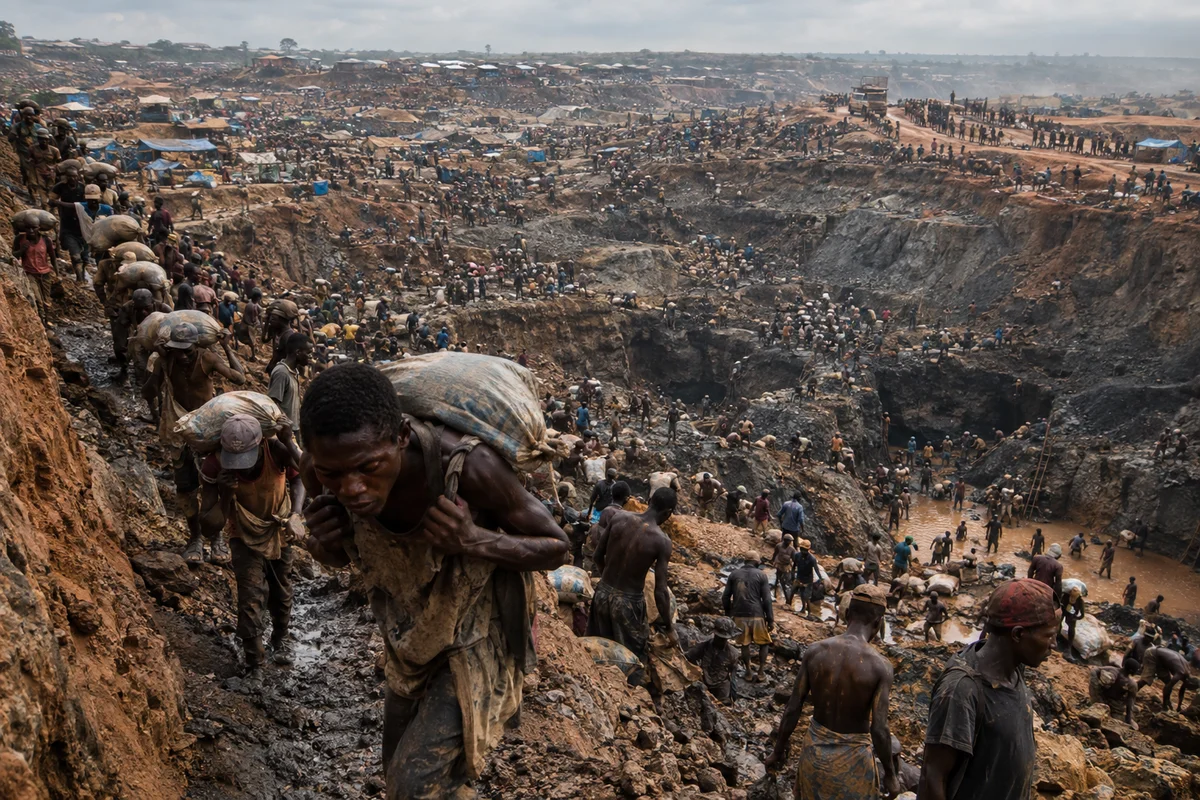
The employment system (Ejembe ly'obuddu) intentionally keeps you insecure. This is because the science is clear: the more insecure you feel, the more productively you work. However, the flip side of that same research shows that your creativity is directly proportional to your confidence. Confidence promises freedom, and creativity actually delivers it. Since freedom is the exact opposite of obuddu, that Jembe—if well kuwanga'd—is determined to keep you in buddu forever.

Feed attachment
17
Explore in Mind Map →
Same ejembe ly'obuddu threadLeads to →
Open post →

Directly continues the 'ejembe ly'obuddu' concept in Luganda, warning how the slave-charm hijacks your dreams to turn you into a mere worker.

X
XKMato
1mo ago

Mulekele okwenakuwaza mujukire bye muloota.
Ekyo bwemutakikola, bagenda kubawamba ko emibiri gyamwe bajitekeko emitwe gyabe.
Mwe mukolelele bilooto byabwe.
Bali bawanga ejembe ely'obuddu ela elyo ejembe ddyo liwambila ddala obulamu bwomuntu bwona nelimufula mukozi.

https://xkmato.com/s/eamqod7v

Traces corporate docility to schoolingLeads to →
Open post →

Links workplace insecurity back to mass schooling, which pre-conditions children into docile, dependent corporate cogs.

X
XKMato
3mo ago

Our biggest problem is that our childhood was stolen from us at school. The mass education system prioritizes training over playing. So, naturally, the child feels like they are living their life for someone else’s intentions. Life is not made by their own decisions. During most of your childhood, if it were up to you, you’d never make 90% of the decisions that you were forced to make. 


In most schools, a child gets about 2 hours of play a day and maybe twice or thrice as much on weekends; the rest of the time, the child is condemned to eternal instruction. So, growing up, most children slowly internalize the false view that their life’s decisions don’t have to be their own. That these decisions come from God, teachers, parents, or elders. This means spending the first 18 years of one's life sacrificing most personal decisions for the decisions of others. And because children are treated as less intelligent (whatever that means) than adults, they don’t even have to consent to most of the choices that are made for them during school. 


That is why, when set free after school, it is easy for most of us to rush to find a devotion—be it further schooling, God, work, alcohol, or drugs. We are so used to waiting for instructions that we are literally incapable of taking reasonable action without first attempting to predict its outcome. 


But all work and no play is a motto for machines. The more you work than play, the closer you are to a machine than to a human. And so it seems to me the current mass education system has been the perfect tool to weld free men into deployable machines whose use is to solve the problems of those who can learn how to control them. Because, when well-trained, a child’s urge to play can be reduced to competitiveness. And a competitive human can be molded into any tool, even a weapon. 


Yes, I know that even adulthood is built around this incentive structure to keep people competitive, but in truth, it is education that molds one’s mind to become compellable by such a structure.


The question is: how can AI help today’s child learn and grow while still maintaining their urge and ability to play? Now, anyone who says that they know the answer has simply spent too much time in school and has forgotten one thing every child knows: that questions aren’t meant to be answered, but rather explored. And it is only through play that a child is able to sustain a lifelong exploration.


We are starting a school, and we would like you to enroll your child. Our pilot project will take only 10 students, and if you can afford it, I strongly recommend it.


Go to school.uvotam.com or DM me directly.

Heals manufactured inadequacy via gratitudeLeads to →
Open post →

Offers existential self-acceptance as the spiritual cure for the psychological inadequacy engineered by employers.

X
XKMato
1mo ago

"Make them all your friends," Jajja Kintu advises.

Who told you that you're poor? Are there not those who have less than you do who believe themselves rich? Before you can get what you love, you must first learn to love what you have. Changing what you love is growth. Changing what you must is repair. Growth turns something into more than it was before. Repair turns something back into what it was before it broke.

Who told you that you're broken? Who told you that you're a sinner? Who made you a victim?

Can you see that getting what you want won't cure you of the wanting? Can you see that the pain is in the wanting itself, and not the object of the wanting?

All I can teach you is that freedom is in befriending the wanting, because that will live with you forever. Don't try to control your wanting, and don't let it control you. That is how a friendship works. And only friendship is the path to harmony.

You're not poor. You just need to learn what you want and befriend it.

How jobs weaponize insecurity← Connected from
Open post →

Explains how the corporate employment system ('Ejembe ly'obuddu') deliberately manufactures insecurity to keep workers anxiously busy rather than creative.

X
XKMato
2mo ago

It has taken me a whole two years to decondition myself out of the idea that staying busy is the same as being productive. There was a guilt that came whenever I caught myself in a daydream, scrolling on my phone, or walking for no reason. "Is there not something better I would rather use this time for?" I always asked.


Unless you're training for something where the routine is clear, the target is clear, and there is no expected outcome from the training besides completing the routine, this idea that people procrastinate is actually nonsense.


For people who work in information manipulation—be it trading, data analytics, digital art and graphics, writing and storytelling, AI training and fine-tuning, etc.—there is no such thing as procrastination. If you feel lazy, it is because your mind hasn't computed a satisfying idea yet. The aversion to the guilt that comes with this concept of procrastination can push you to escape through doom-scrolling, worrying, or self-victimization, among other ways you've conditioned yourself to cope with guilt. Most of these mechanisms are so aggressive in the way they grab your attention that even when your mind finally computes the appropriate idea, you will not be attentive enough to notice it. This is why there is a cult of people who believe they get their best ideas in the shower or after taking a nap. Yet, that is probably just the time they are relaxed enough to listen to their mind.


But in reality, if you calm down and stay mindful, your mind will naturally start suggesting useful solutions to whatever problem you have. All you have to do is keep interacting with your mind. If the solution you've discovered doesn't make sense, ask yourself what is missing, and allow your mind to get to work.


Basically, whenever you catch yourself feeling guilty about procrastinating, remember what you are claiming to be procrastinating from, and pay a bit more attention to the nature of your breath as you keep procrastinating. If you do this for long enough, you'll start craving that free time because you'll believe that it is when you get your best ideas.

Corporate insecurity vs creativity← Connected from
Open post →

Explains the psychology behind Salvador's corporate exit from MTN by showing how employment manufactures insecurity that crushes creative confidence.

X
XKMato
5mo ago

I’ve been listening to the Muna Ug podcast, the Salvador episode, specifically the part where he talks about why and how he resigned from MTN. It's a story very similar to my own, and he describes it as the best decision he ever made. God put that manager in his way to show him his true path. That dude is a dope storyteller, bro, no wonder he is such a successful comedian.

This got me wondering whether he regrets all the time he "wasted" in school, wishing someone had discovered him as a comedian earlier in life. Would he still be a good comedian, or is it school and all that seemingly unproductive time that actually gave him the experience to draw his jokes from?
For all the talk about how TikTok is ruining our attention spans, at least the platform has done a great job of decentralizing the storyteller, allowing us to reflect on our own lives from multiple perspectives. Nothing heals better than listening to someone being grateful for the exact same situation that you identify with pain.

All of us have those specific events in our memory that we point to as the source, the beginning, the big bang of our current selves. We've created an entire identity of who we are based on these events. And most of the time, we just need someone else to tilt the mirror a little bit—to retell our stories from an entirely different perspective—for that rigid identity to fall apart fully. To appreciate that we’ve always been on the right path, the mistake was believing that one painful interpretation of our story was the only possible interpretation.

That is exactly why our biggest business at uvotam.com is podcasting.

We actually believe the world needs to hear your story. There is someone out there who is currently stuck in the pain of a situation you have already survived and learned to be grateful for. People need to hear more from people like them who have chosen to interpret the events of their lives differently. Who have chosen to be grateful. Who have chosen to be happy. Who have chosen to love.

Your story has the power to tilt the mirror for someone else.
If you are ready to share it, we are ready to broadcast it. Book a podcast right now at pod.uvotam.com

You can Salvador's full podcast here: https://youtu.be/YefHzlObLzU?si=mDRZHb9bkT0bIegH

YouTube
1/3
Employment breeds insecurity over creativity← Connected from
Open post →

Explains psychologically why Big Tech boxes crush ambition: corporate jobs manufacture insecurity that kills bold creative confidence.

X
XKMato
4w ago

I suppose I can take a full-time job on the YouTube team. But I am now too big to fit in the box they consider for their employees. I am not dying for another minute of my life looking at that leetcode shit.

When I was at university, I always thought that if I didn't become a billionaire by this time, I would settle for Google. I have grown so much since; I don't know if I would have been mature enough to understand what Google is if I had worked there when I was younger.

I'd probably just hate myself every day, then look at my bank balance and find me some alcohol and women to suppress how disappointed I would be in myself.

Everything happens for a reason. But maybe "reason" is just something we make up to explain two things that happened. Things happen because they happen. All one needs to do is create the right conditions for the next thing that happens to be agreeable to them. It is one life; it doesn't really matter how you choose to live it. Know what is important to you and stay on your path to make it happen.

Every moment is equal. It is advertising, propaganda, and activism that trick you into thinking some moments are better, superior, or more painful than others. In the end, a good life is simply making the best out of the circumstances you're in, because all those posers you admire are just doing the same—if they're lucky enough to have some self-awareness about the advertising, propaganda, and activism they're exposed to.

Feudal control over creatorsLeads to →
Open post →

Shows how creators escaping corporate employment still face feudal control when gatekeepers own attention infrastructure.

X
XKMato
1mo ago

He who controls the infrastructure controls the creator.

Creativity is a thirst that can only be quenched with attention. The person who delivers the creation to the attention that the creator craves owns not just the creation, but the creator itself. Historically, creative business has been run as a feudal enterprise where big distributors decide which art can reach the masses. Many creatives were buried under layers and layers of management institutions in order to create artificial opacity between the art and the attention that consumes it.

The artificial complexifying of social media algorithms is just the next move available to the feudalist. Since the artist has outgrown the opaque distribution channels, the new infrastructure of control is within social media and streaming platforms. It may take forever for artists to realize that the only way out of another's ownership is by building their own infrastructure.

The American rapper Jay-Z has always understood this game better than anybody in hip-hop culture. He co-founded Roc-A-Fella to own his masters, later maneuvered to lead Def Jam from the inside, and eventually broke away to build Roc Nation and Tidal. This is where he hit a wall and learnt the most important lesson about capital today: that it is racist. I wonder whether he has the balls to take a shot at a TikTok competitor. Not just TikTok actually, but a platform that will disrupt TikTok, Netflix, YouTube, and all other similar social media/streaming platforms, while at the same time leaving the creator to own their audience and do as they see fit with the attention their art can cultivate. And leave the current platforms for cooperate slop, propaganda and activism.

The creator today who is brave enough to renounce the easy platforms in favor of building distribution infrastructure transparent to them not only owns the future, but buys back his soul. This is the undeniable expected natural progression of the attention economy; any direction other than this would mean artificial, mostly violent, interference by the feudalists.

https://xkmato.com/what-is-wrong-with-ugandan-film-distribution

Work vs wage-slavery insecurity← Connected from
Open post →

Complicates the call to 'Go work!' by warning that the corporate employment system (Ejembe ly'obuddu) deliberately breeds insecurity to extract labor.

X
XKMato
3mo ago

Genda Okole!

PDF cover
PDF5 pages

Read Document

Open Reader
Satirizes escaping the corporate rat-raceLeads to →
Open post →

Pairs a psychological critique of corporate labor extraction with a satirical venture aimed at escaping credentialist rat races.

X
XKMato
5mo ago

In the next episode of Make Money without Stealing from Others( Or If you steal, steal enough to never need to make money again.), We are starting a school. https://school.uvotam.com

Workplace insecurity as compliance← Connected from
Open post →

Illustrates systemic psychological exploitation through corporate employment, or ejembe ly'obuddu, which manufactures worker insecurity to boost productivity at the expense of creativity.

X
XKMato
3d ago

There is an intentional, systemic mission to understand and solve freedom across the physical, social, digital, psychological, and other realms by those whose goal is to turn humans into exploitable creatures. They have made a persuasive case so far that the world is better with compliant people in it.

The counter-mission should be to systemically understand and solve exploitation across the physical, social, digital, psychological, and other realms for those of us who want to turn humans into free creatures.

We not only have to make a clear case that the world is a better place with free people in it, but also that free people are more efficient than exploited ones.

We have the sensationalism card—the ability to tap into human emotion and outrage—and we shouldn't underplay it. It's a big advantage for us.

How employment breeds conformity← Connected from
Open post →

Explains the psychological root of unoriginal consumerism: corporate employment deliberately manufactures insecurity that crushes creative confidence.

X
XKMato
1mo ago

Kabaka Ndawula - Jajja w'ebibuga

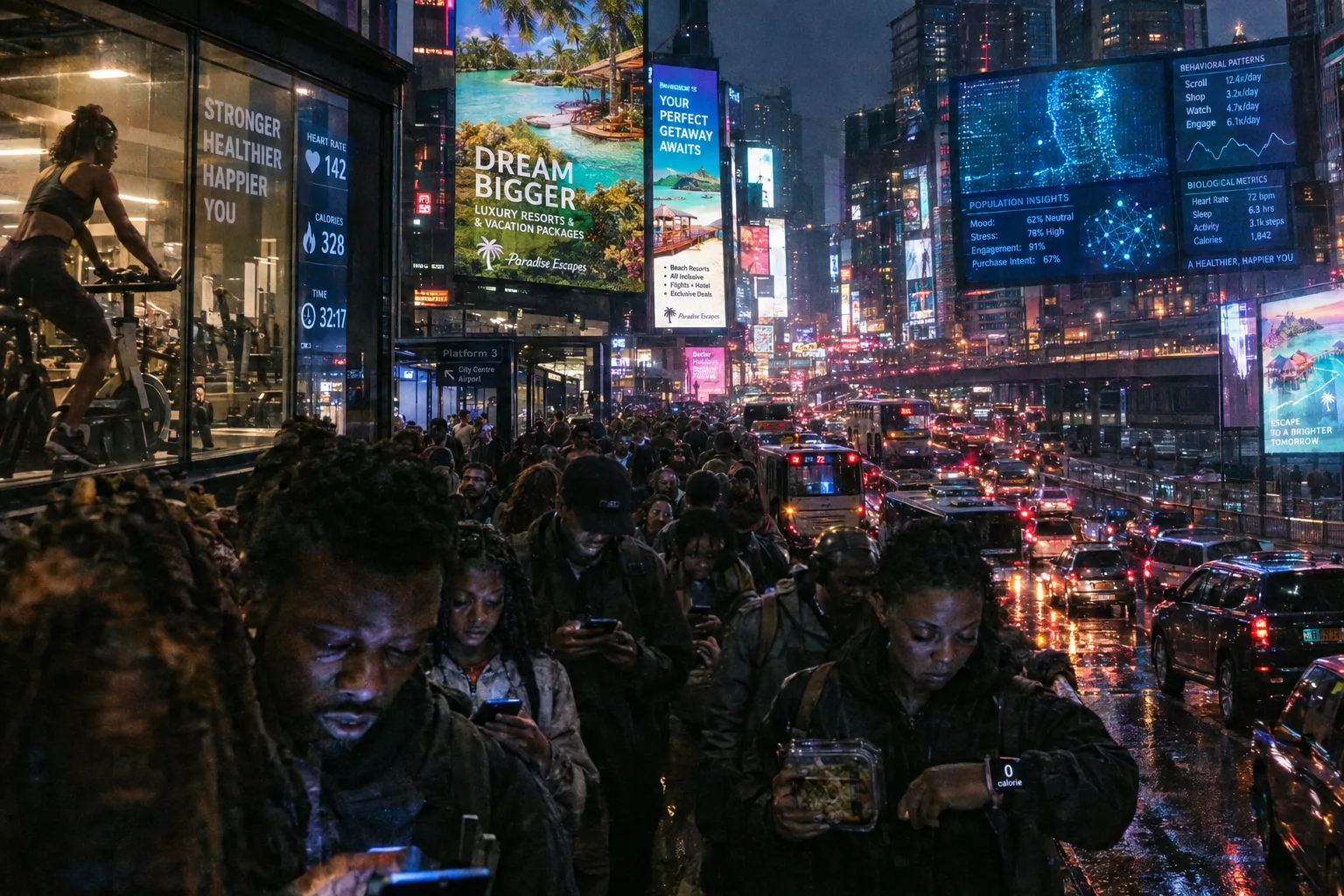
We should stop calling consumers people. I mean these human bodies, devoid of any capability of original thought. They consume content all day. They pay for things because others have them. What they consider leisure is straight out of a resort advert. They eat food based on some numbers called calories that they heard on a podcast. They drive 10 kilometers to work daily, and then pay for the gym. Even when it comes to sex, they want to perform it like they are in a porno. Everything about them is fake.

Ejembe ly'obuddu borrows their body for eight hours a day, five days a week—except for the 21 days off in a year and some holidays. The rest of the time, they don't know what to do with their bodies, so all they do is consume.

I want to go out of my way and say that having a human body is no longer enough qualification to be considered a person. These consumers aren't people. They are things. And if you know slightly more than average mathematics, and you can afford to convert a good amount of energy into computing, you can control them like the tools they are.

Feed attachment
Employment manufacturing insecurity← Connected from
Open post →

Illustrates everyday evil disguised as business by showing how employment systems intentionally engineer psychological insecurity to extract productivity.

X
XKMato
3mo ago

"There's a saying, Shirley, perhaps you've heard it. 'All it takes for evil to succeed is for good people to say, “It's a business.”'"  - Alan Shore

Buganda huntingcraft over servitudeLeads to →
Open post →

Contrasts insecure wage labor with disciplined Buganda huntingcraft ('Omuganda alya ku muyigo') and original creation beyond copying.

X
XKMato
3mo ago

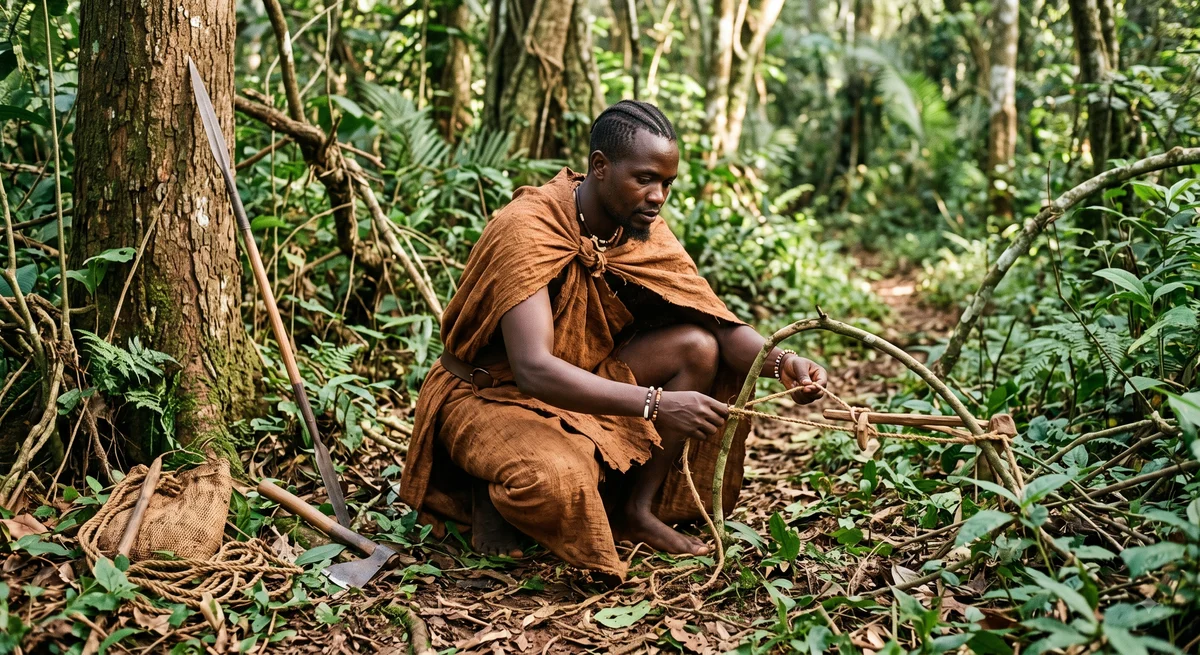
Tokola Lubaale Bamweyana nga Dungu akyabanja. Omuganda alya ku muyigo. Mu luggya osobola okulima n'okulunda eddagala, naye emmere y'Omuganda ya kuteega buteezi. Keera ku makya oyingire eddungu. Yigira ku baganda bo ne bakitaabo okuwanga akatego.


Tetulina kigambo "copy" mu Luganda, kuba omuyizi ayongerako ebibye ku by'ayasoma ng'awanga akatego ke. Okuwanga akatego akanaakusobozesa okutwala enyama ewaka buli kiro, ekyo Kabaka wo Dungu ky'akubanja. Era ekyo bw'oba nga tonnakikola, okusamira Bamweyana ojja kugwa bugwi ddalu.


Oba mu njogera yaffe ey'e Kampala: Just genda okole, blood.

Ne bw'onoonnywa waragi, oba n'ofuna ebikazi, oba n'okuba amasadda, oba n'ovuga mmotoka za mpaka, oba n'okuba omupiira, oba n'obba ssente z'omuwi w'omusolo, oba n'okyunnya banno, oba n'oyingira struggle, oba n'osiiba mu kkanisa, oba n'ogenda mu ssabo—bw'oba tokoledde sanyu lyo, ogenda kusala waya.


Any form of pleasure you indulge in that you've not earned is only going to cost you your mental health. It is just a law of nature.

Feed attachment
Corporate insecurity kills creativity← Connected from
Open post →

Explains why salaried corporate structures fail at lab-style innovation by keeping employees psychologically insecure rather than creatively confident.

X
XKMato
3w ago

I suppose Kiira Motors works best as a lab. But a lab needs a visionary like me. This job is too complex for CEO types. If they were to headhunt me, the only way I would consider the job is if I were allowed to run it with complete transparency. I would accept a decent salary, but I would demand the kind of stock that would make me a billionaire in USD if I met my targets in five years. I need only five years to put them on the right path. If I am going to be forced to join a tribe, Omugagga Matovu sounds like a title I can get comfortable with. Jay-Z taught me well. But don't be surprised if they ignore me and try to install my clone instead.

Confidence vs. security in creativity← Connected from
Open post →

Explains the psychological mechanism behind safe, boring art by linking bold creativity directly to fearless autonomy.

X
XKMato
1mo ago

Maybe J. Cole is suffering the same problem as Eminem and Lil Wayne. The skill is undeniable. All three of these motherfuckers are living boring lives and are not willing to build their brands around important issues. This is the problem with hip-hop: you can't fake it after your audience leaves high school. If you're just an ordinary, boring workaholic, then while you can score some "that guy is relatable" points among some, the gamified attention economy is going to prefer the creators who flirt a little bit with multiple extremes. Being extremely good in only one dimension caps you to the socially acceptable limit of that dimension. And if, relative to your other dimensions, the extreme is too steep, then it is going to be overrepresented, and you're going to come off as one-dimensional. Anyway, what do I know? If I could rap, I would be rapping in Cole's stead because I am a much better writer than him.
https://xkmato.com/feed/5y1dcyx8vkYZR789PKjh

Confidence fuels bold creativity← Connected from
Open post →

Explains the psychological root of Messi-style creative improvisation by noting that creativity scales with confidence while insecurity breeds rote labor.

X
XKMato
3mo ago

The difference between Messi and Ronaldo is that Ronaldo is incredibly trainable. If you show him how to do something and he wants to master it, he will learn it. His superpower is his ability to learn. 


Messi, on the other hand, is highly creative. If you put him in a situation and give him a goal, he will try anything to achieve that goal. His superpower is his ability to create.


Now, this doesn't mean that Messi is not trainable or that Ronaldo is not creative. They both have a mix of both traits, but they lean more toward their respective superpowers.

Feed attachment
Employment insecurity vs. creative confidence← Connected from
Open post →

Shows why work often isn't fun: corporate employment (Ejembe ly'obuddu) deliberately manufactures insecurity, which kills playful creativity.

X
XKMato
5mo ago

If it ain't fun but it gotta be done, then it is up to you to make it fun.

Sign in to communicate privately with the author