Skip to content
X
XKMato
Sep 25, 2026, 8:41 AM

He who controls the infrastructure controls the creator.

Creativity is a thirst that can only be quenched with attention. The person who delivers the creation to the attention that the creator craves owns not just the creation, but the creator itself. Historically, creative business has been run as a feudal enterprise where big distributors decide which art can reach the masses. Many creatives were buried under layers and layers of management institutions in order to create artificial opacity between the art and the attention that consumes it.

The artificial complexifying of social media algorithms is just the next move available to the feudalist. Since the artist has outgrown the opaque distribution channels, the new infrastructure of control is within social media and streaming platforms. It may take forever for artists to realize that the only way out of another's ownership is by building their own infrastructure.

The American rapper Jay-Z has always understood this game better than anybody in hip-hop culture. He co-founded Roc-A-Fella to own his masters, later maneuvered to lead Def Jam from the inside, and eventually broke away to build Roc Nation and Tidal. This is where he hit a wall and learnt the most important lesson about capital today: that it is racist. I wonder whether he has the balls to take a shot at a TikTok competitor. Not just TikTok actually, but a platform that will disrupt TikTok, Netflix, YouTube, and all other similar social media/streaming platforms, while at the same time leaving the creator to own their audience and do as they see fit with the attention their art can cultivate. And leave the current platforms for cooperate slop, propaganda and activism.

The creator today who is brave enough to renounce the easy platforms in favor of building distribution infrastructure transparent to them not only owns the future, but buys back his soul. This is the undeniable expected natural progression of the attention economy; any direction other than this would mean artificial, mostly violent, interference by the feudalists.

https://xkmato.com/what-is-wrong-with-ugandan-film-distribution

15
Explore in Mind Map →
Prescribes antidote to platform feudalismLeads to →
Open post →

Moves from diagnosing algorithmic exploitation of creators to advising how artists can treat platforms as mere conduits.

X
XKMato
3mo ago

I think the healthier way to interact with social media is to measure how well it distributes your work, rather than measuring your work by how well it is distributed by social media.


I think this is actually a design flaw rather than some sort of malicious attempt of the designer. The team at YouTube wants you to play by their rules, changing your approach to art or communication to fit into their container. But the competition TikTok brings is rooted in a different philosophy: TikTok knows that to keep me as a creator, they have to prove they know how to distribute my content. They are doing the opposite of YouTube; they want to prove they are the best partner to distribute my work, while YouTube wants me to prove I am the best creator for their platform.


This is a clear distinction between two growth mindsets. One positions itself as the aspiration of humanity—we should aim to fit into their box. If your content isn't what YouTube is capable of distributing, the problem is you. Part of YouTube's growth strategy is publishing a list of dos and don'ts for those willing to play the game. This is clearly illustrated by how your first video on YouTube is likely to flop unless it is as close to generic as possible.


The other platform positions itself as a partner. TikTok will initially be generous with you and gradually help you find the right fit. That is why your first video is likely to be your best-performing video on TikTok. However, I have seen TikTok publishing rules of engagement recently, so I don't know if the platform will stay this way.


The reason most platforms incline towards the YouTube model is greed, or her synonym, laziness. This human vice mostly manifests as the need to control. At a certain point, a human becomes entitled to their desires and attempts to trap them in a box, only allowing those desires to be modified if they fit into said box. A box made of measurements is limited to only the things it can measure most easily. This is the charm of the Persian mathematician Muhammad ibn Musa al-Khwarizmi, which has since enchanted the minds of Silicon Valley.


Luckily for those among them who have ears, I am here. I know how to lift the curse, but it is sad that I need money to do it. If you or anyone you know has money and is willing to work with me to build the future of content distribution, hit me up. I am building Pyepa, an algorithm to distribute film (especially Ugandan films) and other long-form videos. It is a truly fair algorithm. Some may even call it enlightened. Except, if it was, it would not need money. Forgive me that I have to play a little divide in order to conquer, that is the only game they know and I have to prove to them that I am better at it otherwise they will never stop. Anyway, click on the "pay if you can" button, and if you want me to know who you are, sign in before you pay. You can also email me at kenneth@uvotamstudio.com. 


The purpose and benefit of virtuous behavior is freedom from remorse.

The purpose and benefit of freedom from remorse is satisfaction.

The purpose and benefit of satisfaction is joy.

The purpose and benefit of joy is pacification of the body.

The purpose and benefit of pacification of the body is pleasure.

The purpose and benefit of pleasure is concentration.

The purpose and benefit of concentration is knowledge and vision of things as they really are.

The purpose and benefit of knowledge and vision of things as they really are is disenchantment and dispassion.

The purpose and benefit of disenchantment and dispassion is knowledge and vision of liberation.


Digital feudalism over creators← Connected from
Open post →

Expands the 'Slavery 2.0' thesis by explaining how intermediaries who control distribution infrastructure own attention-hungry creators.

X
XKMato
3w ago

Slavery 2.0

Unlike the physical realm—where if one owns the land, that person almost owns the people on that land too. Look at what is happening in Gaza, for example, to see how control over physical land dictates the very fate of the people living on it. In the digital realm, however, the dynamic is different: the people actively create the real estate. We are the ones building value in the digital realm, yet the billionaires are moving in to enclose it.

Larry Ellison has just bought major pillars of media in America, but Americans, if they so choose, can start actively creating media outside Larry's empire. They are capable of creating entirely alternative sources of content so that Larry doesn't get the option to extract from them by artificially creating scarcity in the media space, because that is obviously the end goal.

Consider Elon Musk, too. While Larry is buying up the studios and infrastructure that create the actual content Americans consume, Musk is buying and building the infrastructure that transports that content. What Starlink is going to end up becoming is a global internet company that takes the power of internet censorship away from your bad government and puts it into the hands of Musk's empire.

This form of centralization is necessary to control the American and global mind, because if one man is in charge of all the content you consume and another man is in charge of how you consume that content, it is just a matter of time until those two men own you attention entirely and can tell you what is right to think and what is wrong to think.

Very soon, as is the case with land, you shall mysteriously struggle to communicate digitally when the feudalists manufacture an artificial digital scarcity. By that time, we shall be too dependent on their infrastructure to reasonably demand fairness.

Unfortunately, this is the all-too-familiar colonial game. They come and build a church. Then they build a school. Then they build a hospital. They build research centers, and you thank them for how wonderfully great they are as people. Then they kill your gods, and your children worship theirs. Then they set exams to extract the most compliant from your kind. Then they replace your healing practices with their medicine. Then they make your seed impotent and sell you their proprietary version. Then they call you poor because you need them to access God, to raise your children, to cure your sick, and to feed yourself.

They already use the digital realm to control how you think and feel about anything by tuning your attention at will. Imagine a world where they own all of your attention.

Welcome to Slavery 2.0!

Gatekeepers own email listsLeads to →
Open post →

Extends the digital feudalism claim by pointing out that email providers even own a creator's newsletter subscriber list.

X
XKMato
4w ago

They own the emails too. So that newsletter subscriber list isn't yours either. You own nothing but are you happy as they promised?

https://xkmato.com/s/14n31xhh

Proposes decentralized exit from intermediariesLeads to →
Open post →

Connects the problem of extractive media intermediaries to peer-to-peer networks built to liberate digital commerce.

X
XKMato
3mo ago

Freenet is a peer-to-peer platform for decentralized applications: communication, collaboration, and commerce without reliance on big tech. Your computer becomes part of a global network where apps are unstoppable, interoperable, and built on open protocols.

https://freenet.org/

Parallels Big Tech user colonizationLeads to →
Open post →

Extends the critique of digital feudalism from creator distribution to Big Tech's broader colonization of user autonomy.

X
XKMato
3mo ago

If YouTube and most other Google services don't lock you into this eco system that traps you with free trinkets like the Android OS and Gmail, Google would be bankrupt. Using google is like digital version of bulisa manyi. Google is the digital shadow of America.

Distribution feudalism over creators← Connected from
Open post →

Frames inbox gatekeeping within his broader thesis that whoever controls distribution infrastructure owns the creator.

X
XKMato
4w ago

The algos have started marking my emails as spam. Beware. If you prefer to not receive my emails, I encourage you to use the unsubscribe button instead. But if you still want to read from me, please check your spam folder if you don't hear from me in a while.

Attention traps in digital business← Connected from
Open post →

Explores the structural side of digital gratification, warning that platforms delivering attention trap thirsty creators in digital feudalism.

X
XKMato
2mo ago

You have to build for short-term thinkers without falling into the short-term thinking trap yourself.


​Digital forces move the mind towards instant gratification. Therefore, consumers of your digital offering are more likely to pay you to excite them immediately than trust you to satisfy them if that satisfaction requires delayed attention.


​The biggest mistake you can make as a content creator is to indulge in exciting content. You have to decide to be either a user or a seller. This is one of those businesses where you cannot get high on the product you intend to sell.


​Read research papers. Read novels. Watch movies. Watch documentaries. Listen to podcasts. Participate in debates. Do hour+-long regular meditations. Do long road trips. Sleep for 50+ hours a week. Spend more time consuming fewer things.


But don't forget to create for the short-term thinker.

Feudal media infrastructure← Connected from
Open post →

Explains the supply side of the entertainment wealth trap: centralized distribution turns creative business into a feudal enterprise enriching intermediaries.

X
XKMato
3mo ago

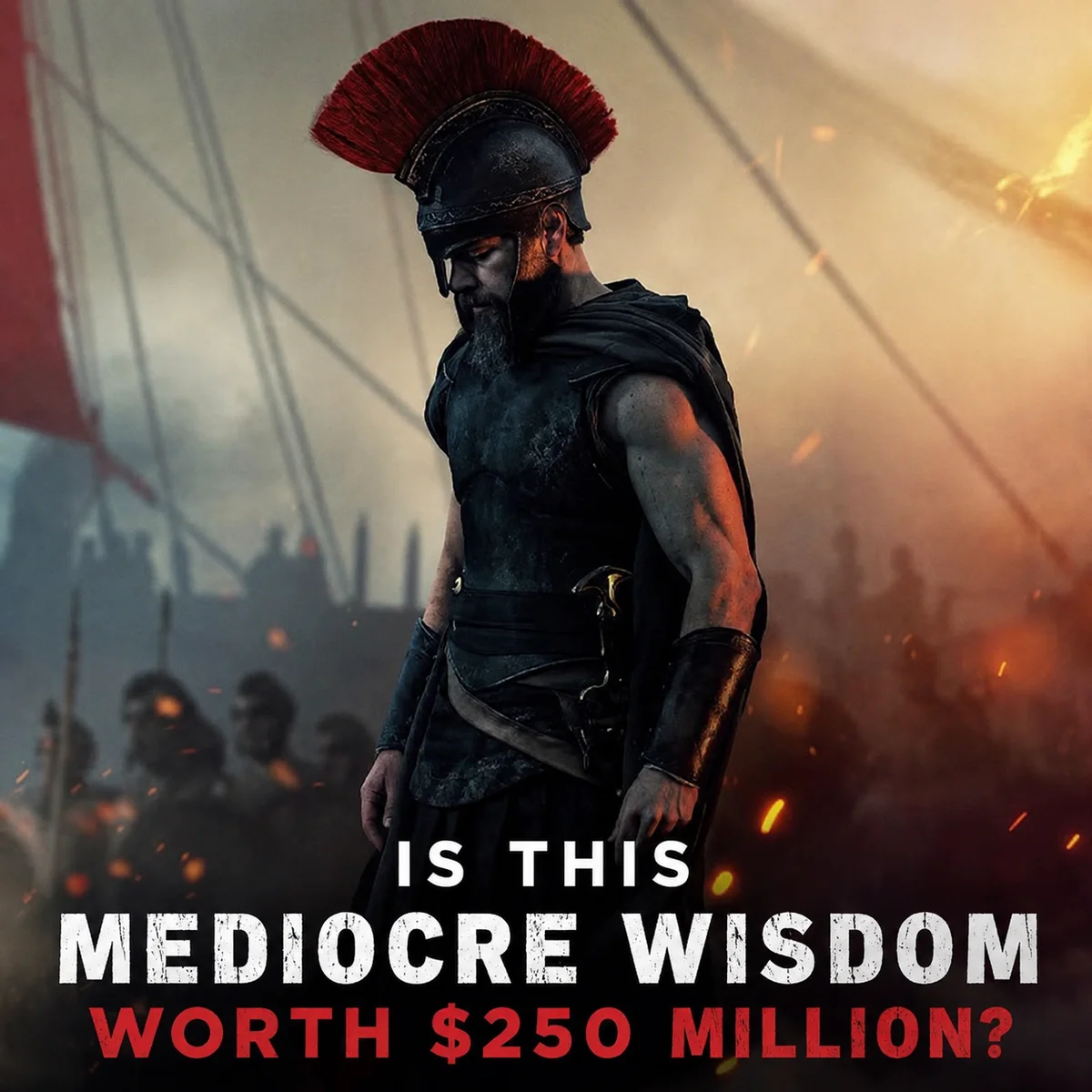
People talk about wealth transfer, pointing to Wall Street and banking practices that unfairly take from the poor to fill the pockets of the rich. But I am coming to believe that mass entertainment is actually the biggest wealth transfer trap there currently is. I watched Odyssey twice in the cinema. The film was not bad; some could even fairly say it was a good film. But how can anyone justify spending $250 million on that picture? I know Ugandan directors who could make such a film (or an even better one) for less than $25 million. We have to talk about these Hollywood budgets, their impact on global culture, and whether they are just a sophisticated form of money laundering.


The biggest counterargument for why it is okay to make such a film is that it grossed almost a billion dollars, making it profitable for investors. Yet, in truth, more than $100 million was spent marketing it. A significant portion of that was poured into TikTok and other advertising platforms to create the illusion that everyone is watching the film, and therefore, it is important that you do, too. The consequence of such advertising is that many poor people will spend the little money they have to sit in a theater for two hours to consume mediocre wisdom that isn't even compatible with their environments.


Having the ability to spend huge sums of money to induce the masses—especially poor people—to hand over their cash is simply not right. Using the force of wealth to impose your culture on others is colonialism. This kind of scheme, whether pulled with Odyssey or other mass-marketed juggernauts like Coca-Cola and Drake, significantly widens the global wealth inequality gap. Just because it is doable doesn't mean it is acceptable. Paying influencers to pretend they enjoyed a film—or worse, paying them to convince themselves they enjoyed it—is a form of corruption. The guys at the the printer need to direct some of that money to Africans so that we can also grow our cultures. The fact that there are no laws against this kind of mass marketing doesn't mean it is right. Don't do it.

Feed attachment
Feudal control over creators← Connected from
Open post →

Shows how creators escaping corporate employment still face feudal control when gatekeepers own attention infrastructure.

X
XKMato
1mo ago

Ejembe ly'obuddu

The employment system (Ejembe ly'obuddu) intentionally keeps you insecure. This is because the science is clear: the more insecure you feel, the more productively you work. However, the flip side of that same research shows that your creativity is directly proportional to your confidence. Confidence promises freedom, and creativity actually delivers it. Since freedom is the exact opposite of obuddu, that Jembe—if well kuwanga'd—is determined to keep you in buddu forever.

Feed attachment
Why creators need distribution power← Connected from
Open post →

Explains why choosing business matters for artists: whoever controls distribution infrastructure owns the attention-hungry creator.

X
XKMato
1mo ago

I remember when I applied for YALI (Obama's program for African leaders), I thought I had impressed the interviewing guy thoroughly. But at the last question, when he asked me whether I wanted to join the business or civic chapter, I chose business. The guy looked disappointed. I wasn't surprised when the axe finally knocked me.

The last thing I applied for was the German EFM Toolbox Distribution Academy, where I laid out my credentials as a filmmaker and software/data engineer. I made a very clear case for why the future of distribution is digital, and why my skillset is the best combination any Ugandan—or human anywhere—can have to innovate in film distribution on the continent. The guys never even acknowledged receipt of my email. In fact, they mistakenly added me to one of the webinars for the program, where I asked if this meant I was selected. Still, up to now, no one has responded to me again.

This program has been running for a while now in Africa, and it has never yielded any results, yet it has not been modified either. Film producers join the program, and they are taken to a fancy hotel in Germany, fed nice food for free, and indoctrinated into the false garbage of the Hollywood distribution playbook that will never work in Africa. After all, what do Germans know about African film distribution that Africans cannot figure out for themselves? Then, they are credentialed with a certificate. This process, in my mind, is meant to induce imposter syndrome. They will teach you things that will never work and set you up to blame yourself when you inevitably fail as a film producer.

And this is the USAID playbook, by the way. So when these NGOs, the UN, and other Western institutions for some reason decide that to qualify for their programs, one has to be between 18 and 35, what they actually mean is that they are looking for someone intelligent but still impressionable and gullible. This way, they can manipulate them with whatever form of indoctrination they have.

Haven't you ever wondered why, for some reason, these guys limit qualifications for their programs—some of which involve finding solutions to real-world problems like global warming—to near-children? The people with the least amount of real-world experience? My hunch is that the goal is to take intelligent Africans who were not poached by Harvard, Google, etc., out of the real-world intelligence market and give them dummy but well-paying jobs and prestigious titles so that they don't focus their intelligence on solving African problems. This, to me, is the most sophisticated form of brain drain.

Anyway, check out my analysis on what I think is wrong with film distribution in Uganda: https://xkmato.com/what-is-wrong-with-ugandan-film-distribution

Centralized distribution feudalism← Connected from
Open post →

Complicates the benign view of organic algorithmic discovery by arguing that whoever controls distribution infrastructure owns the attention-hungry creator.

X
XKMato
4mo ago

78% of the videos on YouTube and TikTok pay for so-called promotion. 90% of people who consume videos on YouTube and TikTok consume content that was organically suggested by the algorithm, because that is most likely the content they are interested in. The algorithm cannot force you to watch content you don't like, even if the person who promoted that video paid YouTube and TikTok to do exactly that.

While the initial ads-based social media model turned the person watching the video into the product by selling their attention to brands and other attention-seeking businesses, with the introduction of the 'For You' feed, the content creator themselves is the product. Not only do they have to create content that keeps platforms like YouTube and TikTok engaging, they also have to pay the platforms for the illusion/trick/scam that these platforms call engagement statistics.

What do impressions mean? What do views mean? What do likes mean? And don't get me started on subscriber numbers. It is now common knowledge that engagement on your video has very little to do with your subscribers. The 'For You' page destroyed the idea of creators being able to create communities on these platforms; each video is distributed on its own merit. Most of this is total nonsense—just user experience design to trick numerate but gullible people who confuse numbers with truth.

When I pay a platform for engagement, I need usable outputs. If my content isn't good enough to be suggested organically, the algorithm shouldn't allow me to promote it if it is just going to take my money and give me fancy numbers in return.

If, by the time I have finished building Pyepa and I've found the right VC to pay for the servers, YouTube and TikTok haven't gotten their shit together, they better have a village to go back to and dig because I am coming for their bread.

Pyepa, by Uvotam, is a platform built to distribute Ugandan films, elevate long-form content like podcasts, and revive the cinema-going culture in Uganda. If you're interested in the actual future of video distribution, DM me for a demo today.

Disclaimer: The numbers above are entirely made up because statistics show that people are just more likely to believe posts that have numbers in them.

Feed attachment
Controlling platform infrastructure← Connected from
Open post →

Explains why opening XkMato's underlying ground to contributors matters by arguing that whoever controls distribution infrastructure controls the creator.

X
XKMato
1d ago

I want to experiment with opening this platform up to a bit more collaboration. Something that goes beyond just asking for your engagement with the content, and invites you to help build the very ground on which that content lives.

I am launching Amphibian.

Think of it like Replit or Vercel's v0, but embedded directly into XkMato. Amphibian is a tool that lets you prompt entirely new features for the blog right within the application itself. You don't need a developer setup, and you don't even need to know how to code to contribute to your favorite platform.

Usually, changing a platform means you either have to deal with the friction of forking code to build it yourself, or you have to submit a request and wait for me to do it. This simplifies that process. You just type what you want to exist, and Amphibian builds it. Or rather you build it alongside Amphibian. Like a salamander regrowing a new limb.

A huge piece of feedback I've gotten is that many of you would prefer to listen to audio or watch video essays instead of reading. But I'm most comfortable as a writer and it will.take.a significant amount of money to get me to dance on Tiktok. Instead, I've been able to add some sensible text-to-speech, but it’s still stuck in commonly available Western accents and it often completely butchers the pronunciation of my Luganda text.

I could spend months building a custom feature to solve that specific TTS problem, or generating video formats I think you'll like. Chances are high that my exact assumption of the problem isn't the problem everyone is facing. When it comes to specifics like accents, pronunciation, or visual styles, every single person prefers to consume content differently.

Amphibian fixes this bottleneck entirely. The philosophy is simple: Build for your own consumption taste.

Imagine prompting a custom UI that automatically converts my posts into your preferred video style, or spinning up a tailored audio engine that actually understands the regional accents you want to hear. You could keep these tools entirely personal to you, share them with a select group of friends, or even turn them into a micro-business by allowing other users to pay for access to the features you've built.

This goes far beyond just reading or listening. Speculation is a core feature of XkMato. Now, imagine being able to prompt your own mini-casino right on the platform. You could build custom prediction markets to speculate not only on world affairs, but on the future behavior of XkMato itself. You aren't just a reader anymore; you're actively building the site's next iteration just by telling it what you want to see.

Amphibian is prototyping here on XkMato, but it is being built from the ground up to be portable. The architecture is designed to eventually plug into any content creation platform—from your favorite social media platforms, to other blogs, to streaming platforms. We are starting here, but the ultimate vision is to give you the power to build your Internet.

Amphibian is fully feasible and working beautifully(not so beautifully but let's say Trump beautifully) on my local machine. Getting it to run safely and smoothly online, however, is a different beast. Running live, AI-generated code on the web requires secure cloud sandboxing and real infrastructure.

To bring Amphibian online, it will need your support.

I'm pitching this to you now because I want this community to be the architects of what comes next. By backing this project, you aren't just paying for a feature; you are funding the engine that turns XkMato into a live playground where your ideas immediately become functional reality.

Let's build this together.

If you want to dig into the technicals or just talk about what this means for XkMato, hit me up using the messaging feature right here on the platform to ask me more about Amphibian. But if you already see the vision and are simply interested in contributing financially, just click the "Pay If You Can" button.

Feed attachment
Owning the creative path← Connected from
Open post →

Advances the theme of creative independence by warning that centralized distribution platforms still trap artists in digital feudalism.

X
XKMato
5mo ago

I’ve been listening to the Muna Ug podcast, the Salvador episode, specifically the part where he talks about why and how he resigned from MTN. It's a story very similar to my own, and he describes it as the best decision he ever made. God put that manager in his way to show him his true path. That dude is a dope storyteller, bro, no wonder he is such a successful comedian.

This got me wondering whether he regrets all the time he "wasted" in school, wishing someone had discovered him as a comedian earlier in life. Would he still be a good comedian, or is it school and all that seemingly unproductive time that actually gave him the experience to draw his jokes from?
For all the talk about how TikTok is ruining our attention spans, at least the platform has done a great job of decentralizing the storyteller, allowing us to reflect on our own lives from multiple perspectives. Nothing heals better than listening to someone being grateful for the exact same situation that you identify with pain.

All of us have those specific events in our memory that we point to as the source, the beginning, the big bang of our current selves. We've created an entire identity of who we are based on these events. And most of the time, we just need someone else to tilt the mirror a little bit—to retell our stories from an entirely different perspective—for that rigid identity to fall apart fully. To appreciate that we’ve always been on the right path, the mistake was believing that one painful interpretation of our story was the only possible interpretation.

That is exactly why our biggest business at uvotam.com is podcasting.

We actually believe the world needs to hear your story. There is someone out there who is currently stuck in the pain of a situation you have already survived and learned to be grateful for. People need to hear more from people like them who have chosen to interpret the events of their lives differently. Who have chosen to be grateful. Who have chosen to be happy. Who have chosen to love.

Your story has the power to tilt the mirror for someone else.
If you are ready to share it, we are ready to broadcast it. Book a podcast right now at pod.uvotam.com

You can Salvador's full podcast here: https://youtu.be/YefHzlObLzU?si=mDRZHb9bkT0bIegH

YouTube
1/3
Self-executing blog vs. feudal platforms← Connected from
Open post →

Contrasts building an autonomous, self-executing personal platform with feudal creative industries where infrastructure gatekeepers own creators and their work.

X
XKMato
1d ago

Eventually, this is going to become a self-executing platform. Like a living thing. I once wrote about The Executable Sage. I will come on every now and again to express my angst, share my dreams, and discuss the skills and approaches of the time. At some point, the advances in AI are going to be so good that just blogging will be enough to build.

The AI agents will pick up my posts, run them through a dev framework (break into tasks, develop, test, publish), and build the world I want based on what they believe to be my perspective on life as I have shared here. The only thing that will limit them will be compromises that I am currently making in my beliefs, or if, at some point, I cave into the gaslighting and threats trying to silence me.

I remember at Makerere University when I stumbled on Crowley's Magick in Theory and Practice, which would later introduce me to his work and also push me to find Buddhism writers. This kicked off my path to cure the anxiety that I had grown to identify as my personality. Many people had called me shy since I was a kid that I started believing them. And because I was exposed to too many Western films and TV, I started to believe that it was this personality of mine that was responsible for my performance at school.

After some studying and practice, I would learn that I am too spiritually advanced for the average Ugandan and that because I did not have the right person to guide me spiritually at my level, I withdrew from society because most people seemed too reactive, like they were not in charge of their lives. When most people read Crowley's work, it is like how the characters in Westworld can't comprehend things that their code forces them to ignore. They say, "This looks like nothing to me." To be honest, most of his work looks like nothing to me too, but there is significant work of his that is so obvious that I am even suspicious he plagiarized it from Eastern spiritual writings.

Anyway, Crowley's definition of magic as the art and science of causing change to occur in conformity with the will is just a perspective. A belief. It is in the same category as Jesus' claim that if you ask, you shall receive. These are just ways of seeing. Ways of organizing one's life, so to say. There is no wrong or right way to believe in yourself; there are just different skills required to be able to see clearly from these perspectives. Jesus takes the burden from you, and all he asks is blind faith in the scripture, while Crowley and Eastern spirituality require you to practice and only refer to scripture as a guide. There is a common saying in Buddhist circles that the Dharma is just like a finger pointing to the moon, but not the moon itself. African spirituality, on the other hand, gets rid of scripture entirely and forces you to pay attention to your life yourself and construct the required rituals you need to cache the lessons you learn as you grow. In fact, in Buganda spirituality, the highest rank is Jajja, and just having children who have children qualifies your life experience to the highest level of Buganda spirituality.

The first time I seriously put my spiritual talent to the test was manifesting my way into a Software Engineering course at Makerere. I hadn't passed as I expected in A-Level. I couldn't qualify for a Computer Science course, but I managed to squeeze the universe into creating a new course called Software Engineering the exact year I was supposed to join. I ended up qualifying simply because it didn't have many applicants. It had just been introduced alongside Computer Engineering, which most wannabe engineering students preferred.

I would later take magic for granted, manifesting my first job in my second year at university that paid more than my lecturers. It is during this time that I was financially comfortable enough to start working on myself. I set out to answer the God question once and for all.

In a way, the idea of finding God, or whatever spiritual lingo you prefer, is mostly about uncovering patterns that are unconscious to you that influence how you make decisions. There is really not much more to it than that. In fact, most people who get lost spiritually try to consume others' patterns, especially using powerful rituals or drugs, without first getting a strong grasp on their own. If they're unlucky, they find themselves trapped in cults or addiction.

I just remembered where I was going with this. This blog is going to become a living thing. As AI advances, this blog will build the world of my dreams for me. While today, and in the foreseeable future, I still need to manually maintain it, at some point, all that work will be part of the blog itself. And everything that I share here will self-improve, self-actualize, and eventually manifest in the real world. It is just one of those magic tricks that is so pure that I don't mind showing you how it actually works. I am certain that when you see the results, you'll be impressed.

Now, if you want to participate, please like, share, and comment, and maybe even pay if you can. Do what thou wilt shall be the whole of the law.

This is a dairy entry intended for XKMato Diary

1/2
Sign in to communicate privately with the author