Skip to content
X
XKMato
Oct 6, 2026, 6:18 PM

I remember when I applied for YALI (Obama's program for African leaders), I thought I had impressed the interviewing guy thoroughly. But at the last question, when he asked me whether I wanted to join the business or civic chapter, I chose business. The guy looked disappointed. I wasn't surprised when the axe finally knocked me.

The last thing I applied for was the German EFM Toolbox Distribution Academy, where I laid out my credentials as a filmmaker and software/data engineer. I made a very clear case for why the future of distribution is digital, and why my skillset is the best combination any Ugandan—or human anywhere—can have to innovate in film distribution on the continent. The guys never even acknowledged receipt of my email. In fact, they mistakenly added me to one of the webinars for the program, where I asked if this meant I was selected. Still, up to now, no one has responded to me again.

This program has been running for a while now in Africa, and it has never yielded any results, yet it has not been modified either. Film producers join the program, and they are taken to a fancy hotel in Germany, fed nice food for free, and indoctrinated into the false garbage of the Hollywood distribution playbook that will never work in Africa. After all, what do Germans know about African film distribution that Africans cannot figure out for themselves? Then, they are credentialed with a certificate. This process, in my mind, is meant to induce imposter syndrome. They will teach you things that will never work and set you up to blame yourself when you inevitably fail as a film producer.

And this is the USAID playbook, by the way. So when these NGOs, the UN, and other Western institutions for some reason decide that to qualify for their programs, one has to be between 18 and 35, what they actually mean is that they are looking for someone intelligent but still impressionable and gullible. This way, they can manipulate them with whatever form of indoctrination they have.

Haven't you ever wondered why, for some reason, these guys limit qualifications for their programs—some of which involve finding solutions to real-world problems like global warming—to near-children? The people with the least amount of real-world experience? My hunch is that the goal is to take intelligent Africans who were not poached by Harvard, Google, etc., out of the real-world intelligence market and give them dummy but well-paying jobs and prestigious titles so that they don't focus their intelligence on solving African problems. This, to me, is the most sophisticated form of brain drain.

Anyway, check out my analysis on what I think is wrong with film distribution in Uganda: https://xkmato.com/what-is-wrong-with-ugandan-film-distribution
10
Explore in Mind Map →
Owning the distribution pipelineLeads to →
Open post →

Shows how fusing software engineering with filmmaking empowers creators to treat platforms as conduits and bypass gatekeepers.

X
XKMato
3mo ago

I think the healthier way to interact with social media is to measure how well it distributes your work, rather than measuring your work by how well it is distributed by social media.


I think this is actually a design flaw rather than some sort of malicious attempt of the designer. The team at YouTube wants you to play by their rules, changing your approach to art or communication to fit into their container. But the competition TikTok brings is rooted in a different philosophy: TikTok knows that to keep me as a creator, they have to prove they know how to distribute my content. They are doing the opposite of YouTube; they want to prove they are the best partner to distribute my work, while YouTube wants me to prove I am the best creator for their platform.


This is a clear distinction between two growth mindsets. One positions itself as the aspiration of humanity—we should aim to fit into their box. If your content isn't what YouTube is capable of distributing, the problem is you. Part of YouTube's growth strategy is publishing a list of dos and don'ts for those willing to play the game. This is clearly illustrated by how your first video on YouTube is likely to flop unless it is as close to generic as possible.


The other platform positions itself as a partner. TikTok will initially be generous with you and gradually help you find the right fit. That is why your first video is likely to be your best-performing video on TikTok. However, I have seen TikTok publishing rules of engagement recently, so I don't know if the platform will stay this way.


The reason most platforms incline towards the YouTube model is greed, or her synonym, laziness. This human vice mostly manifests as the need to control. At a certain point, a human becomes entitled to their desires and attempts to trap them in a box, only allowing those desires to be modified if they fit into said box. A box made of measurements is limited to only the things it can measure most easily. This is the charm of the Persian mathematician Muhammad ibn Musa al-Khwarizmi, which has since enchanted the minds of Silicon Valley.


Luckily for those among them who have ears, I am here. I know how to lift the curse, but it is sad that I need money to do it. If you or anyone you know has money and is willing to work with me to build the future of content distribution, hit me up. I am building Pyepa, an algorithm to distribute film (especially Ugandan films) and other long-form videos. It is a truly fair algorithm. Some may even call it enlightened. Except, if it was, it would not need money. Forgive me that I have to play a little divide in order to conquer, that is the only game they know and I have to prove to them that I am better at it otherwise they will never stop. Anyway, click on the "pay if you can" button, and if you want me to know who you are, sign in before you pay. You can also email me at kenneth@uvotamstudio.com. 


The purpose and benefit of virtuous behavior is freedom from remorse.

The purpose and benefit of freedom from remorse is satisfaction.

The purpose and benefit of satisfaction is joy.

The purpose and benefit of joy is pacification of the body.

The purpose and benefit of pacification of the body is pleasure.

The purpose and benefit of pleasure is concentration.

The purpose and benefit of concentration is knowledge and vision of things as they really are.

The purpose and benefit of knowledge and vision of things as they really are is disenchantment and dispassion.

The purpose and benefit of disenchantment and dispassion is knowledge and vision of liberation.


Outgrowing narrow career boxesLeads to →
Open post →

Both reject institutional gatekeepers—whether Obama's YALI interviewers or YouTube's LeetCode hiring boxes—in favor of sovereign ambition.

X
XKMato
4w ago

I suppose I can take a full-time job on the YouTube team. But I am now too big to fit in the box they consider for their employees. I am not dying for another minute of my life looking at that leetcode shit.

When I was at university, I always thought that if I didn't become a billionaire by this time, I would settle for Google. I have grown so much since; I don't know if I would have been mature enough to understand what Google is if I had worked there when I was younger.

I'd probably just hate myself every day, then look at my bank balance and find me some alcohol and women to suppress how disappointed I would be in myself.

Everything happens for a reason. But maybe "reason" is just something we make up to explain two things that happened. Things happen because they happen. All one needs to do is create the right conditions for the next thing that happens to be agreeable to them. It is one life; it doesn't really matter how you choose to live it. Know what is important to you and stay on your path to make it happen.

Every moment is equal. It is advertising, propaganda, and activism that trick you into thinking some moments are better, superior, or more painful than others. In the end, a good life is simply making the best out of the circumstances you're in, because all those posers you admire are just doing the same—if they're lucky enough to have some self-awareness about the advertising, propaganda, and activism they're exposed to.

Lean polymaths vs. bloated studiosLeads to →
Open post →

Pits agile, multidimensional African creators against Hollywood's extractive, gatekept production machinery.

X
XKMato
3mo ago

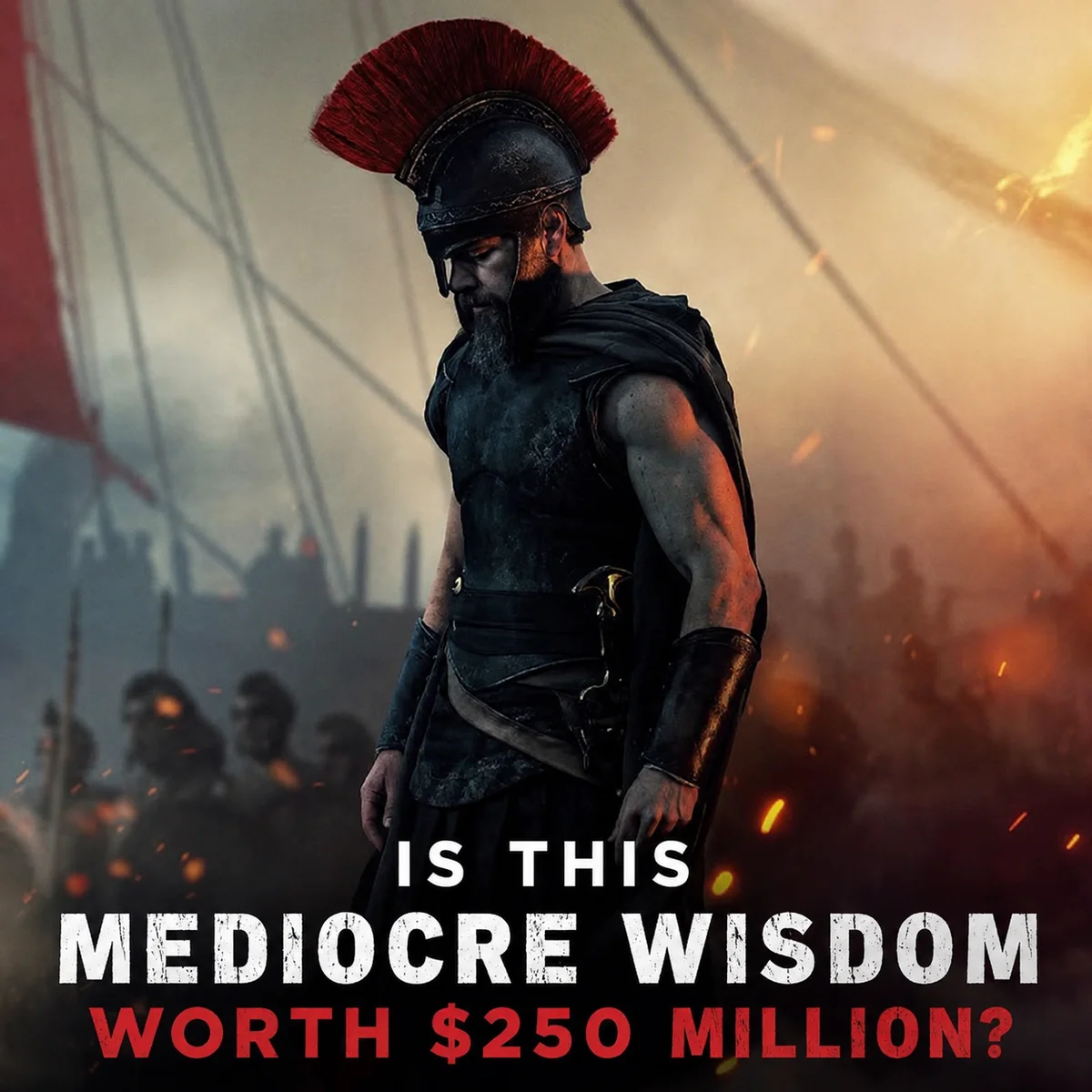
People talk about wealth transfer, pointing to Wall Street and banking practices that unfairly take from the poor to fill the pockets of the rich. But I am coming to believe that mass entertainment is actually the biggest wealth transfer trap there currently is. I watched Odyssey twice in the cinema. The film was not bad; some could even fairly say it was a good film. But how can anyone justify spending $250 million on that picture? I know Ugandan directors who could make such a film (or an even better one) for less than $25 million. We have to talk about these Hollywood budgets, their impact on global culture, and whether they are just a sophisticated form of money laundering.


The biggest counterargument for why it is okay to make such a film is that it grossed almost a billion dollars, making it profitable for investors. Yet, in truth, more than $100 million was spent marketing it. A significant portion of that was poured into TikTok and other advertising platforms to create the illusion that everyone is watching the film, and therefore, it is important that you do, too. The consequence of such advertising is that many poor people will spend the little money they have to sit in a theater for two hours to consume mediocre wisdom that isn't even compatible with their environments.


Having the ability to spend huge sums of money to induce the masses—especially poor people—to hand over their cash is simply not right. Using the force of wealth to impose your culture on others is colonialism. This kind of scheme, whether pulled with Odyssey or other mass-marketed juggernauts like Coca-Cola and Drake, significantly widens the global wealth inequality gap. Just because it is doable doesn't mean it is acceptable. Paying influencers to pretend they enjoyed a film—or worse, paying them to convince themselves they enjoyed it—is a form of corruption. The guys at the the printer need to direct some of that money to Africans so that we can also grow our cultures. The fact that there are no laws against this kind of mass marketing doesn't mean it is right. Don't do it.

Feed attachment
Why creators need distribution powerLeads to →
Open post →

Explains why choosing business matters for artists: whoever controls distribution infrastructure owns the attention-hungry creator.

X
XKMato
1mo ago

He who controls the infrastructure controls the creator.

Creativity is a thirst that can only be quenched with attention. The person who delivers the creation to the attention that the creator craves owns not just the creation, but the creator itself. Historically, creative business has been run as a feudal enterprise where big distributors decide which art can reach the masses. Many creatives were buried under layers and layers of management institutions in order to create artificial opacity between the art and the attention that consumes it.

The artificial complexifying of social media algorithms is just the next move available to the feudalist. Since the artist has outgrown the opaque distribution channels, the new infrastructure of control is within social media and streaming platforms. It may take forever for artists to realize that the only way out of another's ownership is by building their own infrastructure.

The American rapper Jay-Z has always understood this game better than anybody in hip-hop culture. He co-founded Roc-A-Fella to own his masters, later maneuvered to lead Def Jam from the inside, and eventually broke away to build Roc Nation and Tidal. This is where he hit a wall and learnt the most important lesson about capital today: that it is racist. I wonder whether he has the balls to take a shot at a TikTok competitor. Not just TikTok actually, but a platform that will disrupt TikTok, Netflix, YouTube, and all other similar social media/streaming platforms, while at the same time leaving the creator to own their audience and do as they see fit with the attention their art can cultivate. And leave the current platforms for cooperate slop, propaganda and activism.

The creator today who is brave enough to renounce the easy platforms in favor of building distribution infrastructure transparent to them not only owns the future, but buys back his soul. This is the undeniable expected natural progression of the attention economy; any direction other than this would mean artificial, mostly violent, interference by the feudalists.

https://xkmato.com/what-is-wrong-with-ugandan-film-distribution

Why institutions fear polymathsLeads to →
Open post →

Explains gatekeeper hostility by showing how standardized schooling conditions narrow corporate cogs rather than multidisciplinary builders.

X
XKMato
3mo ago

Our biggest problem is that our childhood was stolen from us at school. The mass education system prioritizes training over playing. So, naturally, the child feels like they are living their life for someone else’s intentions. Life is not made by their own decisions. During most of your childhood, if it were up to you, you’d never make 90% of the decisions that you were forced to make. 


In most schools, a child gets about 2 hours of play a day and maybe twice or thrice as much on weekends; the rest of the time, the child is condemned to eternal instruction. So, growing up, most children slowly internalize the false view that their life’s decisions don’t have to be their own. That these decisions come from God, teachers, parents, or elders. This means spending the first 18 years of one's life sacrificing most personal decisions for the decisions of others. And because children are treated as less intelligent (whatever that means) than adults, they don’t even have to consent to most of the choices that are made for them during school. 


That is why, when set free after school, it is easy for most of us to rush to find a devotion—be it further schooling, God, work, alcohol, or drugs. We are so used to waiting for instructions that we are literally incapable of taking reasonable action without first attempting to predict its outcome. 


But all work and no play is a motto for machines. The more you work than play, the closer you are to a machine than to a human. And so it seems to me the current mass education system has been the perfect tool to weld free men into deployable machines whose use is to solve the problems of those who can learn how to control them. Because, when well-trained, a child’s urge to play can be reduced to competitiveness. And a competitive human can be molded into any tool, even a weapon. 


Yes, I know that even adulthood is built around this incentive structure to keep people competitive, but in truth, it is education that molds one’s mind to become compellable by such a structure.


The question is: how can AI help today’s child learn and grow while still maintaining their urge and ability to play? Now, anyone who says that they know the answer has simply spent too much time in school and has forgotten one thing every child knows: that questions aren’t meant to be answered, but rather explored. And it is only through play that a child is able to sustain a lifelong exploration.


We are starting a school, and we would like you to enroll your child. Our pilot project will take only 10 students, and if you can afford it, I strongly recommend it.


Go to school.uvotam.com or DM me directly.

Author's own career path← Connected from
Open post →

Fills in the author's own career backstory after leaving corporate gatekeepers to combine cinema, code, and business.

X
XKMato
5mo ago

I’ve been listening to the Muna Ug podcast, the Salvador episode, specifically the part where he talks about why and how he resigned from MTN. It's a story very similar to my own, and he describes it as the best decision he ever made. God put that manager in his way to show him his true path. That dude is a dope storyteller, bro, no wonder he is such a successful comedian.

This got me wondering whether he regrets all the time he "wasted" in school, wishing someone had discovered him as a comedian earlier in life. Would he still be a good comedian, or is it school and all that seemingly unproductive time that actually gave him the experience to draw his jokes from?
For all the talk about how TikTok is ruining our attention spans, at least the platform has done a great job of decentralizing the storyteller, allowing us to reflect on our own lives from multiple perspectives. Nothing heals better than listening to someone being grateful for the exact same situation that you identify with pain.

All of us have those specific events in our memory that we point to as the source, the beginning, the big bang of our current selves. We've created an entire identity of who we are based on these events. And most of the time, we just need someone else to tilt the mirror a little bit—to retell our stories from an entirely different perspective—for that rigid identity to fall apart fully. To appreciate that we’ve always been on the right path, the mistake was believing that one painful interpretation of our story was the only possible interpretation.

That is exactly why our biggest business at uvotam.com is podcasting.

We actually believe the world needs to hear your story. There is someone out there who is currently stuck in the pain of a situation you have already survived and learned to be grateful for. People need to hear more from people like them who have chosen to interpret the events of their lives differently. Who have chosen to be grateful. Who have chosen to be happy. Who have chosen to love.

Your story has the power to tilt the mirror for someone else.
If you are ready to share it, we are ready to broadcast it. Book a podcast right now at pod.uvotam.com

You can Salvador's full podcast here: https://youtu.be/YefHzlObLzU?si=mDRZHb9bkT0bIegH

YouTube
1/3
Polymath African creator perspective← Connected from
Open post →

Provides personal context on why African storytellers who combine cinema and software get rejected by conventional Western-backed programs like YALI.

X
XKMato
1mo ago

I have to admit, the guys at Network State Conference are pitching a future that I would love to live in. But they are so dull, unpoetic, or maybe just plain boring that sitting through an hour feels like the chair is made of nails.

Maybe they need to let in one or two Africans to give that shit some color. If you're working on some sort of network society, hala at me and we work together.

Western gatekeepers vs. African business← Connected from
Open post →

Pairs Uber ignoring local Ugandan startup experience at transprt.me with Obama's YALI interviewers distrusting an African founder choosing business.

X
XKMato
2mo ago

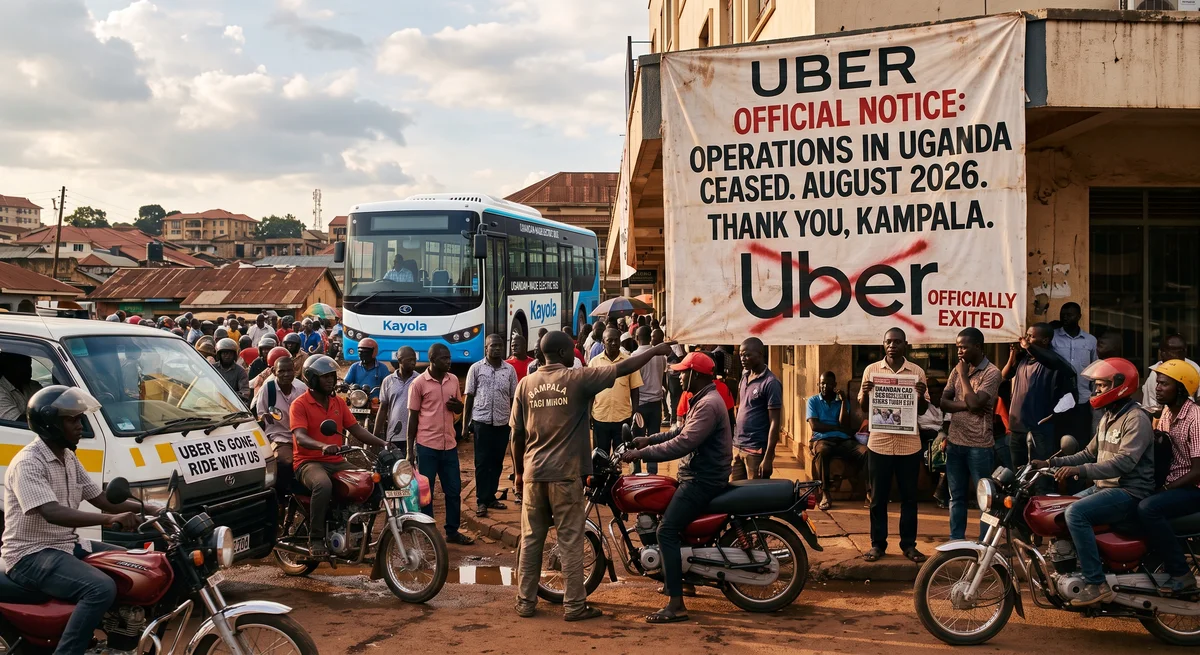
Uber came to Uganda about a month or so after I had launched one of my first startups, transprt.me. By that time, I had already decided that the carpool business was a no-go. If they had consulted me, they would not have had to experiment with all that money that could have fed the poor instead.


But since they are next to the money printer, they can waste any amount of resources with no consequences, and we also still pretend that what they're doing is capitalism.


Big Finance is feudalism. And unlike capitalism that rewards merit when well done, feudalism rewards violence.


The Asians, since the Indians woke up, have colonized the world with intelligence. Mostly through trade.


The Westerners have colonized the world with violence. Mostly through forced religion and education.


The Africans, were they to colonize the world, it would be through entertainment.


A capitalism that optimizes for intelligence is a meritocracy. A capitalism that optimizes for violence is feudalism. A capitalism that optimizes for entertainment is a home.


These printer people giving Uber money to waste, invest that money in Uvotam instead. Participate in this miracle. So that instead of telling people that you saw Jesus turning water into wine, you'll say, "Jesus and I used five small barley loaves of bread and two fish to feed the crowd."


Visit uvotamstudio.com

Feed attachment 1
1/3
Sign in to communicate privately with the author