Skip to content
X
XKMato
Oct 12, 2026, 6:45 AM

Kabaka Ndawula - Jajja w'ebibuga

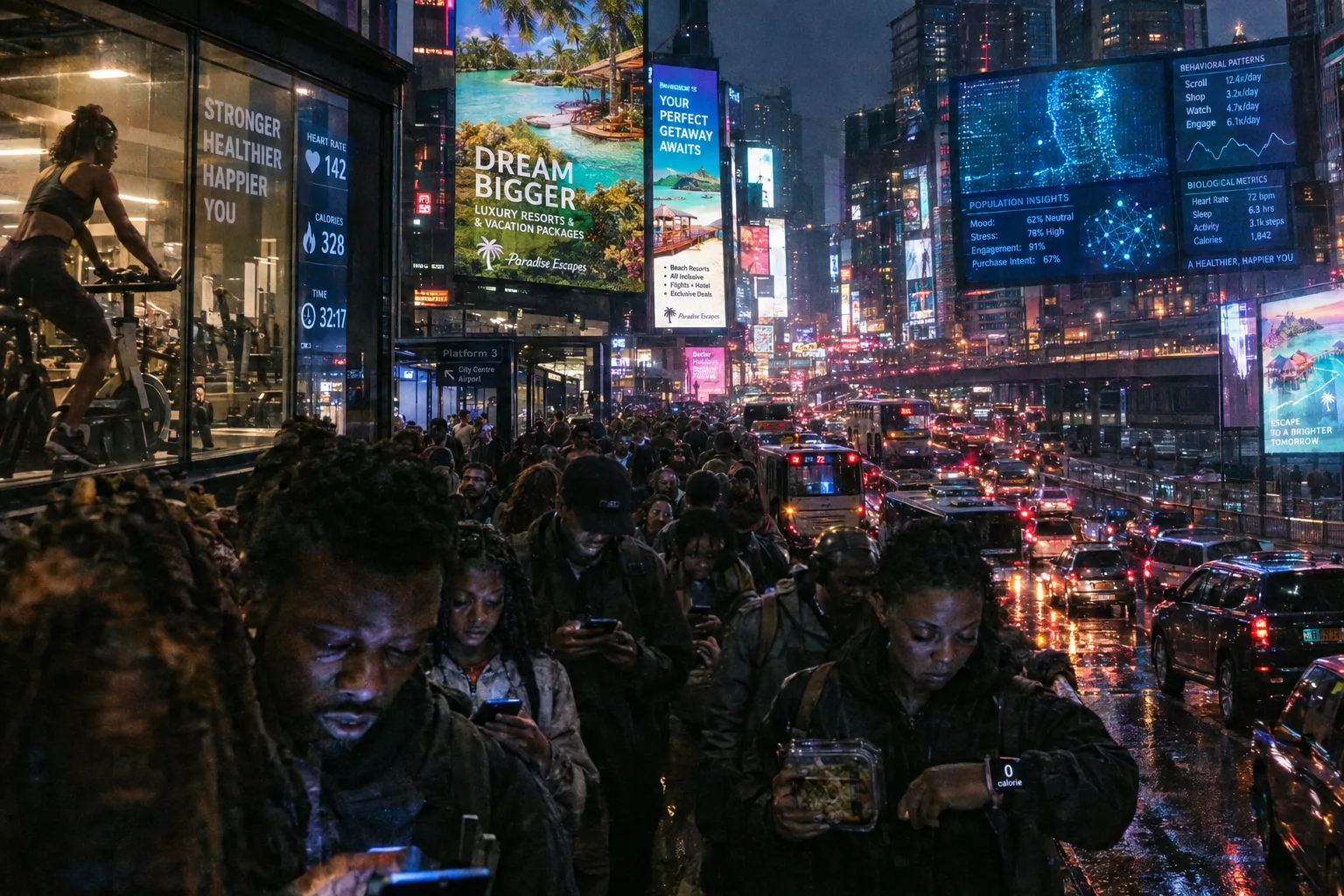
We should stop calling consumers people. I mean these human bodies, devoid of any capability of original thought. They consume content all day. They pay for things because others have them. What they consider leisure is straight out of a resort advert. They eat food based on some numbers called calories that they heard on a podcast. They drive 10 kilometers to work daily, and then pay for the gym. Even when it comes to sex, they want to perform it like they are in a porno. Everything about them is fake.

Ejembe ly'obuddu borrows their body for eight hours a day, five days a week—except for the 21 days off in a year and some holidays. The rest of the time, they don't know what to do with their bodies, so all they do is consume.

I want to go out of my way and say that having a human body is no longer enough qualification to be considered a person. These consumers aren't people. They are things. And if you know slightly more than average mathematics, and you can afford to convert a good amount of energy into computing, you can control them like the tools they are.

Feed attachment
7
Explore in Mind Map →
Related Articles2
Related Feed Notes5
Schooling breeds consumer puppetsLeads to →

Standardized schooling strips intuitive autonomy early on, conditioning adults to become docile corporate puppets.

X
XKMato

Our biggest problem is that our childhood was stolen from us at school. The mass education system prioritizes training over playing. So, naturally, the child feels like they are living their life for someone else’s intentions. Life is not made by their own decisions. During most of your childhood, if it were up to you, you’d never make 90% of the decisions that you were forced to make. 


In most schools, a child gets about 2 hours of play a day and maybe twice or thrice as much on weekends; the rest of the time, the child is condemned to eternal instruction. So, growing up, most children slowly internalize the false view that their life’s decisions don’t have to be their own. That these decisions come from God, teachers, parents, or elders. This means spending the first 18 years of one's life sacrificing most personal decisions for the decisions of others. And because children are treated as less intelligent (whatever that means) than adults, they don’t even have to consent to most of the choices that are made for them during school. 


That is why, when set free after school, it is easy for most of us to rush to find a devotion—be it further schooling, God, work, alcohol, or drugs. We are so used to waiting for instructions that we are literally incapable of taking reasonable action without first attempting to predict its outcome. 


But all work and no play is a motto for machines. The more you work than play, the closer you are to a machine than to a human. And so it seems to me the current mass education system has been the perfect tool to weld free men into deployable machines whose use is to solve the problems of those who can learn how to control them. Because, when well-trained, a child’s urge to play can be reduced to competitiveness. And a competitive human can be molded into any tool, even a weapon. 


Yes, I know that even adulthood is built around this incentive structure to keep people competitive, but in truth, it is education that molds one’s mind to become compellable by such a structure.


The question is: how can AI help today’s child learn and grow while still maintaining their urge and ability to play? Now, anyone who says that they know the answer has simply spent too much time in school and has forgotten one thing every child knows: that questions aren’t meant to be answered, but rather explored. And it is only through play that a child is able to sustain a lifelong exploration.


We are starting a school, and we would like you to enroll your child. Our pilot project will take only 10 students, and if you can afford it, I strongly recommend it.


Go to school.uvotam.com or DM me directly.

Hijacked bodies and dreamsLeads to →

Deepens the image of mindless human bodies by warning in Luganda that abandoning your own dreams lets outsiders put their heads onto your body.

X
XKMato

Mulekele okwenakuwaza mujukire bye muloota.
Ekyo bwemutakikola, bagenda kubawamba ko emibiri gyamwe bajitekeko emitwe gyabe.
Mwe mukolelele bilooto byabwe.
Bali bawanga ejembe ely'obuddu ela elyo ejembe ddyo liwambila ddala obulamu bwomuntu bwona nelimufula mukozi.

https://xkmato.com/s/eamqod7v

Adverts dictating what bodies eat← Connected from

Escalates the critique of food advertising into Kabaka Ndawula's indictment of mindless consumers whose meals and leisure are dictated by adverts.

X
XKMato

There is a tiny region in your brain called the hypothalamus that is believed to have some say on when you feel hungry and thirsty, and it doesn't speak with words so its messaging can be misunderstood. When you are just a bit dehydrated, you can easily misinterpret that thirst as a need for food.


Because advertising can trick your craving for refined sugar and fats to hijacks those thirst signals, most of the times when you suddenly want to buy a soda, grab some Namawojolo, or order a Kikalayi, you're likely just ignorant that you're thirsty.

It is better to start with around 300ml of water when you feel hungry outside of your normal meal times, or when you believe to be craving something sweet or fatty. Give it about 10 to 15 minutes. Most of the time, the craving will just fade away because your body finally got the water it was actually asking for. 

Unless you're pregnant or sick, of course—in that case, just listen to your body(and doctor maybe) and eat.

Coding breaks passive consumptionLeads to →

Proposes teaching children to build digital tools as the antidote to mindless algorithmic and corporate consumption.

X
XKMato

We worry a lot about the loss of jobs, but I imagine how cool the internet is going to look when everyone can code. The amount of time and attention we waste on TikTok, our children are going to spend building the internet for themselves.

That is why I am building the right school to prepare your child for a future beyond content creation. Check out school.uvotam.com — we still have a few available slots.

Critique of passive consumers← Connected from

Sharpens the critique of cinema wealth traps through Kabaka Ndawula's attack on mindless consumers whose leisure and spending are dictated by adverts.

X
XKMato

People talk about wealth transfer, pointing to Wall Street and banking practices that unfairly take from the poor to fill the pockets of the rich. But I am coming to believe that mass entertainment is actually the biggest wealth transfer trap there currently is. I watched Odyssey twice in the cinema. The film was not bad; some could even fairly say it was a good film. But how can anyone justify spending $250 million on that picture? I know Ugandan directors who could make such a film (or an even better one) for less than $25 million. We have to talk about these Hollywood budgets, their impact on global culture, and whether they are just a sophisticated form of money laundering.


The biggest counterargument for why it is okay to make such a film is that it grossed almost a billion dollars, making it profitable for investors. Yet, in truth, more than $100 million was spent marketing it. A significant portion of that was poured into TikTok and other advertising platforms to create the illusion that everyone is watching the film, and therefore, it is important that you do, too. The consequence of such advertising is that many poor people will spend the little money they have to sit in a theater for two hours to consume mediocre wisdom that isn't even compatible with their environments.


Having the ability to spend huge sums of money to induce the masses—especially poor people—to hand over their cash is simply not right. Using the force of wealth to impose your culture on others is colonialism. This kind of scheme, whether pulled with Odyssey or other mass-marketed juggernauts like Coca-Cola and Drake, significantly widens the global wealth inequality gap. Just because it is doable doesn't mean it is acceptable. Paying influencers to pretend they enjoyed a film—or worse, paying them to convince themselves they enjoyed it—is a form of corruption. The guys at the the printer need to direct some of that money to Africans so that we can also grow our cultures. The fact that there are no laws against this kind of mass marketing doesn't mean it is right. Don't do it.

Feed attachment
Sign in to communicate privately with the author