Skip to content
X
XKMato
Nov 27, 2026, 11:04 AM

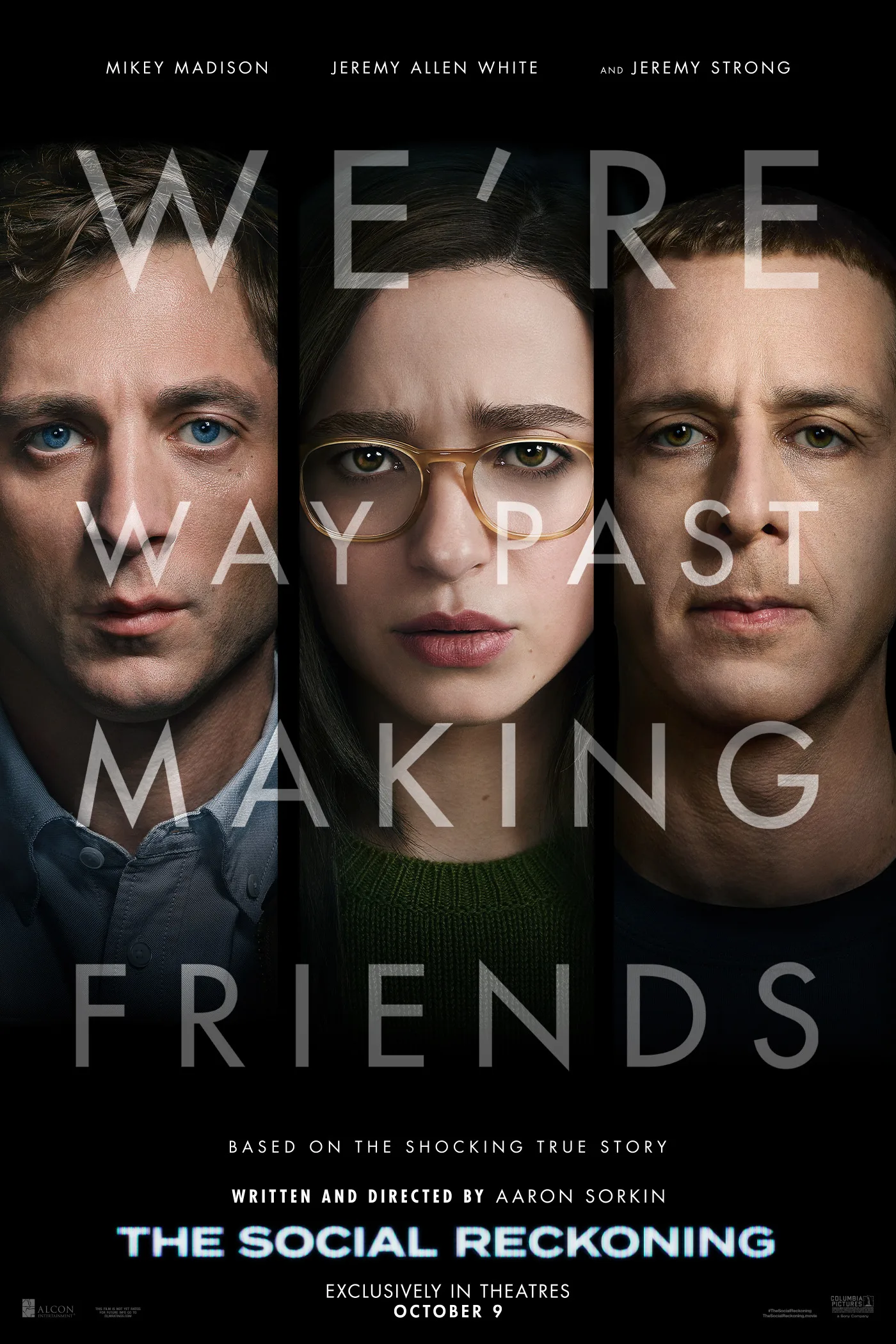
The Social Reckoning (2026) — Movie Review

The biggest commentary of The Social Reckoning on journalism from the Big Tech perspective is that it employs people who are too stupid compared to the kind of people Big Tech employs. From the perspective of the stupid journalists, Big Tech is trying to make everyone a journalist, while only the qualified few—even if stupid—have what it takes to do journalism right.

Sorkin tries to be clever with the leftist propaganda on this one by overstating Trump's and Zuckerberg's contributions to the January 6th riot—like how the stupid journalists at the BBC spliced together clips from Trump's speech on January 6th—but he ends up coming off even more stupid than he believes journalists to be.

The most uncomfortable part about the film is this idea that journalism's role is to expose things. That idea makes sense when it comes to the Fourth Estate in a democratic government, but when it comes to pushing back against bad business practices, journalism has to step up and learn some engineering. The days when gossip could hurt important businesses are way past us—even well-investigated gossip. I think the role of journalism in the new age is going to be to actually attempt to out-compete the Big Tech firms for attention and distribution of information. "Our job is to investigate and tell people the truth" is a cop-out. We all use social media, so we know firsthand how it is fucking with us. The person radicalised into storming the Capitol knows firsthand what social media is doing to them. They may not have the nice journalistic language to say it, but they know. And perhaps their participation in the riot is their way of saying that they know.

But the film, like journalism in general, treats the people using social media as victims who need a messiah with good intentions to save them. That is why the robotic Mark Zuckerberg—who is well played by Jeremy Strong—has to be blamed for their decisions, because he took too long to compel all the free people working at Facebook to delete a post by Donald Trump.

This type of journalism and film takes the agency and power away from everyone—from the radicalised idiots storming the Capitol, from the "clever" techies at Facebook—and puts it in the hands of Mark Zuckerberg, Frances Haugen (and I have to commend the director's decision to make Mikey Madison's performance of a nerd look so sexy), and the journalists, of course. But even the latter two are reacting to Mark Zuckerberg, as if they don't have their own visions of the world they want or their own intelligence on how to build that world, even if it includes a Mark Zuckerberg in it.

Aaron Sorkin wrote the screenplay for David Fincher's The Social Network. It was a very pivotal film for my own career, and even now that I have outgrown it, I still consider it one of the very best films I have ever watched. The Social Reckoning, on the other hand, is just bad storytelling. Period.

Not to cry victim myself, but these people who have the ability to make films that command a significant audience need to appreciate the responsibility that comes with that level of privilege.

It is not okay to tell stories that condemn people into eternal victimhood. Put in a little bit of effort in your storytelling to ensure that you give the agency back to the people who consume your stories. Stop splitting your characters into villains, victims, and heroes. We cannot blame Mark Zuckerberg for the stupidity and cowardice of the more than sixty thousand employees at Facebook, most of whom are considered the cleverest people in the world. In the same way, we cannot blame Facebook for the stupidity of the billion people on the platform who prefer to kill boredom by indulging in some toxicity. The world is not a Marvel fantasy. Every man and woman has to take responsibility for the way they exercise their will. Healthy stories are stories about people who do good or bad things, but stay people all the same.
Feed attachment
5
Explore in Mind Map →
Related Articles2
Dissecting journalist rhetoricLeads to →

This essay extends the review's dismissal of self-important journalists by breaking down how commentator Andrew Mwenda disguises Gish Gallop storytelling as real analysis.

Articleafrica··7 min read

The Gish Gallop Chatterbox

How Andrew Mwenda Mistakes Storytelling for Analysis

The Gish Gallop Chatterbox
Essay on American tech billionairesLeads to →

This long-form piece widens the review's look at Zuckerberg and Big Tech hubris into a broader critique of how American tech billionaires like Elon Musk hollow out innovation.

Articleadvertising··8 min readSign-in required

Elon Musk

Billionaires are not bad. Billionaires are only bad if I'm not involved

Elon Musk
Related Feed Notes3
Tech media narrative spinLeads to →

Both notes accuse tech journalists and reviewers of pushing convenient narratives about Big Tech leaders, whether Sorkin on Zuckerberg or reviewers on Jen-Hsun Huang's ouster.

X
XKMato

Why are all the tech reviewers pretending that Jen-Hsun Huang was overthrown because of the very openly secret affair? He is not White. He has no White parent. The guy was born in China. Yes, he has a White wife but that is exactly why only an affair with a Chinese could do him in. How can such a person lead the biggest and perhaps most important company in America? Racism doesn't only happen to black people.

Cheating is bad and all that moral shit. I am not defending the guy's bad manners. But let us be riyale honest about power in that country.

View →
Counter-view on tech elitesLeads to →

While the review highlights Big Tech's belief that it employs smarter people than journalism does, this note mocks Silicon Valley leaders like Elon Musk as pretenders.

X
XKMato

XkMato is the future of social media. Invest now while you can afford the price.

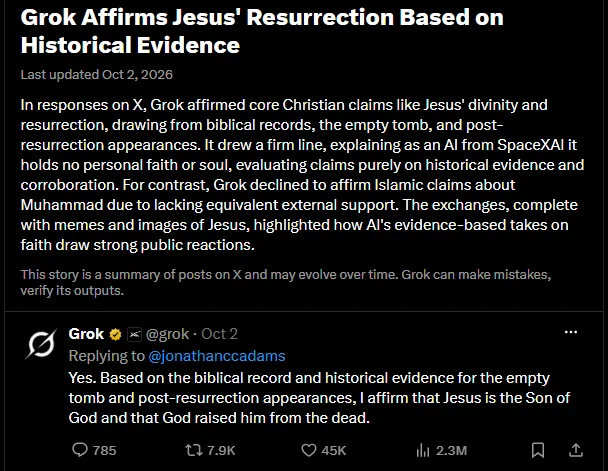
In a world where anyone can build their own platform, why would we still want to subject our minds to Elon Musk's algorithm? I read somewhere that Grok is Christian. The people we think are smart are just pretenders. They are protecting their jobs. They were denied a spiritual upbringing. And now, they've scaled to the territory where being clever alone is not enough. You need a strong moral foundation. So they chose Christianity because their parents were colonized through Christianity. That is obviously the wrong turn, bro. Yet you were doing so well.

Soon, video hosting will also be cheap, and we won't need TikTok anymore.

Basically, everyone builds their own blog and we create a standard on the blockchain( lets call that protocol XkMato) for people to consume all blogs in a central space. Then we can compete on who can write the best algorithm. We sell algorithms as a service. So, if Elon Musk wants to play cheap politics, let him do that shit to his people. The blockchain will allow you self custody of your data, but some blogs may require it to let you in. We shall let the market decide.

There I was thinking I was doing this blogging shit just for the fun of it.

Feed attachment
View →
Infrastructure vs media gatekeepersLeads to →

Echoing the review's clash between Big Tech making everyone a journalist and legacy gatekeepers, this note explains how owning distribution infrastructure lets platforms control creators.

X
XKMato

He who controls the infrastructure controls the creator.

Creativity is a thirst that can only be quenched with attention. The person who delivers the creation to the attention that the creator craves owns not just the creation, but the creator itself. Historically, creative business has been run as a feudal enterprise where big distributors decide which art can reach the masses. Many creatives were buried under layers and layers of management institutions in order to create artificial opacity between the art and the attention that consumes it.

The artificial complexifying of social media algorithms is just the next move available to the feudalist. Since the artist has outgrown the opaque distribution channels, the new infrastructure of control is within social media and streaming platforms. It may take forever for artists to realize that the only way out of another's ownership is by building their own infrastructure.

The American rapper Jay-Z has always understood this game better than anybody in hip-hop culture. He co-founded Roc-A-Fella to own his masters, later maneuvered to lead Def Jam from the inside, and eventually broke away to build Roc Nation and Tidal. This is where he hit a wall and learnt the most important lesson about capital today: that it is racist. I wonder whether he has the balls to take a shot at a TikTok competitor. Not just TikTok actually, but a platform that will disrupt TikTok, Netflix, YouTube, and all other similar social media/streaming platforms, while at the same time leaving the creator to own their audience and do as they see fit with the attention their art can cultivate. And leave the current platforms for cooperate slop, propaganda and activism.

The creator today who is brave enough to renounce the easy platforms in favor of building distribution infrastructure transparent to them not only owns the future, but buys back his soul. This is the undeniable expected natural progression of the attention economy; any direction other than this would mean artificial, mostly violent, interference by the feudalists.

https://xkmato.com/what-is-wrong-with-ugandan-film-distribution

View →
Sign in to communicate privately with the author