Skip to content
X
XKMato
Nov 18, 2026, 2:38 PM

On KACITA: Uganda cannot afford to lose the last independent union.

For four decades, KACITA has achieved something almost impossible in this country: you have managed to elude the despotic patronage of the state. The fact that you can still mobilize a collective shutdown of downtown Kampala today is a massive testament to your leadership. You are the last true union standing—the only society in Uganda capable of flourishing without bending the knee to the powers that be.

But as we watch shops close and traders abandon their merchandise at the ports, I want to express a deep frustration. Complaining to the URA about unfair taxes, demanding relief, and pleading for survival is a powerful statement, but it leaves the agency entirely in the hands of the taxman. You are waiting for a rigid, incompetent authority to suddenly become reasonable. They won't. In their scramble to hit political and revenue targets, they have resorted to using their power to exploit and extort the taxpayer.

It is time to take the agency out of URA’s hands and put it back into yours. KACITA must stop demanding better policies and start drafting them. You have as much data on trade practices in Uganda as the government does. You need to hire the most ruthless, competent policy consultants and draft a comprehensive, data-backed Shadow Tax Policy and lay it on the table. Tell URA and the Ministry of Finance: This is how the Ugandan businessman will be taxed.

First, KACITA must solve the valuation crisis. The taxman is either too lazy or too book-smart to appreciate real-market costs, so they slap impossible taxes on imports into a price that no one on the Ugandan market would ever pay. KACITA’s policy must propose a transparent Pre-Purchase Valuation Guarantee. A trader should know exactly how much they need in their pocket to pay import taxes before they ever ship an item from China. On top of this, KACITA must propose a streamlined, rapid appeals process so traders can easily challenge absurd valuations.

This ties directly into the glaring conflict of interest where URA bosses allegedly own the bonded warehouses that charge exorbitant import storage fees while valuations and payments are deliberately delayed. KACITA's policy must demand that warehouse ownership is completely opened to market competition. KACITA itself should invest in fairly priced warehouses to completely remove this corrupt incentive.

Second, your policy must ruthlessly close the "foreign investor" loophole. We are witnessing an obscenely vulgar political manipulation where foreigners are granted tax exemptions to outcompete locals. The central government may be attempting to repeat the colonial divide-and-conquer trick that forced Idi Amin to expel Indians from Uganda once upon a time. Or perhaps the government is simply scared of rich Ugandans; they would rather have rich foreigners with no political stake in the country and keep the Ugandans who actually have a political stake poor and manageable. While this is an approach expected of colonialists, I wouldn't think our government is willing to stoop this low—but they are abducting people for saying things everyone knows, so what do I know? KACITA must clearly define the legal difference between a foreign industrialist and a foreigner pretending to be an investor to hawk basic commodities downtown.

Finally, while KACITA should never become the tax enforcer, you must draft the Rules of Engagement for Enforcement. You must write the boundaries of what URA can and cannot do. Define a humane, flexible collection structure. Employees are taxed after they are paid; businesses should not be paralyzed by taxes before they can even sell their stock. There is no reason a businessman cannot owe the government for some time while operating the business to make the money needed to pay the tax. If KACITA drafts these enforcement rules, you can complain in advance if URA operates outside them or abuses them by inventing new rules in the future.

When the people meant to be managed by a policy are the ones who create and maintain it, you achieve harmony between the taxman and the taxpayer. Tax collection becomes a practice collectively owned by citizens, rather than a punishment for attempting to make money in Uganda. Stop begging them to fix a broken system, and hand them the blueprint for the new one.
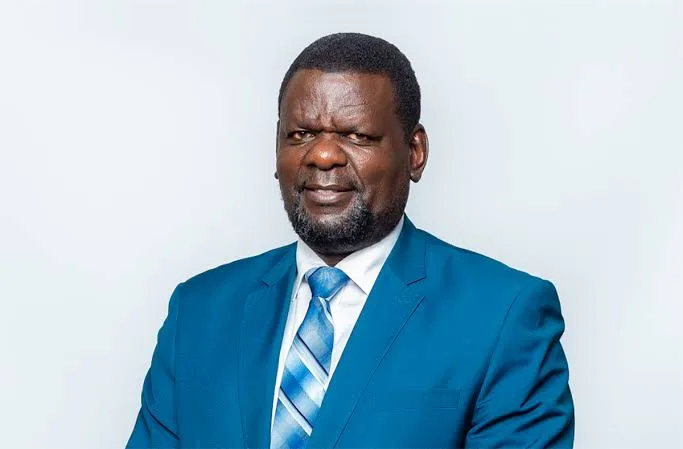
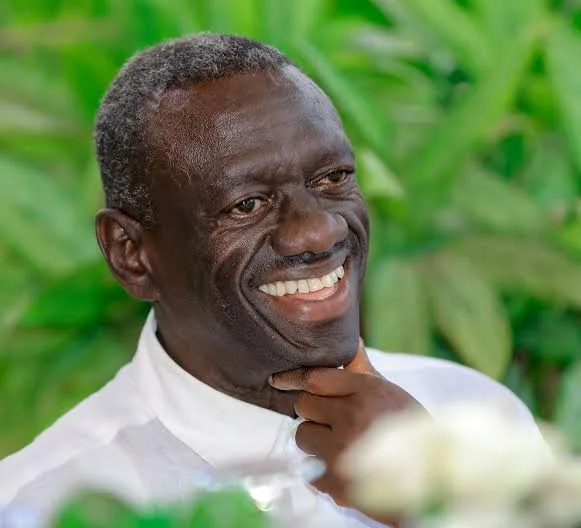
KACITA traders threaten shop closure over dispute with URA

YouTube
Feed attachment 1
1/2
5
Explore in Mind Map →
Collective leverage in KampalaLeads to →
Open post →

Both posts explore how ordinary Ugandans can wield collective economic power in downtown Kampala, whether through KACITA strikes or pooling 100K investments to buy City Square.

X
XKMato
1mo ago

How would it feel to own a piece of Kampala? Even if it is a very small piece worth, say, 100K. That 100K is going to be worth 1M in 10 years if, instead of keeping it in the bank, you buy a piece of City Square. I know how we can take back our land without any violence. I am going to show you all that our numbers are superior to their money. Like any other Ugandan with a dream, you have to play real estate on the side to survive. What if I brought the game to your phone?

Confronting Ugandan state powerLeads to →
Open post →

Provides broader political context on resisting abusive state power in Uganda, linking KACITA's independence from despotic patronage to collective action after the Egesa abduction.

X
XKMato
1w ago

The Egesa abduction doesn't make any sense at all. Power is a mental illness, and it is our collective responsibility to cure those afflicted by it. Otherwise, we shall all succumb to the disease in one way or another, either by getting infected or by being abused by those infected.

The hierarchical social order doesn't scale outside the nuclear family unless enforced with violence. But violence is quick to offer itself to serve, only for you to realize—shortly after accepting its service—that it was the master the whole time.

Why enforce a violent social order in a conflict-free society? How myopic do you have to be to believe that you're the first person to consider violence as a solution, or that despite all the other societies ruined by violence, you are the special one who will somehow be able to tame and subordinate it?

Dr. Besigye, perhaps the last man who genuinely believed in this country, is about to die in prison. Now that the people with guns feel entitled to harm anyone who speaks the truth about this country, what is left are imaginary lines dreamt up by white people at the Berlin Conference. What remains are words we used to call a constitution that no one believes mean anything anymore, and a collection of people who desperately need a leader to turn them into a society.

Society has to be composed in writing. Violence is for the weak in mind and heart. Let the children play with guns. The adults have to start the hard task of describing the Uganda they want their children to grow up in. And they have to do this in writing.

The colonial project has officially come to an end. If there are any of you out there who still believe in a Uganda, we have to get to work and start writing and discussing what exactly we mean by Uganda.

With the end of that project, the chains on our minds must break. You don't need anyone's permission to create. Do what thou wilt shall be the whole of the Law. Every man and every woman is a star. Love is the law, love under will.

Besigye's parallel refusal to kneelLeads to →
Open post →

Pairs KACITA's four-decade institutional refusal to bend the knee to Uganda's rulers with Kizza Besigye's personal refusal to compromise his values.

X
XKMato
1mo ago

In the end, I suppose there is no doubt that Kizza Besigye is the greatest Ugandan that has ever lived. The man just simply refused to compromise on his values. He went to the bush to fight for a Uganda he believed in. When he won the war, he put on his overalls and set out to build. Deep down, he knew that compromising on the Uganda he believed in was a betrayal of all the people whose lives were extremely inconvenienced by the war—especially the children who lost their parents to the war in one way or another and were now suffering poverty in the name of the dream to build a democratic Uganda. Perhaps it is that guilt that keeps him going. He knows his burden is nothing compared to all the pain the war caused others. So, he knows that the least he can do is insist on the promise of a democratic Uganda. Because that is what he fought and killed for, and if he doesn't deliver, what does that make him?

Besigye would later learn that he was just a pawn in a game of powerful men. And in response, he has refused to acknowledge those so-called powerful men. He will never stop fighting for the Uganda he promised the dead because he has already lost too much; nothing other than a democratic Uganda can pay him back.

He was raised Christian, and those stories of faith have a way of devoting a man to something. And for him, he is devoted to paying the debt.

God bless that man. He is the greatest Ugandan that has ever lived.

Feed attachment
Uganda's leadership gapLeads to →
Open post →

Connects the scrutiny of KACITA's leadership to Egesa's argument on the Uvotam Podcast that Uganda urgently needs to cultivate a serious elite class.

X
XKMato
4w ago

The wisest thing that I have heard in a while is that Uganda needs an elite class. This is something Egesa mentioned on the Uvotam Podcast. It is something so obvious that I still feel embarrassed for not thinking of it myself. But I worry that many who know this stop at wishing for such an elite class. A diagnosis is not a treatment. We need to intentionally start engineering this elite class into existence.

The best way is to start setting a standard for the level of conversation we consider elite-worthy. Either those who consider themselves elite but don't meet such a standard step up and learn something new, or they get demoted to play among Kasuku and his crew.

We have to solve the social capital problem in Uganda. Some of the conversations in public discourse are below par not because these guys are posers, but because there seems to be an incentive structure in place that rewards stupidity. As a result, even otherwise intelligent people have to act and sound stupid in order to cultivate the required attention they need to get their ideas across. We cannot allow a troop of monkeys to hijack public discourse just because their bar is so low that anyone with a bit of charisma can play the social capital game and pass for an elite.

https://xkmato.com/the-gish-gallop-chatterbox

NACOBA SACCO cooperative modelLeads to →
Open post →

Shifts from KACITA's trader unionism to the NACOBA SACCO Masterclass as another avenue for Ugandan cooperative solidarity and wealth-building.

X
XKMato
4w ago

On The NACOBA SACCO Masterclass

When we were growing up, we were told that if we save, we shall become rich. I remember as a child, I used to save my pocket money in my tin in the bedroom. Unlike most jazz on TikTok of people lending their mothers and them not paying back, my parents always paid back when they borrowed from my savings. I hadn’t been taught compound interest yet; otherwise, I would now be richer than Elon Musk and they’d be homeless. But it was just common wisdom that when one saved, one got rich.

In fact, the first person I heard on TV say that saving was for stupid people and clever people borrow was the former Kampala Mayor, Alhaj Nasser Ntege Ssebagala, Inna lillahi wa inna ilayhi raji'un. I remember it was a TV interview on NTV or WBS where the Mayor spoke so much broken English, I left the conversation even more sure that saving is for clever people and that it was Ssebagala that was stupid. I have since learnt that he was right. Ssebagala’s advantage in business was that he had survived indoctrination in school that taught us the kind of lazy and wrong advice about saving. The fact that he hadn’t gone to school—or if he had gone, he didn’t pay enough attention even to learn English—saved him from being poisoned with the false wisdom about saving.

But unfortunately, because Ssebagala never went to school, he also did not learn the required sophistication that one needed to thrive as a borrower. That is why he would later resort to politics as the last option to keep his businesses alive.

Below is a conversation about the Namilyango SACCO. It is quite an accomplishment. In the video, they talk about growing their members' investment from 4 million to more than 4 billion. While SACCO in full is Savings and Credit Cooperative Organization, savings is the keyword. This whole conversation, they are intentionally or maybe ignorantly using the word investment instead of saving. You see, they know that you, like me, might have eventually figured out that Ssebagala was right. Saving is bad for you. So they’ve cleverly decided to call their kibiina an investment group. The interest you receive on your savings is regulated by the same institution in charge of inflating your fiat money. So they can basically write a computer program that regulates inflation in the sense that your savings lose value over the 10 years you save them while the numbers in the bank increase. By this I mean that you can put 10 million in the kibiina yesterday when a liter of fuel costs 5k and get 20 million after 10 years when a liter of fuel costs 15k, and you will think you’ve made a profit off your money, but simple math shows that you would have lost about a third of your purchasing power (your 10 million bought 2,000 liters back then, while your 20 million buys only 1,333 liters today).

So that is why the SACCO claims to be an investment vehicle. They say that they will not keep your money in cash but will instead use it to buy land, government bonds, and other safe assets. But look at what actually happens: when a SACCO locks your money into a 10-year Treasury bond yielding 14%, Bank of Uganda and the commercial banks have already calibrated that yield to sit right around real inflation. You, the saver, take on all the illiquidity risk—your money is tied up for a decade while prices run away—while the state comfortably extracts the seigniorage. The problem is that if these so-called safe assets are not secret, and if the returns are predictable by any means, I assure you the person writing the computer program that adjusts inflation has included that information as a parameter within that program. Now I am not saying I know such a program exists, but it is so easy to create that it would instead be stupid for one to believe it doesn’t exist knowing how governments and central banks extract from the citizens. So any kind of safe asset should be considered a saving, and it will be considered by the central banks when adjusting interest rates for inflation.

So Alhaji Ssebagala would laugh at the idea of a SACCO. Obviously, being him, I am sure he would in fact start one and use it to run his businesses, if you know what I mean. As a Muganda, I don’t want to say bad things about the dead.

So the question is: What is an investment? My simple answer would be that you are making a bet off your knowledge today that only you have, no one else. It is a high-risk endeavor. If you know something about how the world works—say, you’re the one who has the Empewo of your family and the jajjas have told you that a drought is coming in 10 years—after the family meeting, sit the elders down and tell them what you dreamt. Then make a plan of how much money you’d need to import water pumps and pipes from China, and go borrow that money. Borrow as much of it as you can. Do not touch your own small cash when you can use other people's money to finance the vision; remember what Ssebagala said about who borrows and who saves. Then take your children out of university into a vocational school where they can learn how to do plumbing for irrigation, then start a hardware shop that sells plumbing equipment while you wait for your investment to ripen. Unless oli mufere, of course, and you don’t even have akawewo akalema.

The point being that if everyone is doing it, it is not an investment, it is a saving. And by design, you’re meant to lose money off your savings because the World Bank and other central banks have owners. How do you think their children will afford somersaulting cars? Who do you think is going to pay for all the children that have to be killed in Gaza? In order to consider something an investment, you have to take on some risk. And that risk is only informed risk if you’re basing it off rare or even secret knowledge.

If you only know what everyone else knows, get a job, enjoy your ka salary as much as you can. When a deal comes, steal, but remember to stay safe. If you’ve stolen enough, start a family, build an apartment block in Kyanja, and buy a second-hand Benz. Today, in fact, you should also consider buying yourself a second citizenship—I don’t know where, because it is hot everywhere. Listen to Kasuku and ensi jijeko amanyi, because your entire life is at the mercy of the powerful. And please, don't fall for those people who try to guilt-trip you into thinking you're financially irresponsible just because you haven't joined a SACCO. They said the exact same thing about saving back then, and when people realized it was a scam, they just changed their minds, rebranded it as an "investment," and carried on. Those SACCO things, they are just going to steal your money.

With all that said, if you have some unique insight about how the world works and you’re willing to bet long term on this knowledge, start recruiting your team. This is extremely hard because you have to figure out how to convince people that the Jajjas actually sit on your head. This Uganda is full of bafere, so you better know how to fake convincing miracles. Then live your life like you’re sure of the future you’re currently building. Start a business you’re willing to do forever. This is the only way you can become truly rich.

https://www.youtube.com/watch?v=VdNcsAWpe-A

YouTube
Sign in to communicate privately with the author