Skip to content
X
XKMato
Oct 5, 2026, 8:47 AM

How would it feel to own a piece of Kampala? Even if it is a very small piece worth, say, 100K. That 100K is going to be worth 1M in 10 years if, instead of keeping it in the bank, you buy a piece of City Square. I know how we can take back our land without any violence. I am going to show you all that our numbers are superior to their money. Like any other Ugandan with a dream, you have to play real estate on the side to survive. What if I brought the game to your phone?

20
Explore in Mind Map →
Buying back Kampala together← Connected from
Open post →

Offers a direct, nonviolent counter-strategy to foreign capital takeover: Ugandans collectively buying shares of Kampala real estate.

X
XKMato
2mo ago

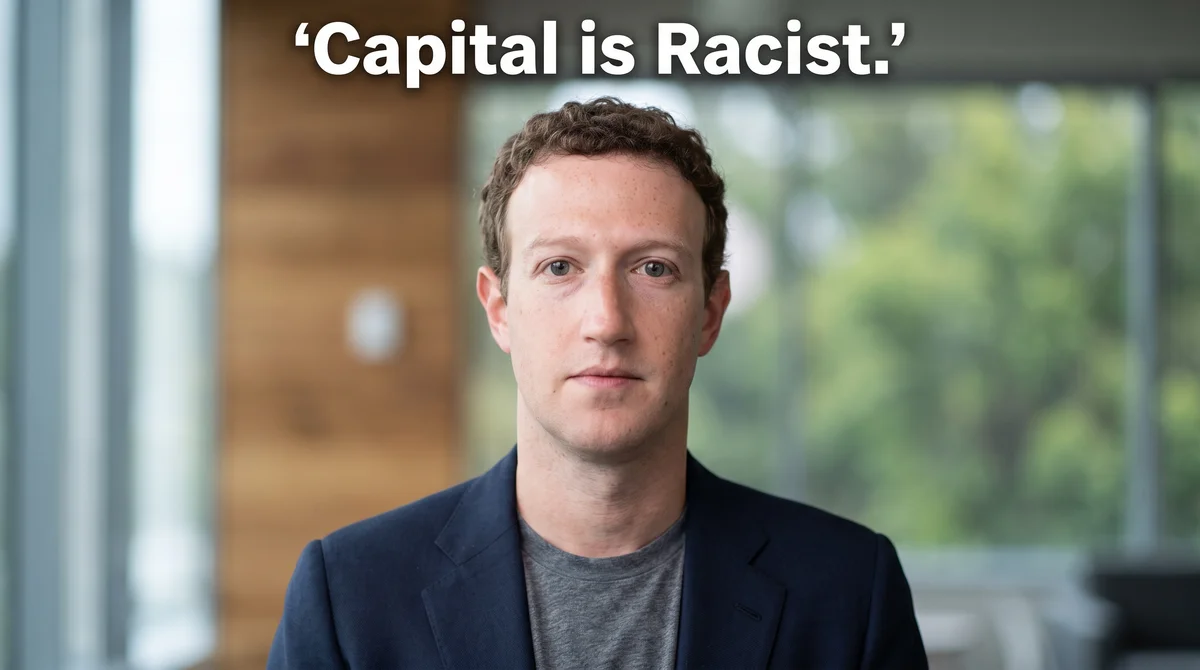
Capital is Racist

If we talk about the future in terms of time, it feels like it has nothing to do with us. If, say, you state a fact that at this rate, in 100 years 90% of Africa is going to be owned by less than 10% of the people living in Africa—most of which will be Western capital—that doesn't sound as important. After all, you have real problems right now. You need to buy milk for your children and jewelry for your wives. These are real problems that you can feel now now. And you're right.

But consider it rephrased: if in your 30s you're renting, or if all the land you own is a 50 by 100 or even an acre, chances are high that your children will be renting African land from white landlords. And your grandchildren will likely be homeless (if conservatives run America in those years) or will stay in mass dormitories (if Democrats run America in those years). This sounds absurd, but it will happen.

Capital optimizes for more capital. If that means killing all the wildlife, and reducing the rest of Africa into a kraal and maize plantation to grow capital, that will happen.

If you're working for your children, you have to start imagining the state of Africa by the time those children are your age. From where you stand, do you have a say in what that Africa will look like? Can you even genuinely predict what Africa will look like? If the answer is no, just know it is likely the same answer for your neighbors as well. So the follow-up question will be whom you've left the fate of Africa to, and whether you trust them.

Is your passivity today subjugating your own children and their children to eternal poverty? Are you the superstitious kind who thinks funny numbers and white-made acronyms like GDP, SDG, etc., have your Black children's best interests at heart? Don't you ever wonder why capital is more accessible to white people than it is to Black people? Here is an example in your lifetime: Mark Zuckerberg just wasted $80 billion to experiment with some thoughts that came to him in the shower. And let's not talk about all the money that white people are using to mass murder children in Gaza because we don't want to get into politics. It better if we pretend the world is not managed by politicians or that they care about their constituents. That is the kind of money that gives all the poor people in Uganda the capital and agency to take back the fate of their lives and the lives of their children. But Zuckerberg blew it, and guess what? He simply got richer.

The world we live in is made up of 10% white people, but somehow, 65% of the wealthiest people in this same world happen to be white. Either that skin comes with some magic intelligence that we cannot explain yet, or a simpler explanation is that capital is racist. It prefers white people.

Now, we can cure capital of this mental illness. We can wake these billionaires up to the reality that wasting $80 billion without consequences while people are starving in Uganda is not acceptable. And yes, that Bill Gates shit of using philanthropy like a PR stunt is also disgusting. But in order for us to make this case clearly, we need to first clarify our own dream, and insist that we take charge of what we dream of, what we desire, and how we want to get these things.

But if we pray to Jesus or Bill Gates and hope they have our best interests at heart, they will use that capital so that their grandchildren will own our grand children like their grandparents owned some of your grandparents.

Feed attachment
Pooling Ugandans' 100K investments← Connected from
Open post →

Applies cooperative SACCO-style thinking to Kampala real estate, proposing collective 100K micro-investments in City Square instead of bank saving.

X
XKMato
4w ago

On The NACOBA SACCO Masterclass

When we were growing up, we were told that if we save, we shall become rich. I remember as a child, I used to save my pocket money in my tin in the bedroom. Unlike most jazz on TikTok of people lending their mothers and them not paying back, my parents always paid back when they borrowed from my savings. I hadn’t been taught compound interest yet; otherwise, I would now be richer than Elon Musk and they’d be homeless. But it was just common wisdom that when one saved, one got rich.

In fact, the first person I heard on TV say that saving was for stupid people and clever people borrow was the former Kampala Mayor, Alhaj Nasser Ntege Ssebagala, Inna lillahi wa inna ilayhi raji'un. I remember it was a TV interview on NTV or WBS where the Mayor spoke so much broken English, I left the conversation even more sure that saving is for clever people and that it was Ssebagala that was stupid. I have since learnt that he was right. Ssebagala’s advantage in business was that he had survived indoctrination in school that taught us the kind of lazy and wrong advice about saving. The fact that he hadn’t gone to school—or if he had gone, he didn’t pay enough attention even to learn English—saved him from being poisoned with the false wisdom about saving.

But unfortunately, because Ssebagala never went to school, he also did not learn the required sophistication that one needed to thrive as a borrower. That is why he would later resort to politics as the last option to keep his businesses alive.

Below is a conversation about the Namilyango SACCO. It is quite an accomplishment. In the video, they talk about growing their members' investment from 4 million to more than 4 billion. While SACCO in full is Savings and Credit Cooperative Organization, savings is the keyword. This whole conversation, they are intentionally or maybe ignorantly using the word investment instead of saving. You see, they know that you, like me, might have eventually figured out that Ssebagala was right. Saving is bad for you. So they’ve cleverly decided to call their kibiina an investment group. The interest you receive on your savings is regulated by the same institution in charge of inflating your fiat money. So they can basically write a computer program that regulates inflation in the sense that your savings lose value over the 10 years you save them while the numbers in the bank increase. By this I mean that you can put 10 million in the kibiina yesterday when a liter of fuel costs 5k and get 20 million after 10 years when a liter of fuel costs 15k, and you will think you’ve made a profit off your money, but simple math shows that you would have lost about a third of your purchasing power (your 10 million bought 2,000 liters back then, while your 20 million buys only 1,333 liters today).

So that is why the SACCO claims to be an investment vehicle. They say that they will not keep your money in cash but will instead use it to buy land, government bonds, and other safe assets. But look at what actually happens: when a SACCO locks your money into a 10-year Treasury bond yielding 14%, Bank of Uganda and the commercial banks have already calibrated that yield to sit right around real inflation. You, the saver, take on all the illiquidity risk—your money is tied up for a decade while prices run away—while the state comfortably extracts the seigniorage. The problem is that if these so-called safe assets are not secret, and if the returns are predictable by any means, I assure you the person writing the computer program that adjusts inflation has included that information as a parameter within that program. Now I am not saying I know such a program exists, but it is so easy to create that it would instead be stupid for one to believe it doesn’t exist knowing how governments and central banks extract from the citizens. So any kind of safe asset should be considered a saving, and it will be considered by the central banks when adjusting interest rates for inflation.

So Alhaji Ssebagala would laugh at the idea of a SACCO. Obviously, being him, I am sure he would in fact start one and use it to run his businesses, if you know what I mean. As a Muganda, I don’t want to say bad things about the dead.

So the question is: What is an investment? My simple answer would be that you are making a bet off your knowledge today that only you have, no one else. It is a high-risk endeavor. If you know something about how the world works—say, you’re the one who has the Empewo of your family and the jajjas have told you that a drought is coming in 10 years—after the family meeting, sit the elders down and tell them what you dreamt. Then make a plan of how much money you’d need to import water pumps and pipes from China, and go borrow that money. Borrow as much of it as you can. Do not touch your own small cash when you can use other people's money to finance the vision; remember what Ssebagala said about who borrows and who saves. Then take your children out of university into a vocational school where they can learn how to do plumbing for irrigation, then start a hardware shop that sells plumbing equipment while you wait for your investment to ripen. Unless oli mufere, of course, and you don’t even have akawewo akalema.

The point being that if everyone is doing it, it is not an investment, it is a saving. And by design, you’re meant to lose money off your savings because the World Bank and other central banks have owners. How do you think their children will afford somersaulting cars? Who do you think is going to pay for all the children that have to be killed in Gaza? In order to consider something an investment, you have to take on some risk. And that risk is only informed risk if you’re basing it off rare or even secret knowledge.

If you only know what everyone else knows, get a job, enjoy your ka salary as much as you can. When a deal comes, steal, but remember to stay safe. If you’ve stolen enough, start a family, build an apartment block in Kyanja, and buy a second-hand Benz. Today, in fact, you should also consider buying yourself a second citizenship—I don’t know where, because it is hot everywhere. Listen to Kasuku and ensi jijeko amanyi, because your entire life is at the mercy of the powerful. And please, don't fall for those people who try to guilt-trip you into thinking you're financially irresponsible just because you haven't joined a SACCO. They said the exact same thing about saving back then, and when people realized it was a scam, they just changed their minds, rebranded it as an "investment," and carried on. Those SACCO things, they are just going to steal your money.

With all that said, if you have some unique insight about how the world works and you’re willing to bet long term on this knowledge, start recruiting your team. This is extremely hard because you have to figure out how to convince people that the Jajjas actually sit on your head. This Uganda is full of bafere, so you better know how to fake convincing miracles. Then live your life like you’re sure of the future you’re currently building. Start a business you’re willing to do forever. This is the only way you can become truly rich.

https://www.youtube.com/watch?v=VdNcsAWpe-A

YouTube
Pragmatic capital over rhetoricLeads to →
Open post →

Exemplifies disciplined economic execution by organizing tangible collective land ownership rather than airing passive political complaints.

X
XKMato
3mo ago

Genda Okole!

PDF cover
PDF5 pages

Read Document

Open Reader
Collective leverage in Kampala← Connected from
Open post →

Both posts explore how ordinary Ugandans can wield collective economic power in downtown Kampala, whether through KACITA strikes or pooling 100K investments to buy City Square.

X
XKMato
3d ago

On KACITA: Uganda cannot afford to lose the last independent union.

For four decades, KACITA has achieved something almost impossible in this country: you have managed to elude the despotic patronage of the state. The fact that you can still mobilize a collective shutdown of downtown Kampala today is a massive testament to your leadership. You are the last true union standing—the only society in Uganda capable of flourishing without bending the knee to the powers that be.

But as we watch shops close and traders abandon their merchandise at the ports, I want to express a deep frustration. Complaining to the URA about unfair taxes, demanding relief, and pleading for survival is a powerful statement, but it leaves the agency entirely in the hands of the taxman. You are waiting for a rigid, incompetent authority to suddenly become reasonable. They won't. In their scramble to hit political and revenue targets, they have resorted to using their power to exploit and extort the taxpayer.

It is time to take the agency out of URA’s hands and put it back into yours. KACITA must stop demanding better policies and start drafting them. You have as much data on trade practices in Uganda as the government does. You need to hire the most ruthless, competent policy consultants and draft a comprehensive, data-backed Shadow Tax Policy and lay it on the table. Tell URA and the Ministry of Finance: This is how the Ugandan businessman will be taxed.

First, KACITA must solve the valuation crisis. The taxman is either too lazy or too book-smart to appreciate real-market costs, so they slap impossible taxes on imports into a price that no one on the Ugandan market would ever pay. KACITA’s policy must propose a transparent Pre-Purchase Valuation Guarantee. A trader should know exactly how much they need in their pocket to pay import taxes before they ever ship an item from China. On top of this, KACITA must propose a streamlined, rapid appeals process so traders can easily challenge absurd valuations.

This ties directly into the glaring conflict of interest where URA bosses allegedly own the bonded warehouses that charge exorbitant import storage fees while valuations and payments are deliberately delayed. KACITA's policy must demand that warehouse ownership is completely opened to market competition. KACITA itself should invest in fairly priced warehouses to completely remove this corrupt incentive.

Second, your policy must ruthlessly close the "foreign investor" loophole. We are witnessing an obscenely vulgar political manipulation where foreigners are granted tax exemptions to outcompete locals. The central government may be attempting to repeat the colonial divide-and-conquer trick that forced Idi Amin to expel Indians from Uganda once upon a time. Or perhaps the government is simply scared of rich Ugandans; they would rather have rich foreigners with no political stake in the country and keep the Ugandans who actually have a political stake poor and manageable. While this is an approach expected of colonialists, I wouldn't think our government is willing to stoop this low—but they are abducting people for saying things everyone knows, so what do I know? KACITA must clearly define the legal difference between a foreign industrialist and a foreigner pretending to be an investor to hawk basic commodities downtown.

Finally, while KACITA should never become the tax enforcer, you must draft the Rules of Engagement for Enforcement. You must write the boundaries of what URA can and cannot do. Define a humane, flexible collection structure. Employees are taxed after they are paid; businesses should not be paralyzed by taxes before they can even sell their stock. There is no reason a businessman cannot owe the government for some time while operating the business to make the money needed to pay the tax. If KACITA drafts these enforcement rules, you can complain in advance if URA operates outside them or abuses them by inventing new rules in the future.

When the people meant to be managed by a policy are the ones who create and maintain it, you achieve harmony between the taxman and the taxpayer. Tax collection becomes a practice collectively owned by citizens, rather than a punishment for attempting to make money in Uganda. Stop begging them to fix a broken system, and hand them the blueprint for the new one.

KACITA traders threaten shop closure over dispute with URA

YouTube
Feed attachment 1
1/2
Builds parallel economic powerLeads to →
Open post →

Extends nonviolent financial strategy from starving corrupt networks to actively pooling grassroots capital.

X
XKMato
3mo ago

Bankrupt the corrupt!

Tools for financial sovereigntyLeads to →
Open post →

Pairs collective urban land acquisition with Bitcoin as pragmatic vehicles for grassroots economic self-determination.

X
XKMato
3mo ago

Buy Bitcoin today!

Grassroots Ugandan capital alternative← Connected from
Open post →

Offers a local alternative to misguided foreign tech experiments like Uber by pitching collective 100K micro-investing to buy back Kampala land.

X
XKMato
2mo ago

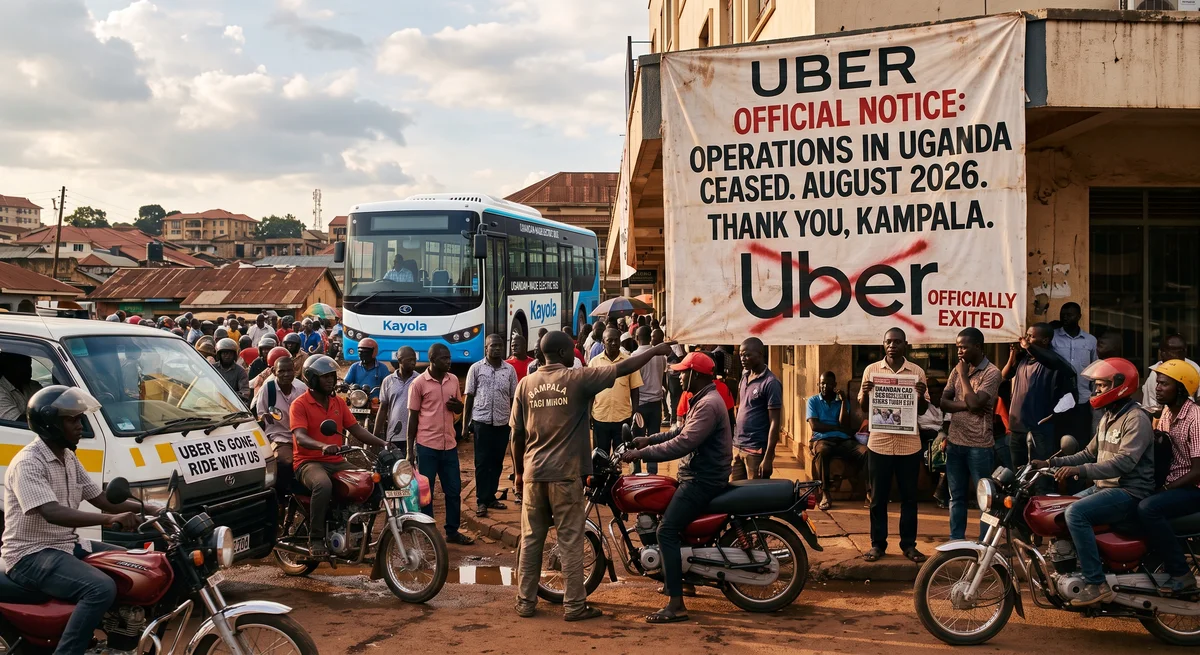
Uber came to Uganda about a month or so after I had launched one of my first startups, transprt.me. By that time, I had already decided that the carpool business was a no-go. If they had consulted me, they would not have had to experiment with all that money that could have fed the poor instead.


But since they are next to the money printer, they can waste any amount of resources with no consequences, and we also still pretend that what they're doing is capitalism.


Big Finance is feudalism. And unlike capitalism that rewards merit when well done, feudalism rewards violence.


The Asians, since the Indians woke up, have colonized the world with intelligence. Mostly through trade.


The Westerners have colonized the world with violence. Mostly through forced religion and education.


The Africans, were they to colonize the world, it would be through entertainment.


A capitalism that optimizes for intelligence is a meritocracy. A capitalism that optimizes for violence is feudalism. A capitalism that optimizes for entertainment is a home.


These printer people giving Uber money to waste, invest that money in Uvotam instead. Participate in this miracle. So that instead of telling people that you saw Jesus turning water into wine, you'll say, "Jesus and I used five small barley loaves of bread and two fish to feed the crowd."


Visit uvotamstudio.com

Feed attachment 1
1/3
Reclaiming physical Kampala land← Connected from
Open post →

Counters the bleak view of physical land control by proposing collective micro-investing to buy back Kampala's City Square without violence.

X
XKMato
3w ago

Slavery 2.0

Unlike the physical realm—where if one owns the land, that person almost owns the people on that land too. Look at what is happening in Gaza, for example, to see how control over physical land dictates the very fate of the people living on it. In the digital realm, however, the dynamic is different: the people actively create the real estate. We are the ones building value in the digital realm, yet the billionaires are moving in to enclose it.

Larry Ellison has just bought major pillars of media in America, but Americans, if they so choose, can start actively creating media outside Larry's empire. They are capable of creating entirely alternative sources of content so that Larry doesn't get the option to extract from them by artificially creating scarcity in the media space, because that is obviously the end goal.

Consider Elon Musk, too. While Larry is buying up the studios and infrastructure that create the actual content Americans consume, Musk is buying and building the infrastructure that transports that content. What Starlink is going to end up becoming is a global internet company that takes the power of internet censorship away from your bad government and puts it into the hands of Musk's empire.

This form of centralization is necessary to control the American and global mind, because if one man is in charge of all the content you consume and another man is in charge of how you consume that content, it is just a matter of time until those two men own you attention entirely and can tell you what is right to think and what is wrong to think.

Very soon, as is the case with land, you shall mysteriously struggle to communicate digitally when the feudalists manufacture an artificial digital scarcity. By that time, we shall be too dependent on their infrastructure to reasonably demand fairness.

Unfortunately, this is the all-too-familiar colonial game. They come and build a church. Then they build a school. Then they build a hospital. They build research centers, and you thank them for how wonderfully great they are as people. Then they kill your gods, and your children worship theirs. Then they set exams to extract the most compliant from your kind. Then they replace your healing practices with their medicine. Then they make your seed impotent and sell you their proprietary version. Then they call you poor because you need them to access God, to raise your children, to cure your sick, and to feed yourself.

They already use the digital realm to control how you think and feel about anything by tuning your attention at will. Imagine a world where they own all of your attention.

Welcome to Slavery 2.0!

Collectively buying back Kampala← Connected from
Open post →

Offers Ugandan youth a concrete way to take ownership of their country by pooling 100K micro-investments to buy urban Kampala land.

X
XKMato
2w ago

Ddamula: A Preparation for Leaving Your Parents’ House

In the end, our parents had the option of fixing this country, and this is the best they could do. It is not fair to say that they failed. I think, based on the information that they had, the lies they were told, and the promises that were made to them, were we in the same place as them, most of us would have made the same decisions. But that is also not to say that none of their decisions were motivated by fear. Especially fear for us. Most of our parents hated the thought of a future where they blamed themselves for any ill that happened to us. And so they moved with caution, which most of the time meant following advice from the authorities that they trusted. They shunned witchcraft. They prayed to Jesus. They laboured their days. They paid their taxes. They schooled their children. They spared a few moments to indulge in some decadence so they could cultivate the little pleasure they were allowed in this life.

The biggest mistake we can make is to follow their path blindly. It is okay for us to pray to Jesus as long as we don’t forget that the institutions that brought Jesus intended to weaponise Him to subjugate us. It is not Jesus’ fault, but we should not be naive. We should shun witchcraft, but let us not confuse our ancestors' ways, norms, and traditions with witchcraft. Any man who convinces you to call your ancestors evil is essentially calling you evil by birth. This is an insult, and you should not take it lightly. We should labour our days, but let us not get tricked into slavery. At least our ancestors had the decency to resist and had to be forced by the threat of death. We should not be too stupid to surrender ourselves into slavery willingly. We should pay our taxes and demand accountability from the taxman. Remember, we won’t be tricked into slavery—not to the foreigner, and not to the neighbour either. We should school our children, but let’s not cower into indoctrinating them into lies that we now know to be scams. But perhaps most importantly, joy and pleasure are not a reward for labour, or obedience, or morality, or any other actions taken. We should encourage our children to seek joy and pleasure as their natural birthright, and break down any systematic incentives that treat pleasure as a reward and pain as a punishment—systems designed to turn our children into tools that others can wield and use as they wish.

To escape this trap, we have to be brave enough to take the wheel from our parents. We should obviously seek their advice whenever we are lost. Seek their shelter whenever we are scared. Ground our dreams in their wisdom—without getting trapped in their nostalgia—whenever we are bored. We should respect and practice their rituals, polish them, and share them down the lineage to our children, and encourage them to share them down their lineage with their children too. This is how we ensure that they live forever through their descendants. But even with all that, we have to take autonomy over our life’s decisions. We have to pay attention to the world for ourselves, decide for ourselves what decisions make the most sense to us, and make them—even with the strong possibility that we may be wrong and have to suffer the consequences of these mistakes. Because the consequences for mistakes have to be suffered, even if those mistakes are made by someone else. We may find some comfort in blaming our parents in situations where we lazily inherited their decisions, but that is a slippery slope if our children inherit that vice from us. In moments when mistakes have been made, we need to be brave enough to look our children in the eyes, apologise, and let them know that had we known better, we would have decided better. But most importantly, we must let them know that at one point in their lives, they will make mistakes, and that mistakes are only life’s language of teaching us the way. We should listen to life and learn from them, but never define ourselves by the mistakes we’ve made, no matter how fatal or frequent they seem. The first lesson one can learn from any mistake is that everything that happens in life is simply a condition that one has to factor into their next decision. Living is just what one does one’s entire life. While there is no right or wrong way to live, there is a conscious, intentional, and responsible way to do it.

Therefore, sons should not inherit the fears of their fathers. Family is not a burden to worry about eternally. Family should be a home to find solace. A place to rest, converse, and play. Therefore, daughters should not inherit the tricks of their mothers. Don’t allow the fear of not being loved by your children to push you to manipulate and tame them into fearing you instead. Because while sons learn from their fathers how to lead and protect from the front, daughters learn from their mothers how to guide and love from behind. In a home, a father can show the way, but only a mother can get the children to take the way. Unlike providing and protecting, which are already institutionalised and teachable, guiding and loving are unique to each mother. Those insecurities we don’t want to face as parents will be inherited down the generations until, down the line, your descendants call them their identities, and not just mannerisms that their ancestors used to cope with their insecurities. The Baganda warn us of what happens when we don't pay attention: Omubbi azaala mubbi. Omutemu azaala mutemu. Omunafu azaala munafu… etc. Meaning that your unexamined vices are inherited by your children. Yet our ancestors also left us the cure. In fact, the practice of okukola Lubaale eri oyo Lubaale gw’abanja is designed to break that cycle—to make you aware of the insecurities that your ancestors' mannerisms covered, which you now consider part of your identity. Especially the identities that are obstructing you from living an intentional, conscious life that you can take full responsibility for.

This is the problem that currently stunts our country. With more than 75% of Ugandans under 30, it is likely that most of us are stuck worshipping our parents and aren’t awake to the fact that only we can live our lives. The country we are inheriting is the result of our parents living their lives. We cannot blame our parents for our shortcomings. That Western psychology, overemphasised in teenage movies, is also being weaponised to subjugate you. And we also cannot wait for our parents to tell us what to do. This country, as you see it, is the best they could do. Do we really want to settle for this? In fact, if you’re a Muganda man, at some point you’re old enough that the clan demands you find a wife outside the clan so that you can participate in growing the clan. At some point, we have to admit when we are too old for the nest and are ready to fly. You have to know when you’re too old for your parents’ family and are ready to start your own—to finally step forward, receive your Ddamula, and govern your own life.

Feed attachment
Escaping predatory financial intermediariesLeads to →
Open post →

Shows why keeping money in Ugandan banks and telco mobile-money monopolies drains ordinary citizens through state-backed rent extraction.

X
XKMato
1mo ago

Why the government doesn't own mobile money or provide a free(cheap) alternative, no one knows. They must be in bed with the telcos to steal from Ugandans in plain day light. Sending sms and updating entries in a database should not be this expensive in 2026.

Buy Kampala land instead← Connected from
Open post →

Provides a concrete antidote to bleeding money on mass entertainment by showing how micro-investing 100K in Kampala's City Square builds real wealth.

X
XKMato
3mo ago

People talk about wealth transfer, pointing to Wall Street and banking practices that unfairly take from the poor to fill the pockets of the rich. But I am coming to believe that mass entertainment is actually the biggest wealth transfer trap there currently is. I watched Odyssey twice in the cinema. The film was not bad; some could even fairly say it was a good film. But how can anyone justify spending $250 million on that picture? I know Ugandan directors who could make such a film (or an even better one) for less than $25 million. We have to talk about these Hollywood budgets, their impact on global culture, and whether they are just a sophisticated form of money laundering.


The biggest counterargument for why it is okay to make such a film is that it grossed almost a billion dollars, making it profitable for investors. Yet, in truth, more than $100 million was spent marketing it. A significant portion of that was poured into TikTok and other advertising platforms to create the illusion that everyone is watching the film, and therefore, it is important that you do, too. The consequence of such advertising is that many poor people will spend the little money they have to sit in a theater for two hours to consume mediocre wisdom that isn't even compatible with their environments.


Having the ability to spend huge sums of money to induce the masses—especially poor people—to hand over their cash is simply not right. Using the force of wealth to impose your culture on others is colonialism. This kind of scheme, whether pulled with Odyssey or other mass-marketed juggernauts like Coca-Cola and Drake, significantly widens the global wealth inequality gap. Just because it is doable doesn't mean it is acceptable. Paying influencers to pretend they enjoyed a film—or worse, paying them to convince themselves they enjoyed it—is a form of corruption. The guys at the the printer need to direct some of that money to Africans so that we can also grow our cultures. The fact that there are no laws against this kind of mass marketing doesn't mean it is right. Don't do it.

Feed attachment
Collective Kampala land alternative← Connected from
Open post →

Pairs digital monetary self-defense via Bitcoin with a tangible local wealth strategy: collective micro-investing in Kampala's City Square.

X
XKMato
3w ago

Buy Bitcoin

Shared community treasuries← Connected from
Open post →

MeAside's digital team treasuries echo the broader vision of Ugandans pooling micro-capital together for collective ownership.

X
XKMato
1mo ago

Official Press Announcement

Headline: A New Chapter for MeAside: From Pickup Matches to Persistent Teams, Tournaments, and Digital Treasuries

FOR IMMEDIATE RELEASE

Today, we are announcing a major evolution in MeAside’s mission. We are pivoting away from our original focus on ephemeral, radar-based pickup matches and pitch bookings to build the definitive competitive operating system for grassroots football.

While our initial focus helped players connect for casual, single-session kickabouts, grassroots football deserves much more than one-off games. Today’s players and organizers need real infrastructure to run clubs, raise funds, and compete in organized competitions.

What’s changing with MeAside 0.2.0:

  • From Ephemeral to Persistent Teams: Teams no longer disappear after match day. Players can now create, brand, and belong to multiple persistent squads with dedicated roles, member rosters, and team governance.
  • Competitive Tournaments & Leagues: We are moving beyond spontaneous pickup games. Organizers can host structured tournaments—complete with automated brackets, qualification rules, live fixture scheduling, and verified standings.
  • Transparent Team Treasuries & Prize Pools: Say goodbye to awkward cash collections and opaque finances. Every team gains a dedicated shared treasury powered by USDC, making it seamless to crowdfund kit purchases, split pitch fees, pay tournament entries, and receive guaranteed prize payouts automatically via secure escrow.
  • Frictionless Social Invites: The radar is gone—replaced by universal invite links that let captains recruit via WhatsApp, SMS, or social media in seconds.

MeAside is stepping into an entirely new arena: empowering local football communities with the tools, governance, and financial transparency of professional clubs.

Experience the new direction today at measide.com or update to the latest version of the app.

Owning Kampala land vs Bitcoin← Connected from
Open post →

Offers a tangible local parallel to Bitcoin accumulation: pooling micro-investments to buy back Kampala real estate instead of holding bank cash.

X
XKMato
1mo ago

Buy Bitcoin

Pooling capital for Kampala land← Connected from
Open post →

Applies the blend of capitalist ownership and collective numbers to micro-investing 100K shares to buy back Kampala's City Square.

X
XKMato
3mo ago

If I am to understand social democracy, its basically, what ideology do you hold yourself to and what ideology do you hold others to. It is the realization that the ultimate societal hack is an internal duality: you treat yourself as a capitalist, and you treat everyone else as a communist.
As an individual, society should actively encourage and reward you to embrace capitalism. You should be incentivized to strive, to earn your station, and to cache your labor into the tangible security of ownership. The prize for this pursuit is autonomy—the absolute freedom to dictate your own life and pursue your unique desires without living at the mercy of others.
But what happens when the capitalist runs out of luck, or simply chooses not to play the grueling game of free enterprise? This is where the external ideology kicks in. You treat others as communists, meaning there is absolutely no punishment for failing or opting to depend on the collective. Destitution and ruin are eradicated.
However, there is a fundamental trade-off. For those who opt out of the capitalist pursuit and rely fully on the community, society steps in to define the terms. The collective decides what labor they can reasonably provide (from each according to his ability) and dictates what provisions they require (to each according to his need). You surrender the boundless autonomy of the capitalist in exchange for the unbreakable security of the commune.

The brilliance of reframing social democracy this way is that it completely rewrites the engine of human motivation. Historically, pure capitalism relies heavily on the threat of poverty to compel labor. But in this duality, failure doesn't mean starvation; it just means a return to a baseline where your needs are managed for you until you are ready to strive again.


The result is a civilization driven by desires rather than compelled by fear. People work hard not because they are terrified of the abyss, but because they are irresistibly drawn toward the reward of self-determination.

The basic minimum needs can be food, water, shelter, clothing and healthcare. The basic minimum effort can be an hour a day of low effort work like data labelling and other simple human Human Intelligence Tasks.

Reclaiming urban land via micro-investing← Connected from
Open post →

Offers a market-based contrast to fiery land-reclamation politics by proposing Ugandans buy back Kampala Square collectively in 100K shares.

X
XKMato
5mo ago

Julius Malema!!

Shared Kampala land ownership← Connected from
Open post →

Counters destructive individual greed with a collective micro-investing model for Ugandans to co-own Kampala real estate.

X
XKMato
4mo ago

Omululu gulalula!

Kampala land vs bank savings← Connected from
Open post →

Proposes collective micro-investing in Kampala's City Square as another concrete alternative to leaving savings in a bank.

X
XKMato
2mo ago

Save your money as Bitcoin.

Nonviolent economic land reclamation← Connected from
Open post →

Contrasts political martyrdom with a nonviolent strategy for ordinary Ugandans to reclaim power by co-owning Kampala's City Square.

X
XKMato
3mo ago

The truth is that Besigye is incapable of being guilty of any crime against this country. Considering everything that has been done to him by the government since the beginning of the millennium with impunity and no consequences whatsoever, whatever he is being accused of—even at its worst fabrication—is a drop in the ocean of vengeance he is owed. Let the man go to Geneva and start a podcast with his son. Everything else is just drama. What kind of man entertains himself with the suffering of another? Ew!

Feed attachment
Africanizing the Network StateLeads to →
Open post →

Connects collective land reclamation via pooled capital to the decentralized governance ideas pitched at the Network State Conference.

X
XKMato
1mo ago

I have to admit, the guys at Network State Conference are pitching a future that I would love to live in. But they are so dull, unpoetic, or maybe just plain boring that sitting through an hour feels like the chair is made of nails.

Maybe they need to let in one or two Africans to give that shit some color. If you're working on some sort of network society, hala at me and we work together.

Sign in to communicate privately with the author