Skip to content
X
XKMato
Oct 7, 2026, 1:08 PM

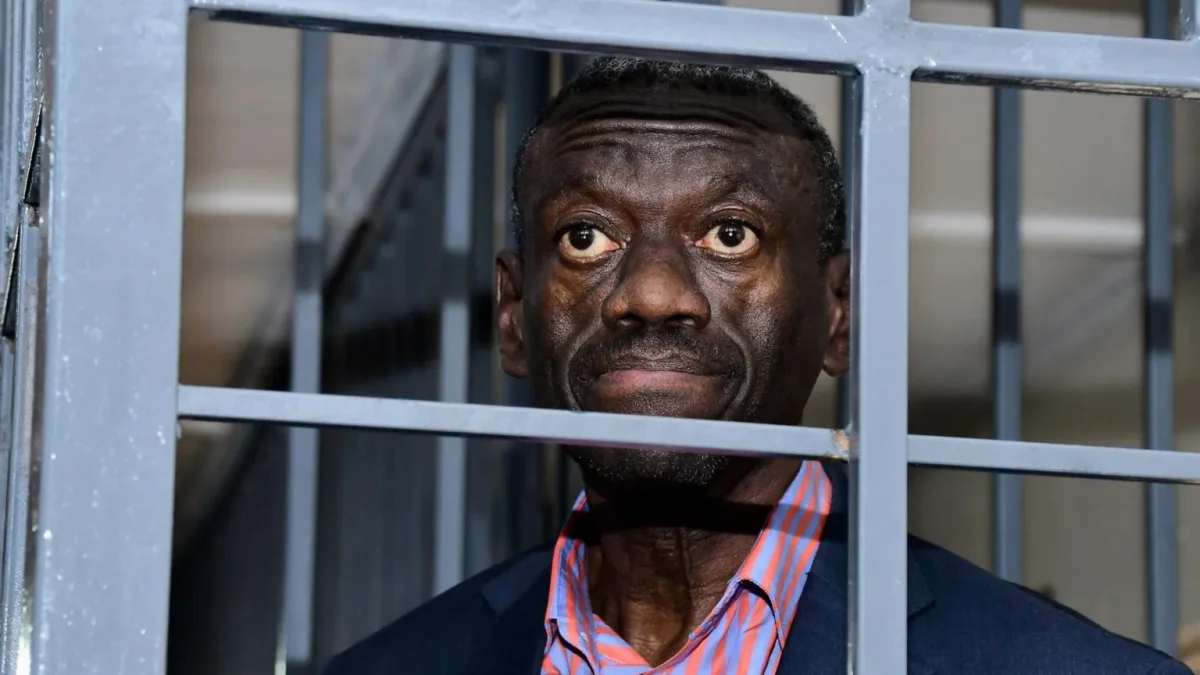
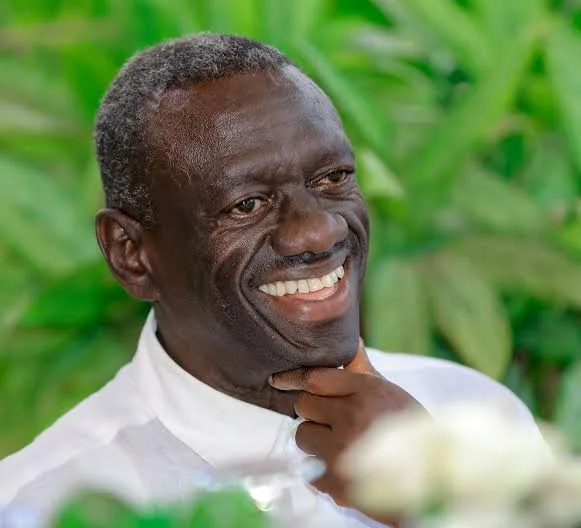
In the end, I suppose there is no doubt that Kizza Besigye is the greatest Ugandan that has ever lived. The man just simply refused to compromise on his values. He went to the bush to fight for a Uganda he believed in. When he won the war, he put on his overalls and set out to build. Deep down, he knew that compromising on the Uganda he believed in was a betrayal of all the people whose lives were extremely inconvenienced by the war—especially the children who lost their parents to the war in one way or another and were now suffering poverty in the name of the dream to build a democratic Uganda. Perhaps it is that guilt that keeps him going. He knows his burden is nothing compared to all the pain the war caused others. So, he knows that the least he can do is insist on the promise of a democratic Uganda. Because that is what he fought and killed for, and if he doesn't deliver, what does that make him?

Besigye would later learn that he was just a pawn in a game of powerful men. And in response, he has refused to acknowledge those so-called powerful men. He will never stop fighting for the Uganda he promised the dead because he has already lost too much; nothing other than a democratic Uganda can pay him back.

He was raised Christian, and those stories of faith have a way of devoting a man to something. And for him, he is devoted to paying the debt.

God bless that man. He is the greatest Ugandan that has ever lived.

Feed attachment
9
Explore in Mind Map →
Defines Besigye's core 'crime'Leads to →
Open post →

Elaborates on Besigye's heroism by framing his persecution as punishment for believing Uganda deserved democracy.

X
XKMato
3mo ago

Besigye's only crime is that he believed in his country. 

Condemns state treason chargesLeads to →
Open post →

Connects Besigye's historic integrity to the injustice of subjecting an elder statesman to fabricated treason charges.

X
XKMato
3mo ago

The truth is that Besigye is incapable of being guilty of any crime against this country. Considering everything that has been done to him by the government since the beginning of the millennium with impunity and no consequences whatsoever, whatever he is being accused of—even at its worst fabrication—is a drop in the ocean of vengeance he is owed. Let the man go to Geneva and start a podcast with his son. Everything else is just drama. What kind of man entertains himself with the suffering of another? Ew!

Feed attachment
Urgent plea for his freedomLeads to →
Open post →

Pairs a biographical tribute to Besigye with an immediate political demand for his release from detention.

X
XKMato
4mo ago

Ebilala mubikole naye free Besigye mwana. It is just not fair.

Uncompromising African opposition: Kizza Besigye← Connected from
Open post →

Pairs admiration for South Africa's Julius Malema with a tribute to Uganda's Kizza Besigye for refusing to compromise his political values.

X
XKMato
5mo ago

Julius Malema!!

State power as mental illnessLeads to →
Open post →

Examines the authoritarian pathology behind Uganda's political abductions that figures like Besigye and Egesa confront.

X
XKMato
1w ago

The Egesa abduction doesn't make any sense at all. Power is a mental illness, and it is our collective responsibility to cure those afflicted by it. Otherwise, we shall all succumb to the disease in one way or another, either by getting infected or by being abused by those infected.

The hierarchical social order doesn't scale outside the nuclear family unless enforced with violence. But violence is quick to offer itself to serve, only for you to realize—shortly after accepting its service—that it was the master the whole time.

Why enforce a violent social order in a conflict-free society? How myopic do you have to be to believe that you're the first person to consider violence as a solution, or that despite all the other societies ruined by violence, you are the special one who will somehow be able to tame and subordinate it?

Dr. Besigye, perhaps the last man who genuinely believed in this country, is about to die in prison. Now that the people with guns feel entitled to harm anyone who speaks the truth about this country, what is left are imaginary lines dreamt up by white people at the Berlin Conference. What remains are words we used to call a constitution that no one believes mean anything anymore, and a collection of people who desperately need a leader to turn them into a society.

Society has to be composed in writing. Violence is for the weak in mind and heart. Let the children play with guns. The adults have to start the hard task of describing the Uganda they want their children to grow up in. And they have to do this in writing.

The colonial project has officially come to an end. If there are any of you out there who still believe in a Uganda, we have to get to work and start writing and discussing what exactly we mean by Uganda.

With the end of that project, the chains on our minds must break. You don't need anyone's permission to create. Do what thou wilt shall be the whole of the Law. Every man and every woman is a star. Love is the law, love under will.

Besigye as warrior and builder← Connected from
Open post →

Offers Kizza Besigye as a living Ugandan embodiment of knowing when to fight in the bush as a warrior and when to put on overalls to build.

X
XKMato
2mo ago

Kabaka Mukasa


Some days, forbearing your debts is how you signal your strength
Other days, collecting your debts is how you signal your strength
Some days are better lived as a saint
Other days are better lived as a warrior
Some days a man shall turn the other cheek
Other days a man shall demand the other's cheek

The flower that blossoms in the bright beautiful sun
Shall never forget
The root that sank in the dull windy rain

To fight when strong is the way of the sadist
To forgive when weak is the way of the coward
To fight when weak is the way of the brave
To forgive when strong is the highest of human virtues

For the weak collects what he is owed by fighting
And the strong is owed even more when he forgives

This is a threat if you believe me weak
This is a pardon if you believe me strong

Feed attachment
Besigye's parallel refusal to kneel← Connected from
Open post →

Pairs KACITA's four-decade institutional refusal to bend the knee to Uganda's rulers with Kizza Besigye's personal refusal to compromise his values.

X
XKMato
3d ago

On KACITA: Uganda cannot afford to lose the last independent union.

For four decades, KACITA has achieved something almost impossible in this country: you have managed to elude the despotic patronage of the state. The fact that you can still mobilize a collective shutdown of downtown Kampala today is a massive testament to your leadership. You are the last true union standing—the only society in Uganda capable of flourishing without bending the knee to the powers that be.

But as we watch shops close and traders abandon their merchandise at the ports, I want to express a deep frustration. Complaining to the URA about unfair taxes, demanding relief, and pleading for survival is a powerful statement, but it leaves the agency entirely in the hands of the taxman. You are waiting for a rigid, incompetent authority to suddenly become reasonable. They won't. In their scramble to hit political and revenue targets, they have resorted to using their power to exploit and extort the taxpayer.

It is time to take the agency out of URA’s hands and put it back into yours. KACITA must stop demanding better policies and start drafting them. You have as much data on trade practices in Uganda as the government does. You need to hire the most ruthless, competent policy consultants and draft a comprehensive, data-backed Shadow Tax Policy and lay it on the table. Tell URA and the Ministry of Finance: This is how the Ugandan businessman will be taxed.

First, KACITA must solve the valuation crisis. The taxman is either too lazy or too book-smart to appreciate real-market costs, so they slap impossible taxes on imports into a price that no one on the Ugandan market would ever pay. KACITA’s policy must propose a transparent Pre-Purchase Valuation Guarantee. A trader should know exactly how much they need in their pocket to pay import taxes before they ever ship an item from China. On top of this, KACITA must propose a streamlined, rapid appeals process so traders can easily challenge absurd valuations.

This ties directly into the glaring conflict of interest where URA bosses allegedly own the bonded warehouses that charge exorbitant import storage fees while valuations and payments are deliberately delayed. KACITA's policy must demand that warehouse ownership is completely opened to market competition. KACITA itself should invest in fairly priced warehouses to completely remove this corrupt incentive.

Second, your policy must ruthlessly close the "foreign investor" loophole. We are witnessing an obscenely vulgar political manipulation where foreigners are granted tax exemptions to outcompete locals. The central government may be attempting to repeat the colonial divide-and-conquer trick that forced Idi Amin to expel Indians from Uganda once upon a time. Or perhaps the government is simply scared of rich Ugandans; they would rather have rich foreigners with no political stake in the country and keep the Ugandans who actually have a political stake poor and manageable. While this is an approach expected of colonialists, I wouldn't think our government is willing to stoop this low—but they are abducting people for saying things everyone knows, so what do I know? KACITA must clearly define the legal difference between a foreign industrialist and a foreigner pretending to be an investor to hawk basic commodities downtown.

Finally, while KACITA should never become the tax enforcer, you must draft the Rules of Engagement for Enforcement. You must write the boundaries of what URA can and cannot do. Define a humane, flexible collection structure. Employees are taxed after they are paid; businesses should not be paralyzed by taxes before they can even sell their stock. There is no reason a businessman cannot owe the government for some time while operating the business to make the money needed to pay the tax. If KACITA drafts these enforcement rules, you can complain in advance if URA operates outside them or abuses them by inventing new rules in the future.

When the people meant to be managed by a policy are the ones who create and maintain it, you achieve harmony between the taxman and the taxpayer. Tax collection becomes a practice collectively owned by citizens, rather than a punishment for attempting to make money in Uganda. Stop begging them to fix a broken system, and hand them the blueprint for the new one.

KACITA traders threaten shop closure over dispute with URA

YouTube
Feed attachment 1
1/2
Diagnosing the Uganda problemLeads to →
Open post →

Broadens from Besigye's personal struggle to a structural diagnosis with Egesa Ronald Leonard of Uganda's broken institutions.

X
XKMato
1mo ago

In the conversation below, I sit down with Egesa Ronald Leonard to talk about Uganda. While the conversation is not as focused or well-structured as one might hope—which is to be expected of first-time conversations—it still gives a clear sense of how Egesa and I diagnose the Uganda problem.

While I am of the religion that Uganda is one or more good systems away from becoming the paradise it was always meant to be, Egesa instead believes that it is the absence of quality values among Ugandans themselves that is stopping the country from operating at its optimum.

Egesa identifies and points out many major problems within Uganda. He shares behaviors and manners from other countries, like Japan, that differ from ours, and he believes this difference in values, behaviors, and mannerisms justifies the gap between Uganda and Japan. I am obviously oversimplifying; that is why you should listen to the conversation for yourself below.

While I wasn't able to express myself as clearly as I would have hoped in the video, the main point I wanted to make was that the values, behaviors, and mannerisms a society wants are engineered intentionally. They are built within a society using structures and systems that compel people (through reward, punishment, obstruction, ritual, etc.) until, over time, the people are so accustomed to those mannerisms that they simply consider them culture. I use the Ejembe analogy, which is a Baganda practice where families build systems and rituals that help protect them and make them prosperous.

The conversation is almost three hours long, but I highly recommend it. If you would like to see another conversation between Egesa and me, please make that clear in the comments.

https://www.youtube.com/watch?v=H9IKTVK4FV4

YouTube
Passing the torch to youthLeads to →
Open post →

Contrasts revering the bush-war generation's hero with forgiving older Ugandans' limits so youth can take ownership via Ddamula.

X
XKMato
2w ago

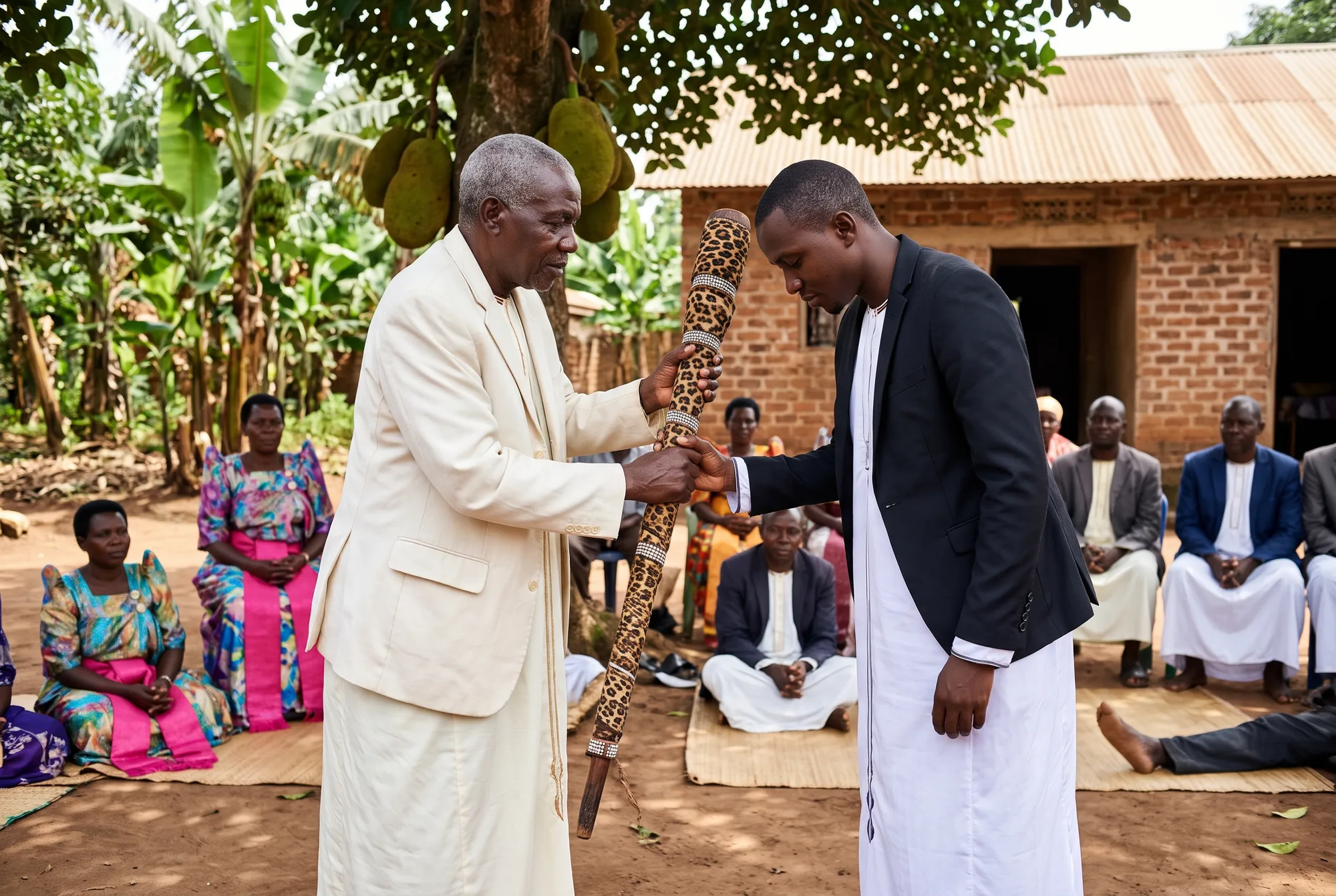
Ddamula: A Preparation for Leaving Your Parents’ House

In the end, our parents had the option of fixing this country, and this is the best they could do. It is not fair to say that they failed. I think, based on the information that they had, the lies they were told, and the promises that were made to them, were we in the same place as them, most of us would have made the same decisions. But that is also not to say that none of their decisions were motivated by fear. Especially fear for us. Most of our parents hated the thought of a future where they blamed themselves for any ill that happened to us. And so they moved with caution, which most of the time meant following advice from the authorities that they trusted. They shunned witchcraft. They prayed to Jesus. They laboured their days. They paid their taxes. They schooled their children. They spared a few moments to indulge in some decadence so they could cultivate the little pleasure they were allowed in this life.

The biggest mistake we can make is to follow their path blindly. It is okay for us to pray to Jesus as long as we don’t forget that the institutions that brought Jesus intended to weaponise Him to subjugate us. It is not Jesus’ fault, but we should not be naive. We should shun witchcraft, but let us not confuse our ancestors' ways, norms, and traditions with witchcraft. Any man who convinces you to call your ancestors evil is essentially calling you evil by birth. This is an insult, and you should not take it lightly. We should labour our days, but let us not get tricked into slavery. At least our ancestors had the decency to resist and had to be forced by the threat of death. We should not be too stupid to surrender ourselves into slavery willingly. We should pay our taxes and demand accountability from the taxman. Remember, we won’t be tricked into slavery—not to the foreigner, and not to the neighbour either. We should school our children, but let’s not cower into indoctrinating them into lies that we now know to be scams. But perhaps most importantly, joy and pleasure are not a reward for labour, or obedience, or morality, or any other actions taken. We should encourage our children to seek joy and pleasure as their natural birthright, and break down any systematic incentives that treat pleasure as a reward and pain as a punishment—systems designed to turn our children into tools that others can wield and use as they wish.

To escape this trap, we have to be brave enough to take the wheel from our parents. We should obviously seek their advice whenever we are lost. Seek their shelter whenever we are scared. Ground our dreams in their wisdom—without getting trapped in their nostalgia—whenever we are bored. We should respect and practice their rituals, polish them, and share them down the lineage to our children, and encourage them to share them down their lineage with their children too. This is how we ensure that they live forever through their descendants. But even with all that, we have to take autonomy over our life’s decisions. We have to pay attention to the world for ourselves, decide for ourselves what decisions make the most sense to us, and make them—even with the strong possibility that we may be wrong and have to suffer the consequences of these mistakes. Because the consequences for mistakes have to be suffered, even if those mistakes are made by someone else. We may find some comfort in blaming our parents in situations where we lazily inherited their decisions, but that is a slippery slope if our children inherit that vice from us. In moments when mistakes have been made, we need to be brave enough to look our children in the eyes, apologise, and let them know that had we known better, we would have decided better. But most importantly, we must let them know that at one point in their lives, they will make mistakes, and that mistakes are only life’s language of teaching us the way. We should listen to life and learn from them, but never define ourselves by the mistakes we’ve made, no matter how fatal or frequent they seem. The first lesson one can learn from any mistake is that everything that happens in life is simply a condition that one has to factor into their next decision. Living is just what one does one’s entire life. While there is no right or wrong way to live, there is a conscious, intentional, and responsible way to do it.

Therefore, sons should not inherit the fears of their fathers. Family is not a burden to worry about eternally. Family should be a home to find solace. A place to rest, converse, and play. Therefore, daughters should not inherit the tricks of their mothers. Don’t allow the fear of not being loved by your children to push you to manipulate and tame them into fearing you instead. Because while sons learn from their fathers how to lead and protect from the front, daughters learn from their mothers how to guide and love from behind. In a home, a father can show the way, but only a mother can get the children to take the way. Unlike providing and protecting, which are already institutionalised and teachable, guiding and loving are unique to each mother. Those insecurities we don’t want to face as parents will be inherited down the generations until, down the line, your descendants call them their identities, and not just mannerisms that their ancestors used to cope with their insecurities. The Baganda warn us of what happens when we don't pay attention: Omubbi azaala mubbi. Omutemu azaala mutemu. Omunafu azaala munafu… etc. Meaning that your unexamined vices are inherited by your children. Yet our ancestors also left us the cure. In fact, the practice of okukola Lubaale eri oyo Lubaale gw’abanja is designed to break that cycle—to make you aware of the insecurities that your ancestors' mannerisms covered, which you now consider part of your identity. Especially the identities that are obstructing you from living an intentional, conscious life that you can take full responsibility for.

This is the problem that currently stunts our country. With more than 75% of Ugandans under 30, it is likely that most of us are stuck worshipping our parents and aren’t awake to the fact that only we can live our lives. The country we are inheriting is the result of our parents living their lives. We cannot blame our parents for our shortcomings. That Western psychology, overemphasised in teenage movies, is also being weaponised to subjugate you. And we also cannot wait for our parents to tell us what to do. This country, as you see it, is the best they could do. Do we really want to settle for this? In fact, if you’re a Muganda man, at some point you’re old enough that the clan demands you find a wife outside the clan so that you can participate in growing the clan. At some point, we have to admit when we are too old for the nest and are ready to fly. You have to know when you’re too old for your parents’ family and are ready to start your own—to finally step forward, receive your Ddamula, and govern your own life.

Feed attachment
Sign in to communicate privately with the author