
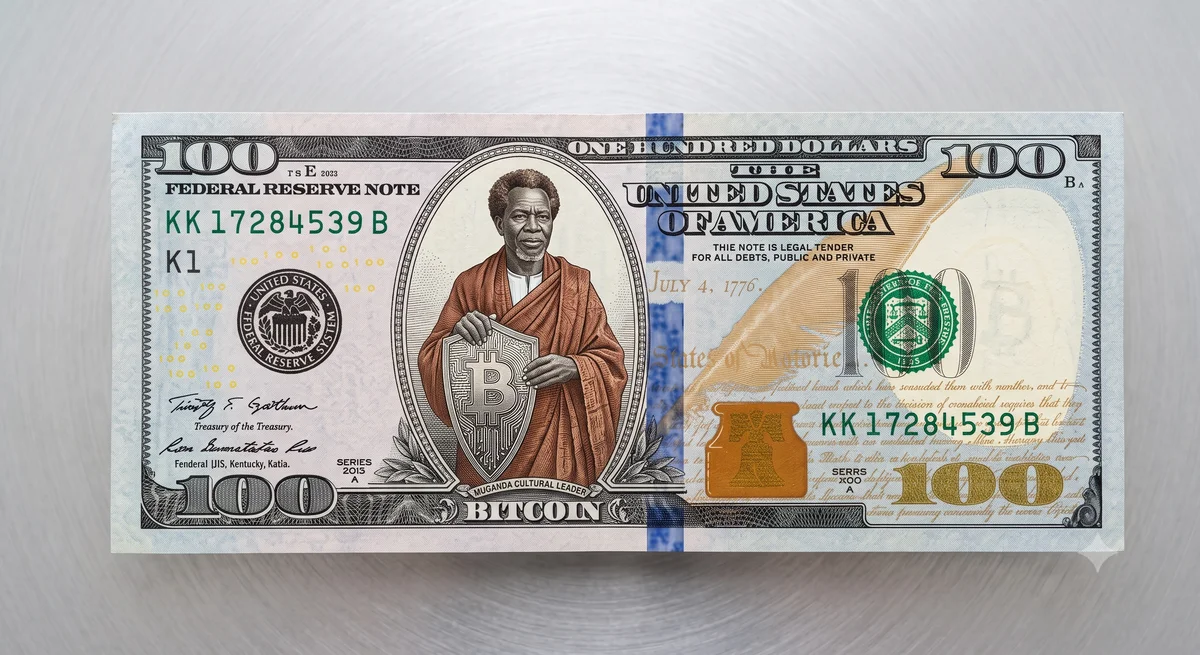
By default, when people—especially those with means—think about growth or scaling human potential, their imaginations tend to hit a wall. They instinctively defer to improving what we already know how to do. They seek out new knowledge or skills using the exact same methods we’ve always used, remaining deeply skeptical of entirely new systems for expanding human intelligence.
This lack of imagination is exactly why we are trapped in our current economic reality: a world where a massive portion of the global population has zero access to productive capital, while a tiny percentage hoards the vast majority of it. Whether the ultra-rich inherited their wealth, worked hard for it, or killed for it, their success highlights the fatal flaw of our current system: money is inherently, dangerously vulnerable to extreme concentration.
Historically, this one-dimensional system worked fine for our simpler ancestors. Back then, you could create immense value out of sophisticated storytelling and basic resource accumulation. But we are rapidly approaching an inflection point. As Artificial Intelligence becomes increasingly accessible, raw knowledge will eventually stop being an edge that one human can hold over another. When intelligence is commoditized by AI, the way we measure and distribute value must change—or the system will collapse.
The Problem with a One-Dimensional Metric for Growth
Today, we place astronomical valuations on individuals like Elon Musk. We assign him a net worth with so many zeros on the left that no human could ever realistically count it. We do this because we believe he commands a significant amount of elite human knowledge and action. Society has essentially decided that it is better overall for him to unilaterally utilize this massive concentration of capital as he sees fit, even if it means some drunk guy in Kigowa has to starve and suffer ulcers for his short life.
But Musk is not the only one in the business of accumulating elite human knowledge and action. Many other billionaires, politicians, warlords, and gurus operate in the exact same arena. The dark reality is that while Musk's approach might ostensibly benefit from a world of smarter, more productive people, many of his competitors actively prefer a world of poor and weak people. Why? Because keeping people desperate is the only approach they know to mobilize the human action required to scale their own power.
All of this systemic suffering stems from a single, foundational error: we have a one-dimensional way to measure human growth. We call it the dollar.
A man who needs a daily meal should never have to compete with Elon Musk for the same dollar. A man who needs life-saving medication should not be forced into the same economic arena as a man who wants to pimp out his Mitsubishi. Yet, our current system forces survival to bid against luxury.
The Illusion of National Currencies
You might argue that we don't just have the dollar; we have hundreds of national currencies. But this idea of nation-based fiat is just intentional ignorance. We all know that every global currency is, in one way or another, a derivative of the dollar. Politicians simply need to call their money by a different name so they can control how their constituents value it.
But what if we borrowed that exact trick and used it to actually serve humanity? Instead of the nation-state acting as the sole source of money, we could establish universally accepted but functionally restricted currencies for our most basic human needs.
The Solution: Horizontally Scaled Money
The solution is not to eradicate money entirely, but to scale it horizontally. We must eliminate the single dimension through which we force ourselves to measure all growth.
This is where the true promise of blockchain and cryptocurrency lies. Not the stablecoin scams. Not the speculative proof-of-stake nonsense. The real, untapped value of blockchain is its ability to serve as transparent, immutable ledgers designed to track growth across all imaginable human dimensions.
To truly grasp how a functionally restricted currency works, we have to unlearn everything the current system has taught us. Let's look at a prime example: Healthcoin.
Currently, the insurance industry is a predatory system where bankers get rich by scaring us about worst-case scenarios. You place a bet every month (your premium) that you might get sick, and the insurance company bets that you won't. If you stay healthy, they keep your money and get rich. If you get sick, they fight to deny your claim so they can still keep your money.
Healthcoin replaces this casino with a transparent, government-managed digital ledger. Here is exactly how it would work:
The Birthright: When a child is born, the government creates a digital "Health Wallet" tied directly to their identity. Into this wallet, the government deposits a baseline allowance of Healthcoins. Think of this like a digital gift card that never expires, but with a catch: it can only be swiped at a hospital, clinic, or pharmacy. Because the maximum cost of any medical event—even the most complex AI-assisted surgery—is legally capped at exactly 1 Healthcoin (charging only in fractions for lesser medical requirements), the government can easily calculate and issue enough to cover a normal human lifetime of standard medical care. You don't earn this baseline. You receive it simply for being human.
The "Buy, But Never Sell" Rule: What happens if you face a rare, chronic illness and actually run out of the Healthcoins you were given at birth? Or what if you simply want the peace of mind of having a massive surplus? You can always buy more Healthcoins, but you can never sell them. If you run out, you can take your "Competitive Dollars" (the regular money you earn from your career or business) and buy a Healthcoin. But the moment that Healthcoin enters your digital wallet, it is permanently locked to you. You cannot trade it for a car or groceries, and you cannot cash it back out. Because the coin has zero exchange value outside of a hospital, it becomes mathematically impossible to hoard it for financial gain. A billionaire could buy 10,000 Healthcoins, but all they have done is prepay for 10,000 hospital visits they will never need.
The Government Monopoly: To prevent this system from turning into a black market, one absolute rule is coded into the blockchain: you can only buy Healthcoins directly from the central government ledger. You cannot buy a Healthcoin from your neighbor, and your neighbor cannot sell one to you. If peer-to-peer transfers were allowed, a healthy 20-year-old would sell their essential Healthcoins to a sick, desperate person at a discount to buy a video game. Instantly, a secondary market emerges where survival is traded for luxury. By making the government the only authorized vendor, the coin is rendered completely untradable between citizens.
This creates True Health Equity. It guarantees that a person who needs life-saving medication never has to compete in the open market against a millionaire buying a yacht. If you only have 1 Healthcoin to your name, and Elon Musk has 1,000 Healthcoins, it doesn't matter. When you both walk into the hospital, your 1 Healthcoin buys the exact same tier of elite, AI-driven medical care as his. Wealth can no longer buy a higher tier of survival; it can only buy luxury.
The exact same ledger logic applies to Education, Food, Water, Shelter, and other services as society sees fit. By capping costs and restricting convertibility, speculation is structurally neutralized across all basic human needs.
For the luxurious and highly competitive world, we would still maintain a currency that behaves exactly like the current dollar. It would have unlimited hoarding value, meaning people could still strive to become super-rich, build empires, and fund massive vanity projects.
Solving Poverty and Unleashing Human Potential
This horizontally scaled monetary system solves poverty once and for all.
Under this model, governments provide every child born with the necessary basket of essential coins required to grow, learn, and live a comfortable life. Because these basic needs are secured from birth, that child can grow up and make a genuine choice. They can enter the competitive corporate world, dedicate their life to spiritual growth, or pursue sports and entertainment—all without the terrifying anxiety that choosing the "wrong" path will leave them structurally disadvantaged in the long run.
It levels the starting field. By securing a baseline threshold of survival, the future of our world becomes infinitely more diverse and "equal-ish." More importantly, with billions of humans freed from the daily grind of sheer survival, we make vastly more human bandwidth available to contribute to the general growth of human knowledge, action, and innovation.
When we stop forcing a few powerful individuals to dictate how the entire species should grow, and instead empower the whole of humanity to participate, we stand a much higher chance of achieving wholesome, multidimensional growth. The AI revolution will strip away our monopolies on knowledge; it's time we build a monetary system that reflects that new reality.
0 Comments