
What is the ultimate goal of Africa’s journey in the 21st century? Is it to create a “United States of Africa”—a single, monolithic power to rival China, Europe, and America? Or is it to cultivate a continent of distinct, self-confident peoples who cooperate from a position of cultural strength? This is the fundamental question of our time, and the answer we choose will define our future.
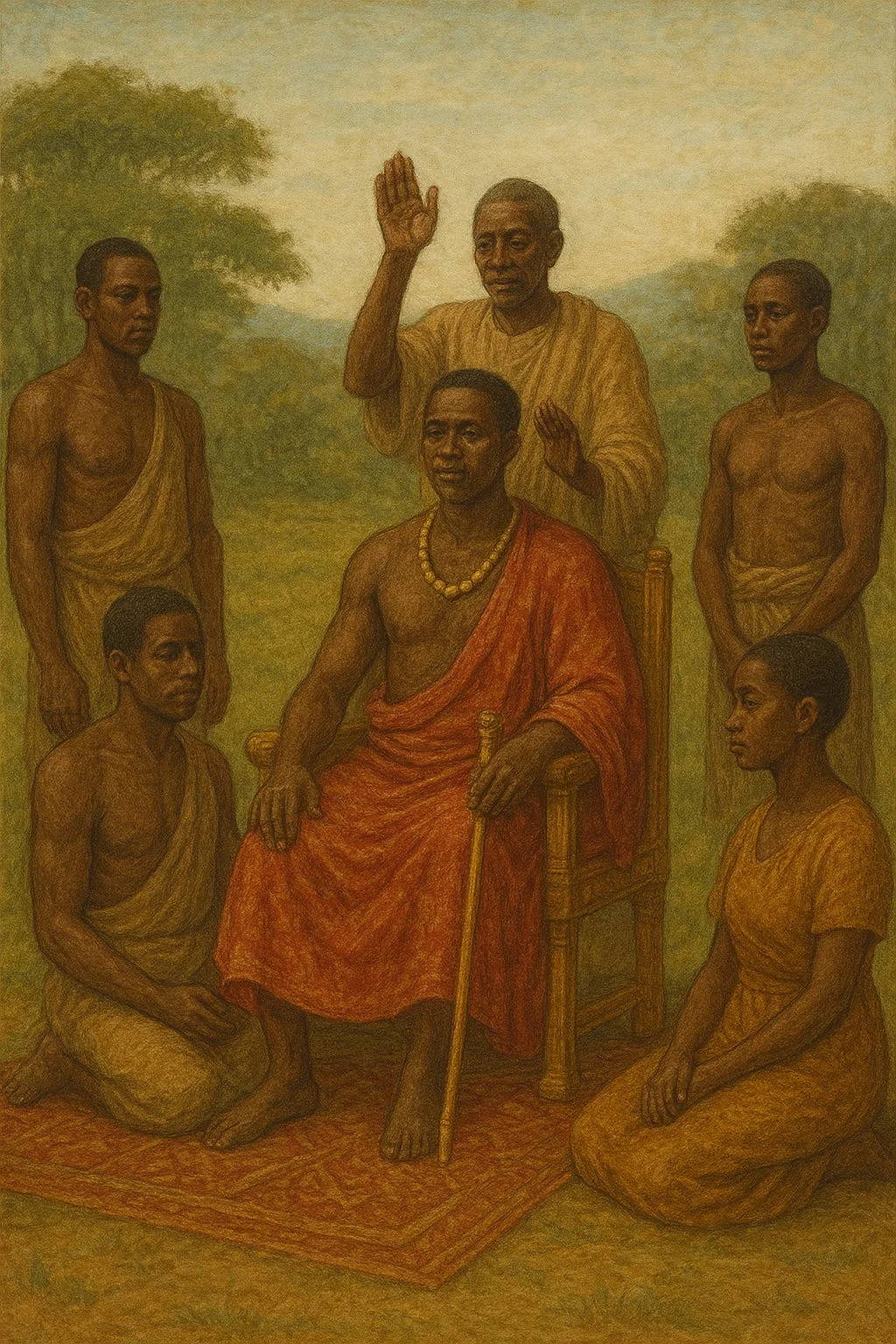
The case for the former was made with passion recently by Major General Kahinda Otafiire at Makerere University. He argued that identities like “Ugandan” or any other tribal affiliation are cages, and that liberation lies in adopting a singular “African” identity. While his diagnosis of the continent’s challenges is sharp, his prescription is a poison pill. It is a philosophy of reduction, born of fear, that tragically mimics the very Eurocentric model of unity that justified colonialism itself. This article will propose an alternative: a creationary path based not on coercive unity, but on voluntary cooperation; not on erasing our differences, but on harnessing them as our greatest asset.
This vision of a monolithic “Africa” is not an indigenous political philosophy; it is the unquestioned intellectual inheritance of a Eurocentric model obsessed with a singular foundation for everything. For centuries, the dominant strain of Western thought has been a project of reductionism—the search for the one thing that explains everything else. It sought the one God (monotheism), the one indivisible particle (the atom), the one code (the gene), and the one universal value (money). The logical political endpoint of this worldview is the nation-state, a unified entity that seeks to dissolve internal differences in favor of a single, manageable identity. This philosophy of “conversion” demands that everything must fit into a pre-defined box, and that which does not fit is deemed abnormal, backward, or an obstacle to progress.
The fundamental difference between this imported model and a truly African one lies in its animating spirit: fear versus love. Fear animates us according to our aversions, while love animates us according to our desires. The call for Pan-African unity has almost always been a project of fear. It is a reaction to the threat of colonialism, a fear of neocolonial exploitation, and a fear of global irrelevance. It is a philosophy defined by what it is against. A framework built on love, conversely, is creationary. It starts by appreciating what already exists—the dazzling and complex mosaic of African peoples, languages, and cultures—and asks, “What can we build from this abundance?” instead of “What must we destroy to protect ourselves?”
We don’t have to guess where the path of fearful imitation leads. The world is filled with cautionary tales of nations that traded their souls for a seat at the global table. Look to the profound social malaise and depression in Japan and South Korea, or the passive consumerism and lack of agency in the Gulf states. These are societies that generate excellent statistics for a Steven Pinker book—high literacy, low violence, rising GDP—but have lost a core sense of self-determination in the process. They became second-class versions of a Western ideal, not first-class versions of themselves. This is the ultimate price of reductive unity: you become a well-managed resource, not a self-willed people.
Perhaps the most damning indictment of this model, however, is what it would mean in practice on our continent. African leaders have, for the most part, failed to peacefully unite the smaller countries they govern, often resorting to violence and coercion to manufacture a fragile national identity. To believe that this same political class can create a just and voluntary continental union is a dangerous fantasy. The Pan-Africanism being sold to us is not a grand project of liberation; it is the domestic policy of coercion and erasure, magnified to a continental scale.
If the Eurocentric model of monolithic unity is a dead end, the alternative is not a new or better form of unity, but a radical shift in perspective: from unification to cooperation. This is the creationary path, the framework built on love. It does not begin by asking which parts of ourselves we must amputate to fit into a global order. Instead, it begins with a deep appreciation of what is already here and asks, “How can we connect these vibrant realities to create something even stronger?” A unified Africa is a brittle monolith; a cooperative Africa is a resilient and intricate network.
To achieve this, we must embrace a powerful paradox: we will need to divide more to cooperate better. This is not a call for conflict, but a recognition that many of Africa’s most violent struggles have been caused by the forced unity of disparate peoples within arbitrary colonial borders. This forced cohabitation creates a zero-sum game where ethnic groups must fight for control of a centralized state, fearing that to lose is to be erased. True cooperation is only possible between entities that are secure in their own identity and sovereignty. By allowing for greater autonomy and the flourishing of more organic political units, we create stable partners who can engage with each other voluntarily, based on mutual interest and respect, rather than internal rivals trapped in a state they do not fully claim.
What does this cooperation look like in practice? It is not a distant dream; its seeds are already present.
Economically, it means strengthening and expanding regional blocs like the AfCFTA (African Continental Free Trade Area), not as a precursor to political union, but as a framework for sovereign partners to trade freely, build shared infrastructure like railways and energy grids, and negotiate with the world as a coordinated economic force.
Technologically, it means learning the most vital lesson from modern China: selectively adopting what works without importing the underlying ideology. African nations can cooperate on research in AI, agriculture, and medicine, sharing knowledge and investment to solve common problems without needing to share a flag. We can build a digital Africa on our own terms.
Culturally, it means investing in programs that celebrate our differences. Instead of searching for a single “African” story, we should fund translations between our languages, promote cross-continental artist residencies, and reform our education systems to teach the history of our neighbors with the same seriousness we give our own.
Ultimately, this is a call for a profound shift in mindset. It requires us to stop behaving like children seeking a simple label to give us meaning in the eyes of others. Africa does not need to become African; it is Africa, in all its glorious, contradictory, and complex splendor. The task is to stop trying to engineer a new identity and start observing, understanding, and connecting the realities that exist. This is the mature work of self-determination: to build a future not on a fearful reaction to the outside world, but on the loving and courageous embrace of ourselves.
The path for Africa’s future forks here, presenting a choice not between weakness and strength, but between two profoundly different ideas of what strength is. On one side lies the familiar dream of monolithic unity—a continent melted down and recast into a single entity to compete on a global stage. It is a path of reaction, of fear, and ultimately, of imitation.
But this path comes at an unacceptable cost. The creation of a singular “African” identity demands the slow erasure of the Baganda, the Igbo, the Shona, and the thousands of other peoples who are the continent’s lifeblood. It is to finally complete the colonial project for them. If we allow the Eurocentric model to violently manipulate us into this hollow form, we are allowing it to create an African in its own image. And as their own foundational book warns, to be made in another’s image is to accept them as your god.
The other path is one of creation. It requires the courage not to unify, but to cooperate; not to assimilate, but to appreciate. It begins with the simple, revolutionary act of seeing ourselves clearly and recognizing that our diversity is not a problem to be solved, but the very source of our genius. A rope woven from a thousand different threads is infinitely stronger than any single, solid bar. Let us choose to weave.
0 Comments