Jajja Bulamu: Plastics is an existential threat to the poor African.
Either building wealth or micro plastics will be the existential threat to the poor... and right now, the plastics are winning the race.
Listen to me, you are poor. Your poverty is exactly what makes you the prime target for a slow, invisible slaughter. You spend all day stressing about rent, school fees, and making it to tomorrow, completely blind to the fact that the very things keeping you alive are quietly filling your veins with toxic sludge.
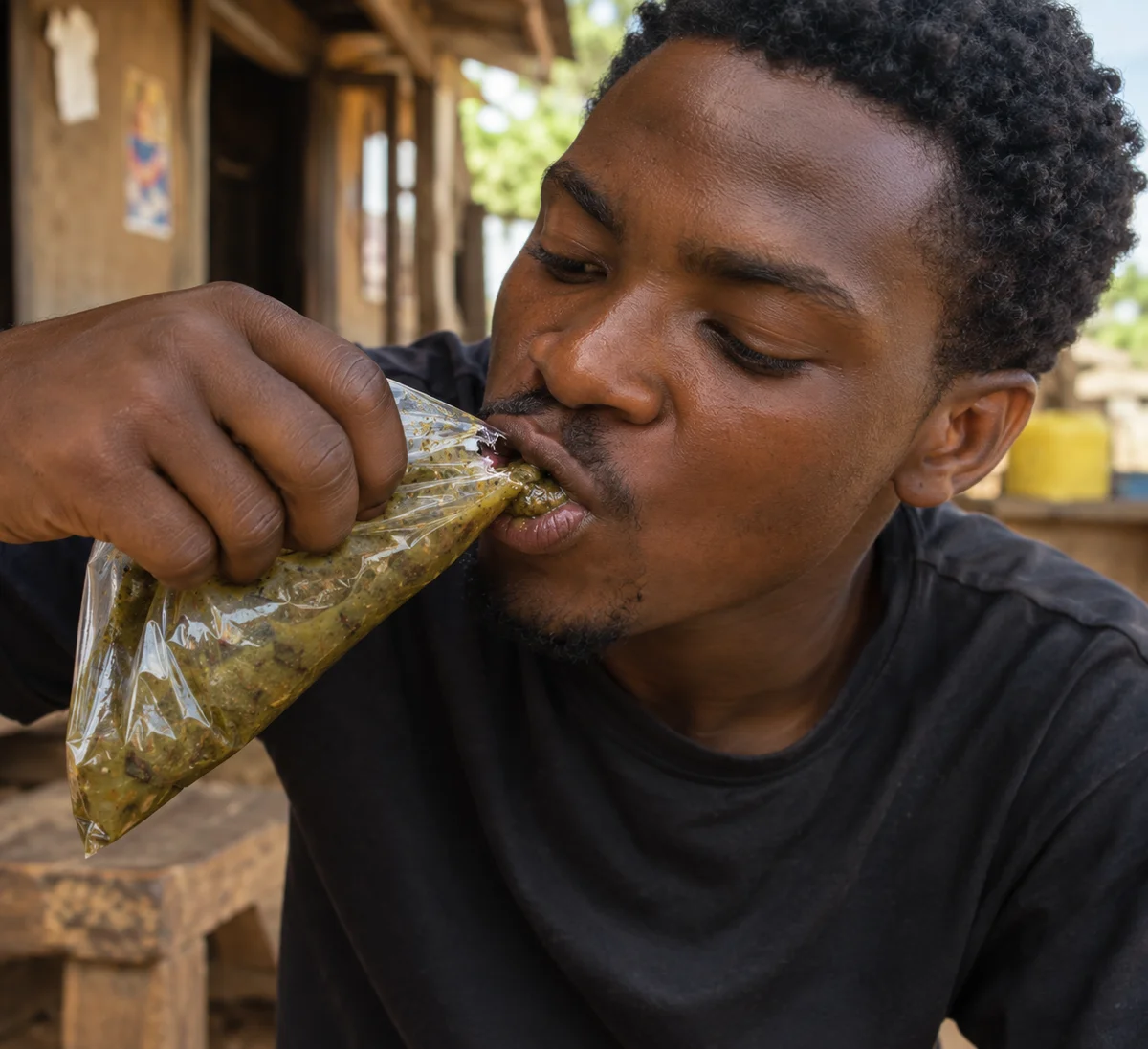
Take your daily hustle as an urban worker in Kampala. You’ve been sweating in the dust all morning, and by 2 PM, you finally scrape together just enough coins for lunch. You buy hot kikomando—steaming beans and chopped chapati—and the vendor scoops it directly into a cheap, flimsy kaveera (polythene bag). You tie it up, bite off the corner, and squeeze the food into your mouth to keep moving.
The heat from those boiling beans instantly leaches invisible, toxic chemical layers from that cheap plastic directly into your food. You swallow it, and your digestive system goes to work. But stomach acid cannot dissolve plastic. Instead, those microscopic shards—nanoplastics—pierce right through the delicate lining of your gut. They slip past your cellular defenses like microscopic shrapnel.
Once they break through, they drop directly into your bloodstream. They hitch a ride alongside your red blood cells, pumping through your liver, your lungs, and your heart. Slowly, day by day, they lodge themselves into the plaque of your arteries, hardening into a synthetic wall just waiting to trigger a massive stroke or a heart attack before you even hit fifty.
We used to think smoking was the ultimate slow killer. This is worse. It is vastly more fatal for one simple reason: you can choose not to light a cigarette, but you cannot choose not to eat.
This crisis is almost entirely out of hand. The rich are already pivoting. They can afford to buy their way out of the fallout with glass food containers, organic cotton clothing, and expensive reverse-osmosis water filters. But you? Your entire survival—your cheap synthetic shirts, your water tied in nylon pouches, your hot street food—is wrapped, served, and consumed in plastic because it is all you can afford.
This is a death sentence. You are becoming the plastic.