Skip to content
X
XKMato
Sep 29, 2026, 9:36 AM

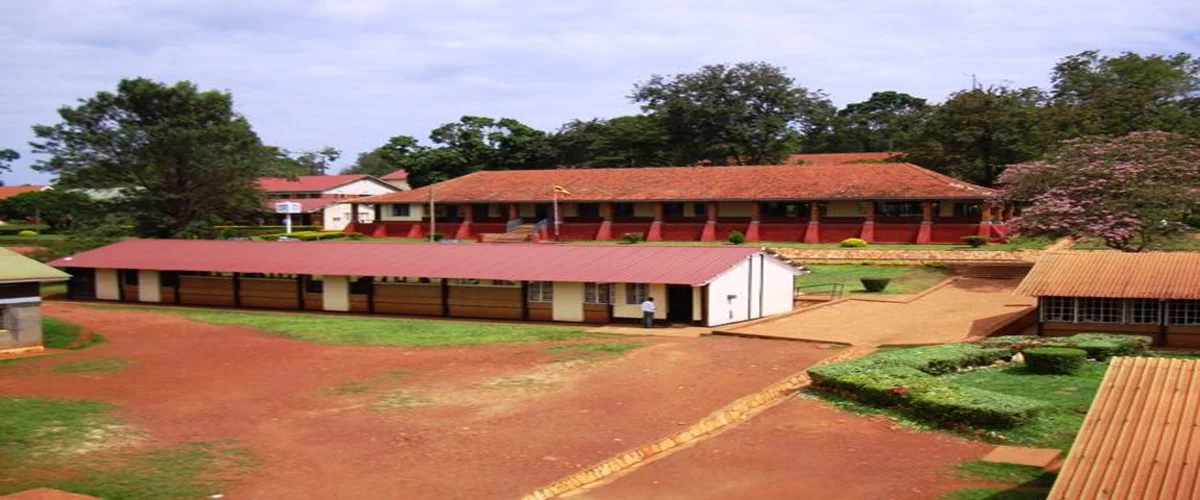
When I joined Jinja College, the Head Prefect at the time was a respectable character. I remember he used to bend slightly, cross his left arm against his belly, hold his books in the other arm, and march. Okay, now that I remember this, I realize the guy took himself too seriously, but that guy really commanded respect. If you wanted to go to town on a Saturday, all you had to do was ask a teacher for permission. The teachers trusted you to come back. My father only drove me to school the first term of S1. The rest of my time there, I commuted to school on my own. In fact, the only other time he came back to school is when Mr. Kawuki expelled me for talking during prep time. That guy ruined my TikTok career. I would be competing with Kasuku right now for gossip.

My point, anyway, is that we were mature at 13. In fact, the stories of the Form Aboves were also stories of a free school that is contracting into a prison every day. They would reminisce about how much free time they had in school. How once upon a time, they were allowed to have radios in school. About sosh. They made us wish we had joined Jinja College earlier.

When I left Jico, I went to Namirembe Hillside, the dystopia of education. For a person from Jico, I could not believe that that place qualified to be called a school. The whole thing was a bunch of buildings on a 50 by 100. Okay, maybe a little bit bigger. But you'd still need only like two or so steps from your class to your dormitory. There was a fene tree in the middle of the football pitch that also doubled as the school ground and parking. It had never seen grass. The basketball court too was kataka marked with charcoal. But the most shocking thing about Namirembe Hillside for an OB of Jico was the fact that they caned students. Imagine caning the HP that I described earlier. That school, my guy, was a prison. It was the place that parents who wanted to outsource parenting took their children to be herded. But despite all that, it took more children to Makerere University than Jinja College. And that is the only metric that mattered to both the teachers and the parents.

So it is not surprising that today, children in Jico are even required to wear after-class uniforms. They are not trusted enough to even be allowed to look different. I imagine they even started caning students. They are not allowed out of school unless they're sick. They are not allowed phones or even radios. They are forced to wake up at 5 am and stay up until 10 pm to memorize the thoughts of better men than them. They are in a prison or a kraal. It is hard to tell the difference these days.

School is suffering from a measurement problem. The metrics set by Makerere University, the government, and other stakeholders are reducing schools into certificate-minting industries. We are no longer teaching, training, or raising children. We are optimizing them for exams. The student that comes out of Jinja College today isn't human enough to live in the real world; he has been reduced to an exam-passing body.

But Makerere University as well is regressing. At this rate, in 5 years, they will require a uniform.

Even worse, when a former student has magically survived the system and resisted the procrastination of doing PhDs and whatnot, the real world doesn't welcome them. Our parents have refused to retire. They are still doing jobs they got in their 40s while in their 80s. So there are no jobs for us. And even us, if we follow suit and are lucky to get our parents' jobs when we are 50, there will be no jobs for our children until they're 100. And I hate jobs personally; having no job is not the worst thing in the world, but the bigger picture I am trying to paint is our regression as a species. We are staying as children for the majority of our lives. Most of us, especially from rich families, live and die without ever taking on responsibility because we are still eating from our fathers' plates. For most of you, the only risk you've ever taken in your lives is betting on Arsenal to beat Manchester United—which, by the way, Arsenal will win by 3 goals on December 19th just FYI. We have built an education system that has infantilized the whole nation. We don't have adults. 18 is not just the age you're supposed to start sending nudes, drinking beer, or voting; it is when you are legally an adult. But if you're being honest with yourself, would you trust your 18-year-old daughter to go to Mombasa and clear your new car? Chances are that you're raising an 18-year-old child. And it is not your fault. Everyone else is. And the problem starts with school.

This nationwide infantilization is exactly why when one reads Steven Pinker's books about how there is progress, one feels like stoning Pinker to death. Don't cherry-pick the things that have grown and pretend that the things that haven't don't exist just because they are harder for you to measure. That positive-thinking evangelical mindset of Steven Pinker is what atheists like Steven Pinker would call a mental illness.

This whole post was supposed to be a small motivational thing about asking parents and teachers to trust their children and students a little more. To allow them to take a bit more risk. To indulge them a little bit more. To listen to them a bit more. Those kids know more than what they are capable of skillfully expressing, and if you cap them to what you know, you're going to mentally cripple them. In fact, the one main thing where Zohran and I disagree is on removing AI from school. The kids are going to be fine. Allow the kids to grow up in the world they will actually live in.

Feed attachment
5
Explore in Mind Map →
Reexamines Ugandan boarding school legacyLeads to →
Open post →

Nuances an earlier critique of Ugandan boarding school institutionalization by highlighting the peer autonomy and resilience it unexpectedly forged.

X
XKMato
3mo ago

If you look at Oscar-winning films or study the Western giants of clinical psychology—like Freud, Jung, or Bowlby—you'll notice one recurring obsession: everything traces back to the parents. It is almost a given that the true origin story of the human psyche, and by extension our most complex villains, is simply a reaction to parenting or "daddy issues."


But applying this strictly Western model to Uganda misses a profound cultural reality.


For a massive demographic of Ugandans—especially the ones who grew up to become today's corporate leaders, politicians, and elites—childhood was not spent on a couch at home. It was spent in a boarding school.

While early infant attachment happens at home, the true crucible of character, socialization, and ego-formation for many of us happened away from our parents. The foundational figures shaping our psychology were not just moms and dads. They were the strict matrons, the authoritarian patrons, the unforgiving teachers, and—most importantly—the peers.


When you spend nine months of the year in a dormitory from a young age, you inevitably develop an involuntary structure to your ego. You learn institutional conformity, the brutal realities of social hierarchy, and survival tactics not as a reaction to parental love, but as a reaction to a highly structured, communal ecosystem. You learn early on that sucking up to the privileged—the prefects, the wealthy, the well-connected—buys you safety and resources. This is the exact psychological training ground for the sycophancy, patronage, and corruption that later infect our adult institutions.


So, how do you write a relatable yet complex villain in a Ugandan drama?


You cannot just copy Hollywood tropes or rely solely on imported psychoanalysis. We can't just put the Ugandan Tony Soprano on a therapist’s couch and ask, "Tell me about your mother."


To understand the true psychology of a Ugandan antagonist, we have to ask: "Who was your dorm prefect? What did you have to do to survive in the dining hall? How did you compensate for your dyslexia?"


The true drama of the Ugandan psyche doesn't just live in the family home. It lives in the dormitories. It is time our stories reflected that.

Finds ironic autonomy inside strict schoolingLeads to →
Open post →

Contrasts mass schooling's goal of docile compliance with how strict boarding schools inadvertently bred self-governing teenagers.

X
XKMato
3mo ago

Our biggest problem is that our childhood was stolen from us at school. The mass education system prioritizes training over playing. So, naturally, the child feels like they are living their life for someone else’s intentions. Life is not made by their own decisions. During most of your childhood, if it were up to you, you’d never make 90% of the decisions that you were forced to make. 


In most schools, a child gets about 2 hours of play a day and maybe twice or thrice as much on weekends; the rest of the time, the child is condemned to eternal instruction. So, growing up, most children slowly internalize the false view that their life’s decisions don’t have to be their own. That these decisions come from God, teachers, parents, or elders. This means spending the first 18 years of one's life sacrificing most personal decisions for the decisions of others. And because children are treated as less intelligent (whatever that means) than adults, they don’t even have to consent to most of the choices that are made for them during school. 


That is why, when set free after school, it is easy for most of us to rush to find a devotion—be it further schooling, God, work, alcohol, or drugs. We are so used to waiting for instructions that we are literally incapable of taking reasonable action without first attempting to predict its outcome. 


But all work and no play is a motto for machines. The more you work than play, the closer you are to a machine than to a human. And so it seems to me the current mass education system has been the perfect tool to weld free men into deployable machines whose use is to solve the problems of those who can learn how to control them. Because, when well-trained, a child’s urge to play can be reduced to competitiveness. And a competitive human can be molded into any tool, even a weapon. 


Yes, I know that even adulthood is built around this incentive structure to keep people competitive, but in truth, it is education that molds one’s mind to become compellable by such a structure.


The question is: how can AI help today’s child learn and grow while still maintaining their urge and ability to play? Now, anyone who says that they know the answer has simply spent too much time in school and has forgotten one thing every child knows: that questions aren’t meant to be answered, but rather explored. And it is only through play that a child is able to sustain a lifelong exploration.


We are starting a school, and we would like you to enroll your child. Our pilot project will take only 10 students, and if you can afford it, I strongly recommend it.


Go to school.uvotam.com or DM me directly.

Ugandan schoolboy finance memoriesLeads to →
Open post →

Connects Jinja College nostalgia to fellow Ugandan boarding-school alumni reflections at the NACOBA SACCO Masterclass.

X
XKMato
4w ago

On The NACOBA SACCO Masterclass

When we were growing up, we were told that if we save, we shall become rich. I remember as a child, I used to save my pocket money in my tin in the bedroom. Unlike most jazz on TikTok of people lending their mothers and them not paying back, my parents always paid back when they borrowed from my savings. I hadn’t been taught compound interest yet; otherwise, I would now be richer than Elon Musk and they’d be homeless. But it was just common wisdom that when one saved, one got rich.

In fact, the first person I heard on TV say that saving was for stupid people and clever people borrow was the former Kampala Mayor, Alhaj Nasser Ntege Ssebagala, Inna lillahi wa inna ilayhi raji'un. I remember it was a TV interview on NTV or WBS where the Mayor spoke so much broken English, I left the conversation even more sure that saving is for clever people and that it was Ssebagala that was stupid. I have since learnt that he was right. Ssebagala’s advantage in business was that he had survived indoctrination in school that taught us the kind of lazy and wrong advice about saving. The fact that he hadn’t gone to school—or if he had gone, he didn’t pay enough attention even to learn English—saved him from being poisoned with the false wisdom about saving.

But unfortunately, because Ssebagala never went to school, he also did not learn the required sophistication that one needed to thrive as a borrower. That is why he would later resort to politics as the last option to keep his businesses alive.

Below is a conversation about the Namilyango SACCO. It is quite an accomplishment. In the video, they talk about growing their members' investment from 4 million to more than 4 billion. While SACCO in full is Savings and Credit Cooperative Organization, savings is the keyword. This whole conversation, they are intentionally or maybe ignorantly using the word investment instead of saving. You see, they know that you, like me, might have eventually figured out that Ssebagala was right. Saving is bad for you. So they’ve cleverly decided to call their kibiina an investment group. The interest you receive on your savings is regulated by the same institution in charge of inflating your fiat money. So they can basically write a computer program that regulates inflation in the sense that your savings lose value over the 10 years you save them while the numbers in the bank increase. By this I mean that you can put 10 million in the kibiina yesterday when a liter of fuel costs 5k and get 20 million after 10 years when a liter of fuel costs 15k, and you will think you’ve made a profit off your money, but simple math shows that you would have lost about a third of your purchasing power (your 10 million bought 2,000 liters back then, while your 20 million buys only 1,333 liters today).

So that is why the SACCO claims to be an investment vehicle. They say that they will not keep your money in cash but will instead use it to buy land, government bonds, and other safe assets. But look at what actually happens: when a SACCO locks your money into a 10-year Treasury bond yielding 14%, Bank of Uganda and the commercial banks have already calibrated that yield to sit right around real inflation. You, the saver, take on all the illiquidity risk—your money is tied up for a decade while prices run away—while the state comfortably extracts the seigniorage. The problem is that if these so-called safe assets are not secret, and if the returns are predictable by any means, I assure you the person writing the computer program that adjusts inflation has included that information as a parameter within that program. Now I am not saying I know such a program exists, but it is so easy to create that it would instead be stupid for one to believe it doesn’t exist knowing how governments and central banks extract from the citizens. So any kind of safe asset should be considered a saving, and it will be considered by the central banks when adjusting interest rates for inflation.

So Alhaji Ssebagala would laugh at the idea of a SACCO. Obviously, being him, I am sure he would in fact start one and use it to run his businesses, if you know what I mean. As a Muganda, I don’t want to say bad things about the dead.

So the question is: What is an investment? My simple answer would be that you are making a bet off your knowledge today that only you have, no one else. It is a high-risk endeavor. If you know something about how the world works—say, you’re the one who has the Empewo of your family and the jajjas have told you that a drought is coming in 10 years—after the family meeting, sit the elders down and tell them what you dreamt. Then make a plan of how much money you’d need to import water pumps and pipes from China, and go borrow that money. Borrow as much of it as you can. Do not touch your own small cash when you can use other people's money to finance the vision; remember what Ssebagala said about who borrows and who saves. Then take your children out of university into a vocational school where they can learn how to do plumbing for irrigation, then start a hardware shop that sells plumbing equipment while you wait for your investment to ripen. Unless oli mufere, of course, and you don’t even have akawewo akalema.

The point being that if everyone is doing it, it is not an investment, it is a saving. And by design, you’re meant to lose money off your savings because the World Bank and other central banks have owners. How do you think their children will afford somersaulting cars? Who do you think is going to pay for all the children that have to be killed in Gaza? In order to consider something an investment, you have to take on some risk. And that risk is only informed risk if you’re basing it off rare or even secret knowledge.

If you only know what everyone else knows, get a job, enjoy your ka salary as much as you can. When a deal comes, steal, but remember to stay safe. If you’ve stolen enough, start a family, build an apartment block in Kyanja, and buy a second-hand Benz. Today, in fact, you should also consider buying yourself a second citizenship—I don’t know where, because it is hot everywhere. Listen to Kasuku and ensi jijeko amanyi, because your entire life is at the mercy of the powerful. And please, don't fall for those people who try to guilt-trip you into thinking you're financially irresponsible just because you haven't joined a SACCO. They said the exact same thing about saving back then, and when people realized it was a scam, they just changed their minds, rebranded it as an "investment," and carried on. Those SACCO things, they are just going to steal your money.

With all that said, if you have some unique insight about how the world works and you’re willing to bet long term on this knowledge, start recruiting your team. This is extremely hard because you have to figure out how to convince people that the Jajjas actually sit on your head. This Uganda is full of bafere, so you better know how to fake convincing miracles. Then live your life like you’re sure of the future you’re currently building. Start a business you’re willing to do forever. This is the only way you can become truly rich.

https://www.youtube.com/watch?v=VdNcsAWpe-A

YouTube
Post-1986 youth raising themselvesLeads to →
Open post →

Places teenage student self-governance within the broader history of post-1986 Ugandan youth having to teach themselves adulthood.

X
XKMato
4mo ago

About 85% of Ugandans today were born after 1986. Growing up in the shadow of the 90s HIV/AIDS pandemic, over 1.7 million children from that era were left orphaned. This created a massive generation of Ugandan youth who had to teach themselves how to be adults. Sadly, most of them have given up and submitted fully to eternal childhood. I wrote this poem to remind you all that growing up is not optional, and that Uganda is facing dark days ahead—which will be even darker for you if you are still a child.
https://xkmato.com/are-you-ready-to-love?ref=share

Ugandan boarding school discipline← Connected from
Open post →

Contrasts physiological predictors of school success with a memoir of how strict student self-governance at Jinja College shaped teenage character.

X
XKMato
1mo ago

The flu, respiratory allergies, and other blockages in a child's respiratory tract are a better predictor of their overall success in school (including academics, sports, music, etc.) than any other narrative you've read in any book. Breath training from a young age (around 10) may actually be the trick that schools can employ to not only improve the success of their pupils but also raise more self-aware people. Self-awareness, in my opinion, is a better skill than intelligence, discipline, ambition, and other human virtues.

So I'm concerned like all other parents that my children spend 4 weeks of each holiday recovering from flu only to get a new infection in the first week of school.

The government, Buganda kingdom, the Catholic Church, Makerere university, NTV, namenya ani naleeka ani. It is all your fault. You have all failed me. And I blame you fully.

This flu in schools is not an impossible problem to solve. Get to work.

Feed attachment
Sign in to communicate privately with the author